
Goon lacks clear direction
Inspired by the book, Goon: The True Story of an Unlikely Journey Into a Minor Hockey League, Goon tells the story of an up-and-coming hockey player. Though the film stars Sean William Scott, it is not Stifler-on-ice. In fact, Goon has the opportunity to be Scott’s breakout role from being typecast as the crazy partier that every group of friends has.
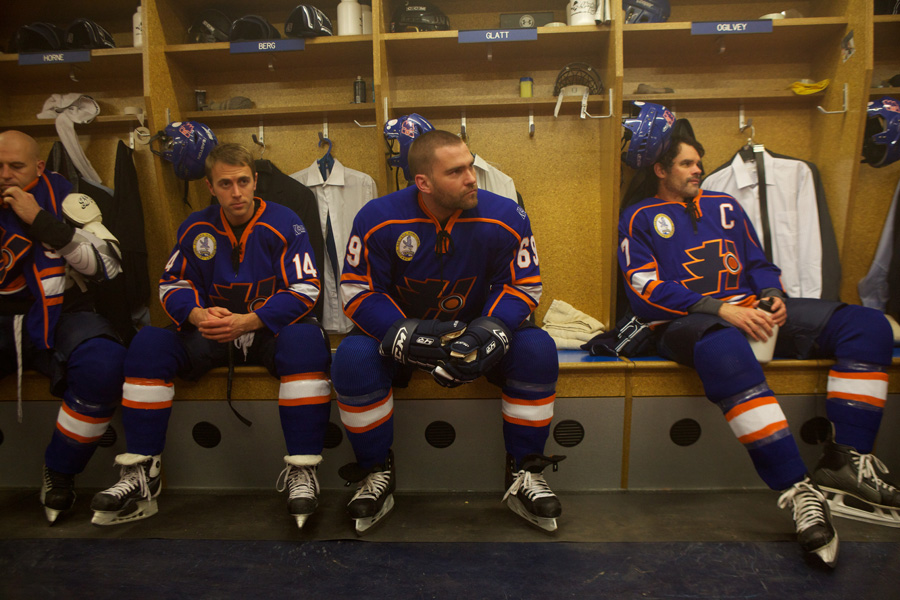
Game over · Though Sean William Scott delivers an entertaining and convincing performance in Goon, the film fails to find its footing. - Photo courtesy of Magnet Releasing
The film focuses on Doug Glatt’s (Scott) search for a new career and the acceptance and pride of his father, played by Eugene Levy. Levy and Scott also worked together throughout the American Pie movie series, with the latest installment American Reunion now playing in theaters.
The film starts in Massachusetts, with Doug utilizing his undeniable ability to give and take a beating as a bouncer. When Doug and his friend Pat (Jay Baruchel) attend a hockey game and Doug gets in a fight with one of the players, he draws the attention of a coach and is soon picked up by the Halifax Highlanders, a minor league team in need of a morale boost after its star player (Xavier Laflamme) has lost his confidence and the team’s losing streak appears to be ever-lengthening.
The subplot of Ross “The Boss” Rhea (Liev Schreiber), a fellow hockey goon, and his impending retirement give the film just enough drama to keep the audience’s attention as the film builds to the inevitable fight: rookie versus veteran. Doug sees Ross as a potential mentor, and their mutual understanding of what happens on the ice is separate from their personal feelings for one another, demonstrating the sportsmanship that is missing from professional sports nowadays.
In a movie about hockey and the game’s enforcers, violence is expected, and Goon does not disappoint. The opening and closing shots of the film are dripping with blood and lost teeth, the symbol of any good hockey fight.
The gore is most graphic when Doug comes into his own on the ice and ends up blocking a goal with his face. As the puck falls and the blood covers the screen, Quentin Tarantino’s films come to mind, but the scarcity of these scenes throughout the film makes the violence inconsistent. Gore is not used excessively for any kind of comedic effect, as Tarantino would do, but it isn’t used lightly enough to take at face value. With the only remnants being a few bruises throughout the movie, the importance of the violence in comparison to Doug’s emotional journey is disproportional, making the audience unsure of the tone of the film.
Following the unrealistic precedent of other hockey movies, the fights in Goon are over the top. In professional hockey, the slightest inkling of a kick can have a player suspended for multiple games. In Goon, a referee allows the final fight to continue, even encourages it, until Doug can no longer stand on his previously broken ankle — oh, right, in addition to stopping a goal with his face, while he’s on the ground, Doug gets stomped on by an opposing player, with no repercussions to anyone involved — all for the sake of Rhea’s “last stand.”
Scott’s portrayal of Doug as a man appreciative of his experience is the film’s finest attribute. His sincerity and willingness to do anything for his team is a touching, refreshing aspect of Scott’s performance. Scott commands attention through simplicity, and the honesty prevalent in Doug’s persona gives Scott the chance to evolve past the American Pie character that made him famous.
Unfortunately, Scott is partnered with Baruchel as co-leads. Baruchel, a co-writer of the screenplay, had the opportunity to write himself his dream role, and he chose a lewd hoodlum who doesn’t have a single scene without multiple f-bombs and perverted hand gestures. Baruchel is supposed to be comic relief in the film but ends up coming off as a Stifler-impersonator, and not a very good one.
Levy’s persona as a funnyman is underplayed in the film, giving Scott the opportunity to command scenes more effectively. But in the end, Levy is a missed opportunity for greatness in the film. In the few scenes that Levy is in, he portrays the shame of having a son deemed unsuccessful convincingly, but with a lack of that Levy-pizzazz that has made him such a draw for moviegoers.
Directed by Michael Dowse, the movie continually dances between the borders of comedy, Tarantino-esque gore and drama. From start to end, Doug’s insecurity is unfortunately translated to the tone and direction of the film, making its 90-minute run-time seem much longer as the audience and Dowse wrestle with what they want the film to be in the end.
What’s clear is that Scott as Doug Glatt measures up to the hype; unfortunately, even with comparisons to The Mighty Ducks and Slapshot, Goon does not.