
Robert Krieger at the Grammy museum
You can usually tell how well (or badly) an event went by the chatter among the attendees in the ladies restroom.

Robert Krieger at the GRAMMY Museum on January 14, 2011. | Courtesy of the GRAMMY Museum
At the GRAMMY Museum Friday night, the mood following the part Q&A, part mini-concert that imploded in the 200-seat Clive Davis Theater was nothing less than exhilarating.
“Was that not the shit?” a woman breathlessly asked, to no one in particular, as she reapplied her lipstick. The exclamation was quickly echoed by a chorus of agreements resounding throughout the stalls.
That “shit?” The seminal, newly Grammy-nominated electric guitarist Robby Krieger.
In one of their first events of the new year, the GRAMMY Foundation hosted Krieger, an unassuming, rather frail-looking man well into his ’60s who Rolling Stone deemed the 91st greatest guitarist of all time. In his twilight years, Krieger has been crafting compelling instrumental albums that interweave jazz and rock, the latest of which, 2010’s Singularity, was nominated for a 2011 Grammy Award in the Best Pop Instrumental Album category. But many—including the 200 fans gathered that night, some dressed in their finest tie-dye and others, leather—remember him best as the lead guitarist for The Doors.
The Doors’ legacy typically lives on through Jim Morrison, the temperamental, tousled hair poet who acted as the band’s charismatic yet somewhat unhinged frontman until his untimely death in 1971.
Undeniably bestowing upon the band a daring sex appeal, Morrison was the fearless media leader, garnering attention and creating fodder fit for modern-day tabloids. When it came to the music, however, Krieger was an essential foundation for the band, defining their wild, jazz-tinged sound with his piercing slide guitar.
“I don’t it’s overstating it to say that our guest tonight and his work with The Doors helped make rock music matter, both here and around the world,” said vice president of the GRAMMY Foundation Scott Goldman at the beginning of the evening. “The music of The Doors was complex, metaphorical, long-form in nature, improvisational — lots of things that not only influenced rock music, but informed Robby’s career after The Doors.”
When Krieger began entertaining the idea of playing guitar, however, rock music was all but under his radar.
“My dad had a great record collection, and he had some flamenco albums. I would listen to them, never thinking I would ever play guitar,” he said. “But some of my friends then started playing when I was 12, and little by little I would borrow their guitars.”
At the age of 16, Krieger finally received a guitar of his own — “a Mexican flamenco guitar,” which his father bought for $180.
“I never thought about playing rock and roll,” Krieger admitted. “Then, I was just playing flamenco and folk.”
Until, that is, he saw Chuck Berry in concert at the Santa Monica Civic Center in 1963, with Big Mama Thornton and The Chamber Brothers as the supporting acts.
“When I saw that [show], I said, ‘I gotta play like that guy,’” Krieger recalled. “I went and traded in my guitar for a red Gibson guitar the next day.”
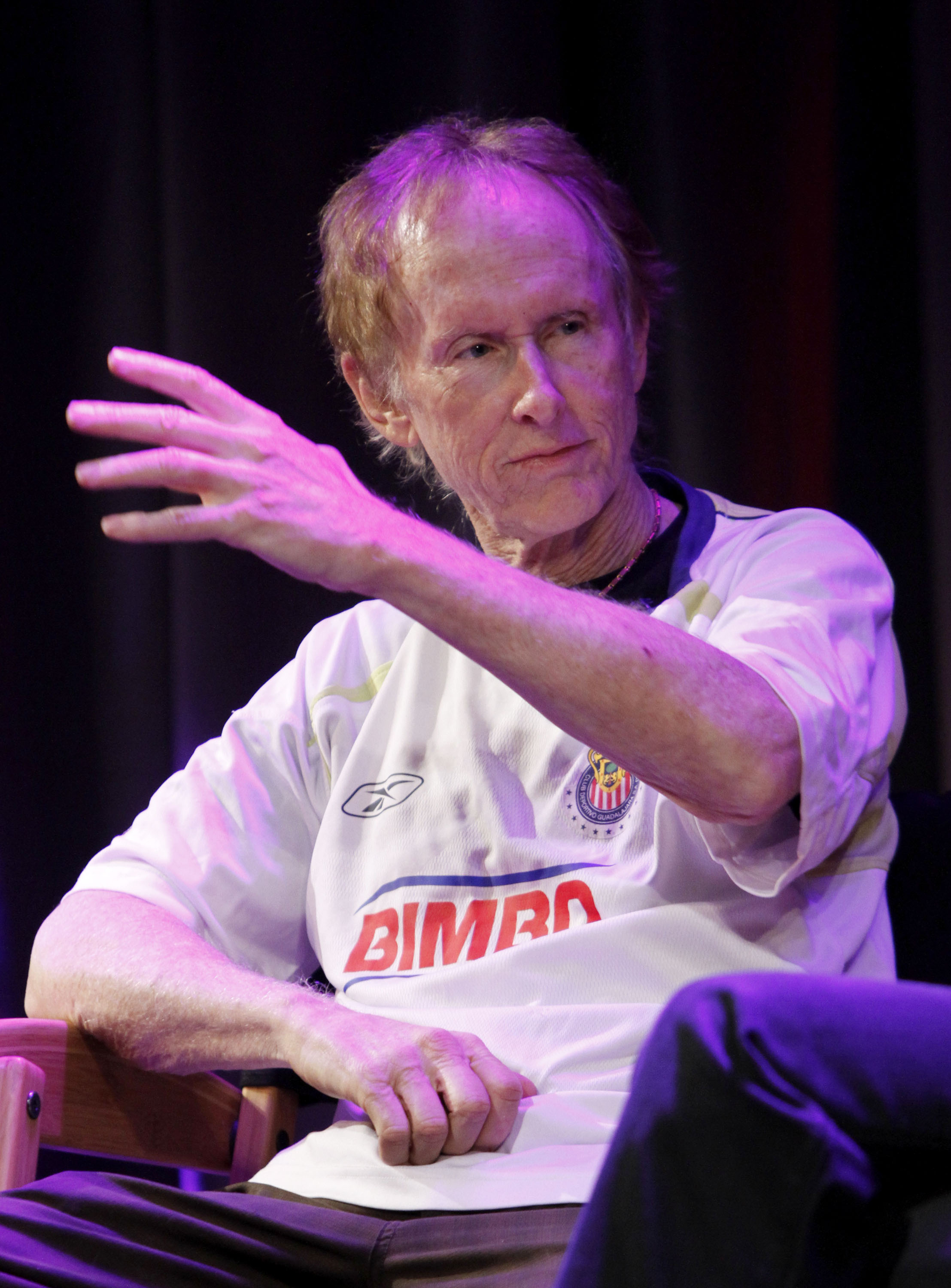
Robert Krieger | Courtesy of the GRAMMY Museum
While in his teens, Krieger was also schooled on jazz, attending John Coltrane and Miles Davis shows whenever those musicians stopped in Los Angeles — experiences that lingered when he became a member of The Doors.
“We really just saw [The Doors] as poetry and jazz,” he mused.
Krieger met Morrison and keyboardist Ray Manzarek through drummer John Densmore while he was studying at UCLA. Morrison was instantly enamored by Krieger’s finger-pick playing — he never used a pick while in The Doors — and his experimentation with the slide technique.
“It was kind of amazing how the four of us, musically, gelled from the very beginning. I’ve been in a million different band situations since then, and it’s never been that feeling, that easy,” Krieger said.
And even though Morrison has always been portrayed as a tyrannical leader of sorts, Krieger describes the writing and recording process as creatively democratic.
“Once I got in the band, Jim said, ‘We don’t have enough originals. Why don’t you try writing some songs?’ So I went home and wrote ‘Light My Fire.’” Kreiger recalled.
Krieger added he was glad the band decided to do the extended version of “Light My Fire,” especially when the radio stations ignored the cut, three-minute version and played the iconoclastic hit in its entirety.
“I don’t sit around listening to those records anymore, but I do like hearing them on the radio,” he laughed.
Following “Light My Fire,” Krieger went on to write a slew of equally as popular Doors hits, including “Love Me Two Times,” “Love Her Madly” and the racy rock fanfare “Touch Me.” He claims his guitar style — renown for his mastering of the slide technique, at once elegant as it is piercing — evolved over time, although he acknowledges that being sonically distinct was always in the back of his mind.
“I always said if your mother can’t tell if that’s you coming over the radio, then you don’t have a sound,” Krieger quipped.
Friday night, Krieger had a chance to show off his slide technique, inviting his band onstage to perform several selections from Singularity, including the Coltrane homage “Runaway Trane” and the flamenco-tinged “Russian Caravan.”
As he looked out over the audience, nodding his head at the standing ovation — perhaps long-overdue with a career like his — he reminded his fans about the upcoming Grammy Awards.
“You never know,” Krieger said breathlessly, smiling. “We might just win.”
You can usually tell how well (or badly) an event went by the chatter among the attendees in the ladies restroom.
At the GRAMMY Museum Friday night, the mood following the part Q&A, part mini-concert that imploded in the 200-seat Clive Davis Theater was nothing less than exhilarating.
“Was that not the shit?” a woman breathlessly asked, to no one in particular, as she reapplied her lipstick. The exclamation was quickly echoed by a chorus of agreements resounding throughout the stalls.
That “shit?” The seminal, newly Grammy-nominated electric guitarist Robby Krieger.
In one of their first events of the new year, the GRAMMY Foundation hosted Krieger, an unassuming, rather frail-looking man well into his ’60s who Rolling Stone deemed the 91st greatest guitarist of all time. In his twilight years, Krieger has been crafting compelling instrumental albums that interweave jazz and rock, the latest of which, 2010’s Singularity, was nominated for a 2011 Grammy Award in the Best Pop Instrumental Album category. But many—including the 200 fans gathered that night, some dressed in their finest tie-dye and others, leather—remember him best as the lead guitarist for The Doors.
The Doors’ legacy typically lives on through Jim Morrison, the temperamental, tousled hair poet who acted as the band’s charismatic yet somewhat unhinged frontman until his untimely death in 1971.
Undeniably bestowing upon the band a daring sex appeal, Morrison was the fearless media leader, garnering attention and creating fodder fit for modern-day tabloids. When it came to the music, however, Krieger was an essential foundation for the band, defining their wild, jazz-tinged sound with his piercing slide guitar.
“I don’t it’s overstating it to say that our guest tonight and his work with The Doors helped make rock music matter, both here and around the world,” said vice president of the GRAMMY Foundation Scott Goldman at the beginning of the evening. “The music of The Doors was complex, metaphorical, long-form in nature, improvisational — lots of things that not only influenced rock music, but informed Robby’s career after The Doors.”
When Krieger began entertaining the idea of playing guitar, however, rock music was all but under his radar.
“My dad had a great record collection, and he had some flamenco albums. I would listen to them, never thinking I would ever play guitar,” he said. “But some of my friends then started playing when I was 12, and little by little I would borrow their guitars.”
At the age of 16, Krieger finally received a guitar of his own — “a Mexican flamenco guitar,” which his father bought for $180.
“I never thought about playing rock and roll,” Krieger admitted. “Then, I was just playing flamenco and folk.”
Until, that is, he saw Chuck Berry in concert at the Santa Monica Civic Center in 1963, with Big Mama Thornton and The Chamber Brothers as the supporting acts.
“When I saw that [show], I said, ‘I gotta play like that guy,’” Krieger recalled. “I went and traded in my guitar for a red Gibson guitar the next day.”
While in his teens, Krieger was also schooled on jazz, attending John Coltrane and Miles Davis shows whenever those musicians stopped in Los Angeles — experiences that lingered when he became a member of The Doors.
“We really just saw [The Doors] as poetry and jazz,” he mused.
Krieger met Morrison and keyboardist Ray Manzarek through drummer John Densmore while he was studying at UCLA. Morrison was instantly enamored by Krieger’s finger-pick playing — he never used a pick while in The Doors — and his experimentation with the slide technique.
“It was kind of amazing how the four of us, musically, gelled from the very beginning. I’ve been in a million different band situations since then, and it’s never been that feeling, that easy,” Krieger said.
And even though Morrison has always been portrayed as a tyrannical leader of sorts, Krieger describes the writing and recording process as creatively democratic.
“Once I got in the band, Jim said, ‘We don’t have enough originals. Why don’t you try writing some songs?’ So I went home and wrote ‘Light My Fire.’” Kreiger recalled.
Krieger added he was glad the band decided to do the extended version of “Light My Fire,” especially when the radio stations ignored the cut, three-minute version and played the iconoclastic hit in its entirety.
“I don’t sit around listening to those records anymore, but I do like hearing them on the radio,” he laughed.
Following “Light My Fire,” Krieger went on to write a slew of equally as popular Doors hits, including “Love Me Two Times,” “Love Her Madly” and the racy rock fanfare “Touch Me.” He claims his guitar style — renown for his mastering of the slide technique, at once elegant as it is piercing — evolved over time, although he acknowledges that being sonically distinct was always in the back of his mind.
“I always said if your mother can’t tell if that’s you coming over the radio, then you don’t have a sound,” Krieger quipped.
Friday night, Krieger had a chance to show off his slide technique, inviting his band onstage to perform several selections from Singularity, including the Coltrane homage “Runaway Trane” and the flamenco-tinged “Russian Caravan.”
As he looked out over the audience, nodding his head at the standing ovation — perhaps long-overdue with a career like his — he reminded his fans about the upcoming Grammy Awards.
“You never know,” Krieger said breathlessly, smiling. “We might just win.”
Comments are closed.