
REVIEW: ‘Climax’ dives deep into its drug-induced trip

In May 2002, the Cannes Film Festival premiered “Irreversible” to mixed responses from the audience. Some people believed the movie had strong artistic merit, as it received a five-minute standing ovation. However, many deemed it unwatchable because it caused 250 people to walk out of the screening — some in need of medical attention.
Ever since then, director Gaspar Noé has kept this controversial stigma alive with each successive movie. This is why the marketing for his newest film, which had a limited release Friday, was as follows: “You despised ‘I Stand Alone.’ You hated ‘Irreversible.’ You loathed ‘Enter the Void.’ You cursed ‘Love.’ Now try ‘Climax.’”
The film opens on a wintry night, as French dancers gather for the day’s rehearsal in an empty school building. After drinking LSD-laced sangria at a post-practice party, the group slowly descends into a waking, hallucinatory nightmare.
Knowing that the drug-centric nature of the film might cause audience members to suffer panic attacks, Noé starts the movie in a more casual tone with a series of interviews with the dancers. Old books and DVDs bleed into the sides of the screen while a TV placed in the center sequentially plays each interview. Not a single inch of empty space is visible. After this sequence and two expertly-coordinated, sensuous dances, Noé starts the slow but creeping descent into madness.
In “Enter the Void,” Noé demonstrated the effects of drugs through vibrant shapes and an epileptic atmosphere. However, in “Climax,” he displays the effects of LSD strictly through each dancer’s actions after unknowingly consuming the drug. As such, the performances naturally convey the anguish the group undergoes. The strong chemistry among all of them is palpable.
Except for a few rooms and a hallway, the setting confines the dancers to the main rehearsal space, allowing Noé to generate much discomfort since the dancers are forced to interact with one another as the drugs kick in. The film’s unpredictability stems from the fact that Noé only worked off of a one-page outline — the events and conversations are largely improvised.
While the movie makes the dancers feel secluded, Noé makes the entire trip feel grandiose through the camerawork. There are long takes that feel like they last more than 10 minutes. Many of these shots involve complicated elements like moving between different areas of the building or suddenly turning the camera upside down to capture the situation’s intensity. This impressive cinematography is consistent throughout the movie, and it’s the one element that keeps the viewer’s attention even before the dancers’ LSD trip.
What truly ensnares the audience is the techno-infused soundtrack. Varied and electrifying, it includes artists like Cerrone and Daft Punk’s Thomas Bangalter. Given the setting and concept, the music helps create tension for the viewers and reel them in, even during the more mundane parts of the film.
The film’s sound editing works best during the actual LSD trip.Screams of agony echo as the camera moves between different rooms, away from the source of the sound. Moments like these are why the movie deserves to be seen in theaters — the movie is most powerful when experienced with surround sound.
Of course, Noé has built up a reputation for unflinchingly showing disturbing content in his films, and “Climax” is no exception. The most terrifying moments are scattered throughout the long, nightmarish sequence. These instances, which will easily disgust the faint of heart, range from shocking imagery to horrific events that result from the choices of certain character.
In fact, the film’s only minor shortcoming is that it does not effectively create the high level of distress that Noé wanted the audience to feel toward the end. Based on the plot and direction, it appeared as if the emotional reaction of this anxiety-inducing trip was going to unfold like in “Irreversible,” if it here told chronologically: slowly building until it reaches one chaotic culmination.
The climactic point in the film is highly effective, showing that most of its behind-the-camera direction was wise. It’s just that Noé could have done more — like making the music louder or the camera more focused — to leave a stronger impact on the viewer.
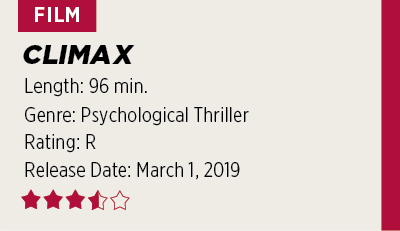
Still, Noé has once again proven himself an incredibly provocative and intriguing director. While it isn’t impactful enough to be deemed a pure cinematic achievement, “Climax” is still undoubtedly an impressive, immersive and terrifying experience.