Getty Villa probes Egyptian portraits
A new exhibition studying the portraits of Egypt’s 26th Dynasty opened Jan. 24.
By CARSON LUTZ

A new exhibition studying the portraits of Egypt’s 26th Dynasty opened Jan. 24.
Obsession with our own image is a ubiquitous aspect of today’s culture. From the unflagging profitability of the fashion and beauty industries to the endless stream of selfies on social media platforms, we are deeply preoccupied with the projection and perfection of our likenesses. Perhaps even verging on the narcissistic, we seem forever entranced by the various reflections of our appearance.
Now on view at the Getty Villa Museum, a new exhibition demonstrates that long before the advent of the front-facing smartphone camera, Egyptians from the seventh and sixth centuries B.C.E. had a similar impulse to reproduce their physical image. “Sculpted Portraits from Ancient Egypt” examines artistic renditions of individuals from several millennia ago, showcasing the rich variety within the genre. With a three-year loan from the British Museum, the exhibition offers a rare chance for public display of many objects typically kept in storage by their home institution.
“Sculpted Portraits” adopts a focus on the 26th Dynasty, also known as the Saite Dynasty — so named for its capital city, Sais. Traditionally, this stretch from 664 to 526 B.C.E. has received less public attention than the periods preceding it: Astounding architectural feats like the pyramids or memorable figures like Ramses II tend to overshadow the more understated accomplishments of Egypt’s later period. However, this exhibition makes clear that the historical importance of the Saite Dynasty — and the artistic merit of its sculptural output — deserves increased recognition.
“For most of our visitors, they’re not very familiar with first millennium B.C. Egypt,” said Sara E. Cole, assistant curator of antiquities at the Getty Museum. “I wanted to introduce this really significant — but I think often underappreciated — phase of ancient Egypt history to our visitors.”
The assemblage of sculptures in the exhibition contains a diverse array of portraits, ranging from a small wooden statuette to a colossal granite sarcophagus weighing around 12,000 pounds. The subjects of the exhibition’s portraits nearly exclusively correspond to non-royal individuals of Egyptian history, instead depicting figures like priests or administrators.
As anthropological objects, these sculptures provide revealing glimpses into the sociocultural realities of Saite Egypt. For instance, the show boasts several naophorous statues, which feature their subject holding a small shrine box that encloses a deity. These intricately crafted sculptures reveal a desire for intimate connections with divine entities like Neith and Osiris.
Moreover, specific renderings of dress are a recurrent aspect in the Saite portraits. Kilts, wigs, false beards and other elements of clothing adorn the Egyptian subjects, in turn, revealing information about fashion trends of the period — and even further, how they sought to immortalize themselves by producing statues for temples or graves.
Fascinating though these revelations are, the exhibition’s real magic exists in its meditation on the responsibilities of a portrait. Contrary to the typical Western expectation of replicating a likeness in portraiture, these objects instead are typically meant to have a spiritual function. Resultantly, the pieces often capture aestheticized or aggrandized realizations of the historical figures.
“The goal behind these images, artistically, was not to represent a likeness of how the person actually physically appeared in life. That wasn’t the point, really, of the sculptures,” Cole said. “No, the sculptures are meant to kind of convey the essential qualities of a person. They’re also meant to convey different ideals or idealization.”
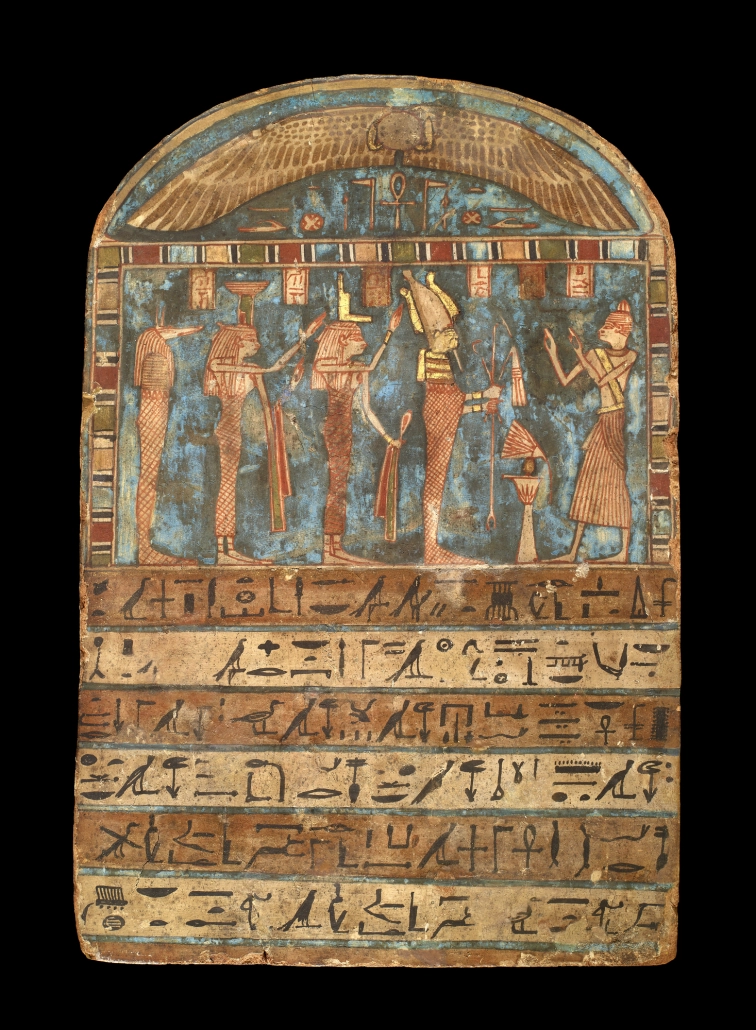
And further, with the diversity of objects represented, the show invites reflection on the definition of a portrait in general. Pieces like the exhibition’s “Statue of Nakhthorheb” may readily adhere to preexisting notions of portraiture, but what about a limestone funerary slab carved to depict a priest’s interaction with the gods? Does an ushabti — a miniature avatar buried with the deceased to be summoned in the afterlife — qualify? “Sculpted Portraits” welcomes these questions.
Finally, given the Villa’s predominant focus on Greco-Roman objects, the exhibition encourages viewers to consider the links between the artistic styles of Egypt and Greece, especially in light of the ever-increasing contact between the two civilizations during the Saite Dynasty. Part of the museum’s program “The Classical World in Context,” the show participates in the Villa’s efforts to dismantle reductive views of Classical worlds with insular conceptions of Greece and Rome.
“It is a period during which there is intensifying communication and intensifying relationships between Egypt and the Greek world,” Cole said. “Things like the Kouros and Kore statues develop, and arguably there is an Egyptian influence in the development of that kind of artwork in Greece. The Greeks are coming to Egypt and seeing these large-scale sculptures of human form and taking inspiration from it.”
In examining the standards of portraiture from thousands of years ago, “Sculpted Portraits” provides a unique perspective — not just on the 26th Dynasty, but also on humanity’s relationship with our likenesses.
“This [exhibition] is an opportunity to see some really extraordinary works of Egyptian sculpture from a period that is not as well-known or as celebrated, but that is very significant in Egyptian history … and to really think about portraiture, about our impulse to make images of ourselves and why,” Cole said.
“Sculpted Portraits from Ancient Egypt” will be on view until Jan. 25, 2027. Admission to the Getty Villa Museum is free, but a reserved entry time is required.