THE (S)EXISTENTIALIST
Intellectualizing gets between you and your emotions
Thinking too much might make you more out of touch with life.

By KEVIN GRAMLING
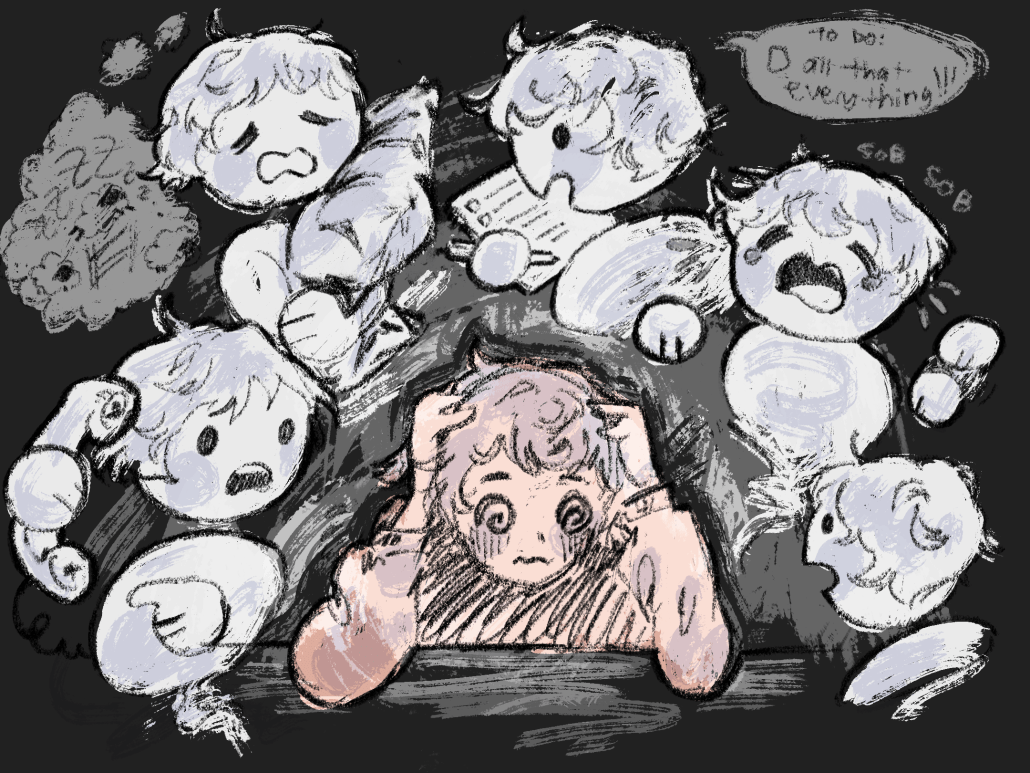

Thinking too much might make you more out of touch with life.
“I spent my whole life so deep in my imagined world that there’s nothing here for me. The real world keeps demanding my attention and participation, but I have nothing,” I wrote in my Notes app, sitting at the airport in Rio de Janeiro, about to take a flight back to the United States. The short paragraph was the consolidation of everything that had become obvious about my life in the past five days in Rio, celebrating Carnival.
For the last two years, even with all the self-reflection, talk therapy and medication prescribed by a psychiatrist, I have still felt like a prisoner in my own mind.
My attitude has long been that I could solve any problem with enough thinking. I flattered myself, too, secretly believing that my introspection elevated me, as it meant that I was not so subject to the kinds of roiling emotions that I’ve seen drive others to aggressiveness and recklessness.
However, Psychology Today describes intellectualization as a defense mechanism in which people reason with a problem to avoid uncomfortable or distressing emotions.
It’s effective. I haven’t cried over a single heartbreak in the past two years, even when I reasonably should have felt crushed. Instead, I opted for observing heartbreak, describing the ways in which each relationship went wrong and attempting to understand the narrative device that each love interest plays in the larger story.
Once I was introduced to Enneagram personality types by my mom, I began suspecting that being able to run intellectual circles around my emotions didn’t necessarily mean I was in touch with them. I was skeptical, but she insisted I read the chapter on Enneagram Type 3.
I found it scarily accurate, up until the book claimed that out of every personality type, Threes are the least connected to their emotions.
“That can’t be true,” I thought to myself, “I think about my emotions all the time.”
A seed of doubt was planted, though. What does it even mean to be “emotionally intelligent?” If I’m emotional and intelligent, is that enough?
Eventually, I realized the reality was that intellectualizing my emotions hadn’t brought me real change, only dust. The same demons continue to haunt me — vices I talk myself out of and back into, wired in by intricate, subconscious patterns far cleverer than me.
That final hour in Brazil, in the airport, was the first moment I had time to self-reflect on the trip. Sitting there waiting for group eight to be called to board, it occurred to me that I had learned more about joy while dancing amid droves of sweat-slick strangers than months of ruminating in journal entries and deep conversations with close friends.
The time I spent dissecting my life and experiences only further separated me from my lived experience. It’s this process that I referred to in my notes as the “imagined world.” The longer I spent wandering the back alleys and thickets of my mind, the less I experienced my real, embodied life.
It’s a vicious cycle as I look for comfort deeper in my mind, turning away from the answers to my problems that exist in the present life around me at every minute. At its worst, my life fades into a numb derealization. My friends recognize that I’m in these slumps when I begin to repeatedly remark, “I don’t know. Life just doesn’t feel real.”
It’s dangerous, because a life that doesn’t feel real is not a life that feels worth investing in. In my experience, there is a slippery slope from dissociation to depression where “the point” is impossible to identify.
The lesson I discovered at Carnival wasn’t that I need to go travel more and party harder — though I, and perhaps all of us, do sometimes — rather, it was a simple reminder that joy is an experience that isn’t meant to be rationalized. It’s ephemeral, unpredictable and no easier to hold onto, and it’s best when left that way.
I had no time to intellectualize in Rio de Janeiro. Between meeting my cousin’s one-year-old baby for the first time, showing a beloved friend from USC my hometown and making new friends from around the world, I was left surprised by each moment. Without the numbing comfort of retreating into my head, I felt the most joy I have had in the past two years.
We can’t always be on a trip in Rio — life comes with less pleasant emotions like discomfort, anger and sadness. Still, if we want to feel the depth of joy, we have to let go of the fear of feeling pain.
Intellectualizing takes the edge off of life, but that edge is precisely what gives it the point.
Kevin Gramling is a senior writing about his search for meaning amid the daily chaos of being a USC student. His column, “The (S)existentialist,” runs every other Monday.