USC revokes some Ph.D. acceptances citing fund issues
Departments like chemistry, classics and philosophy took back some of their offers.
By APRIL MAO & TALIA WEXLER
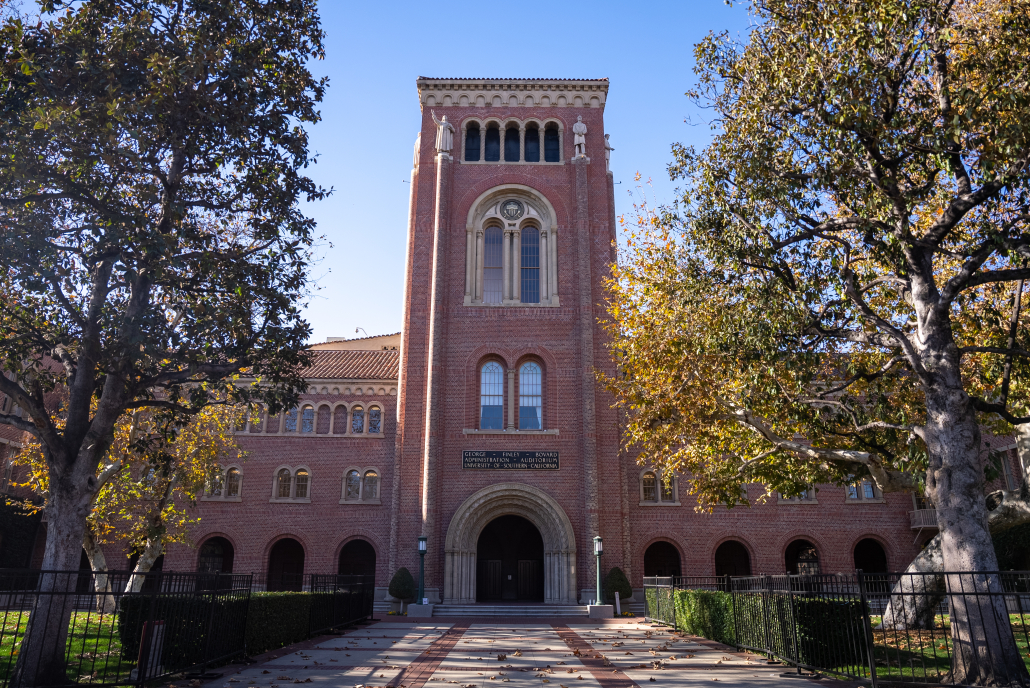

Departments like chemistry, classics and philosophy took back some of their offers.
Multiple USC doctoral programs, including philosophy, chemistry, sociology, molecular biology and religion, rescinded pending admission offers last week, first reported by Morning, Trojan. The Daily Trojan found that the classics department also revoked Ph.D. admissions.
The University wrote that programs and schools were giving “careful consideration” to how admitted students will be funded “in light of uncertainty regarding federal research funding,” in a statement to the Daily Trojan on Monday.
The uncertainties come from the Trump administration’s Department of Government Efficiency’s cutbacks on federal research funding. In February, $10.6 million in National Science Foundation grants for USC research projects were identified in Sen. Ted Cruz’s “woke DEI” database. At a March 27 Academic Senate meeting, Provost Andrew Guzman said it’s “overwhelmingly likely” that the University will lose up to hundreds of millions of dollars in federal funding.
The individual schools make decisions on Ph.D. admissions, the University statement read. Dornsife College of Letters, Arts and Sciences departments were told they were going to change the Ph.D. admission system around March 21, according to Ralph Wedgwood, director of the Dornsife School of Philosophy.
According to Morning, Trojan, Dornsife circulated two letters for programs to send to applicants whose offers could be rescinded, one that offered students deferment to Fall 2026 and one that only rescinded the acceptance.
Daniel Richter, chair of the classics department, said every University doctoral program has an allotted number of spots it is meant to fill each year. Because programs at other universities were already rescinding admissions offers, more students accepted USC’s doctoral program offers than normal, Richter said, meaning Dornsife had to “kind of redo the math.”
This year, the classics department had an allotment of three spots. The program usually expects around a 50% yield and admits six applicants, according to Richter. He said due to this year’s admissions changes, the department was asked to rescind any offers in excess of three.
By the time the changes were made, four students had already accepted admission to the classics doctoral program. All four would be able to keep their spots, Richter said.
In past years, it was usually fine for programs to exceed their designated allotments, but due to uncertainties surrounding the future of research funding, programs could not over-accept students for Fall 2025, according to Richter.
“Being able to say ‘yes, we can fund you for five years,’ we are compromised, deeply compromised, in our ability to do that,” Richter said.
This wasn’t the first time USC paused Ph.D. admissions this year. According to STAT, some biomedical programs were advised to pause admissions for a short period in February. That pause closely followed the Trump administration’s ordered cuts to the National Institutes of Health research funding.
Richter said he doesn’t “think anybody knows what’s going to happen next” with USC’s doctoral programs in future admissions cycles.
USC’s pre-existing financial woes make cuts from DOGE more challenging, according to Wedgwood. In her State of the University address March 4, President Carol Folt said the University has been in a recovery phase after facing $2.5 billion of “legal and COVID costs.”
On March 24, USC leadership announced it was taking measures to “limit and reduce expenditures” due to its ongoing structural deficit and heightened financial stress from federal funding cuts, including a hiring freeze for most staff positions and restricted hiring for faculty.
Wedgwood said rescinding the admissions offers won’t significantly impact USC’s reputation, as he thinks students will see the decision as a “sign of the times.”
“It’s possible that there will be a bit of a reputational hit, but I don’t think it’ll be serious because I think we dealt with it, certainly in our department … in a humane and clear and compassionate way,” Wedgwood said.
Richter said he thinks Dornsife is doing the best it can with the “really bad hand” the federal government has dealt.
“Universities are very special places where the free exchange of ideas is absolutely central to what we do,” Richter said. “We have to protect that mission.”