You can’t cherry-pick aspects of a culture
Choosing parts of a culture while glazing over the others is cultural appropriation.
By AMRITA VORA
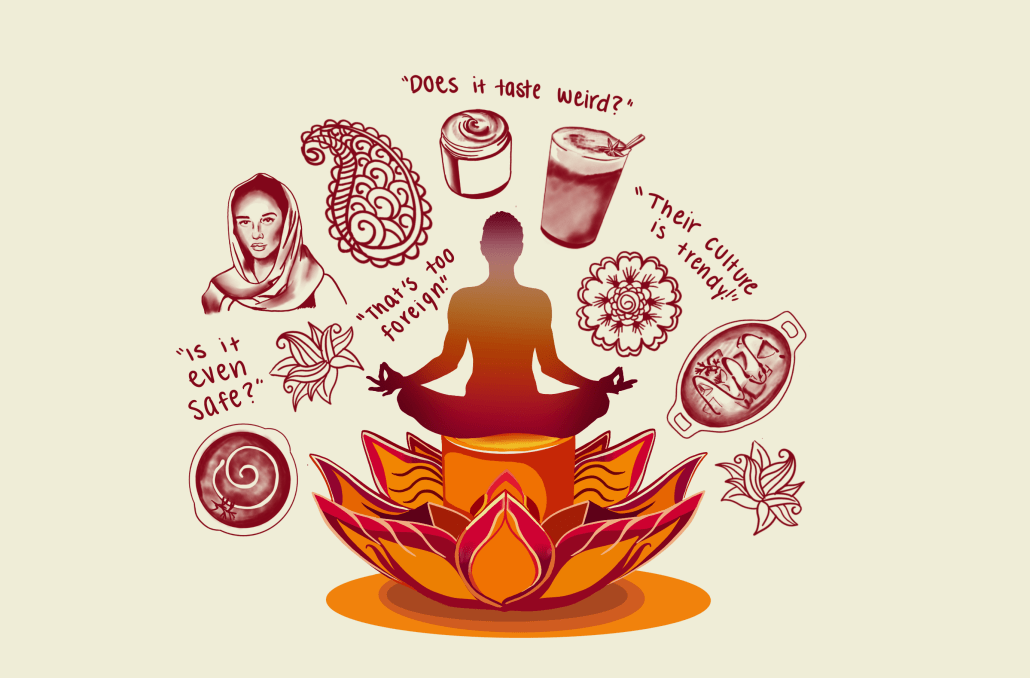

Choosing parts of a culture while glazing over the others is cultural appropriation.
A few Saturdays ago, my roommate and I were sitting on our respective beds, performing our daily TikTok doom scroll when she sent me a video that had popped up on her For You page. The video entailed a woman in a dress wearing what was then coined as a “Scandinavian shawl.”
I couldn’t put my finger on where I had seen such a shawl before, until it hit me: The piece of clothing worn by the woman in the video was neither Scandinavian nor a shawl, it was a dupatta. A dupatta is an Indian scarf or shawl that is typically draped over a woman’s chest and combined with kurtas, lehengas and saris, which are different types of South Asian attire.
As I began to go down a rabbit hole of these so-called “Scandinavian” shawls, I was met with more videos of people appropriating South Asian attire but crediting Western nations for the fashion style instead of where it actually originated from. Clothes that I had been judged for wearing as a child were now receiving praise because they were being worn by white women under the guise of European fashion.
South Asian culture being appropriated isn’t a new phenomenon. Cultural appropriation refers to the adoption of cultural elements of a minority group by members of a majority group in an exploitative, disrespectful or stereotypical way, and it has affected the South Asian community for a long time.
Even before this shawl scandal, people have adopted aspects of Indian culture without giving any credit to their origins and instead treating them like a trend. For example, chai, henna, yoga, hair oiling and bangles have all been popularized by Western society but have origins deeply rooted in South Asian culture.
This is not to say that people should cancel their yoga classes or never order chai at a coffee shop again. Instead, it is important to meet different cultures with a desire to broaden perspectives and connect with others, leading with cultural appreciation rather than appropriation.
The primary difference between cultural appropriation and cultural appreciation lies in their results, as cultural appropriation perpetuates racist stereotypes and prejudices, while cultural appreciation fosters cultural connection and understanding.
Whitewashing culture by making it palatable for a Western audience while simultaneously being racist towards ethnic groups is not only disrespectful but also harmful, as it directly impacts cultural minorities. Cherry-picking aspects of a culture to fit an aesthetic is neither representative of the culture nor respectful to the ethnic groups that practice it.
While it is understandable that people are unaware of certain cultural influences, educating oneself before engaging with cultural materials is important.
When it comes to the video where dupattas were called “Scandinavian shawls,” the creator acknowledged and listened to the comments that disapproved of the video, ultimately crediting South Asians and apologizing for adopting the culture and calling it European.
While the video has now been deleted, its emergence at all is evidence of a larger narrative of appropriation through Western cultures profiting from South Asian cultures by adopting their traditions without any acknowledgement.
Naturally, it is not only South Asian cultures that feel this cultural appropriation. Many other marginalized groups also face this hardship.
This can not only lead to cultural erasure, which occurs when credit is not given to ethnic groups after their traditions and artifacts have been borrowed by the West, but it also emphasizes the existing hierarchy and power dynamics that have resulted from colonization. Naturally, this has a negative effect on the mental health of people in these marginalized communities. For instance, research has found that sports mascots that appropriate Native American culture negatively affect the self-esteem of Indigenous adolescents.
The only way to combat such a widespread issue is through accountability, which can then be used to arrive at cultural appreciation. Listening to minority groups and people of color when they point out issues is just one of the ways to stay informed about cultures and ensure that people are not appropriating them.
However, it is not the responsibility of marginalized groups to educate others, so learning from the internet and watching creators that belong to these communities on apps such as TikTok and Instagram can create strides in the conversation, turning cultural appropriation into cultural appreciation.