MENASA celebrates Arab American Heritage Month
The event provided free food, a lively performance and henna tattooing.
By ADAM YOUNG
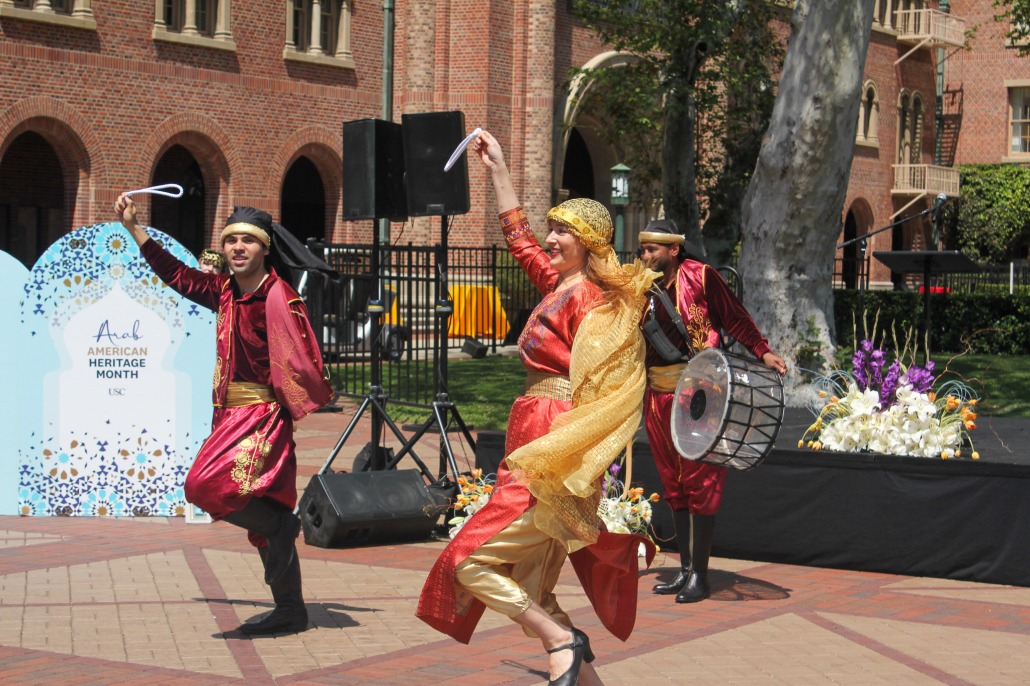

The event provided free food, a lively performance and henna tattooing.
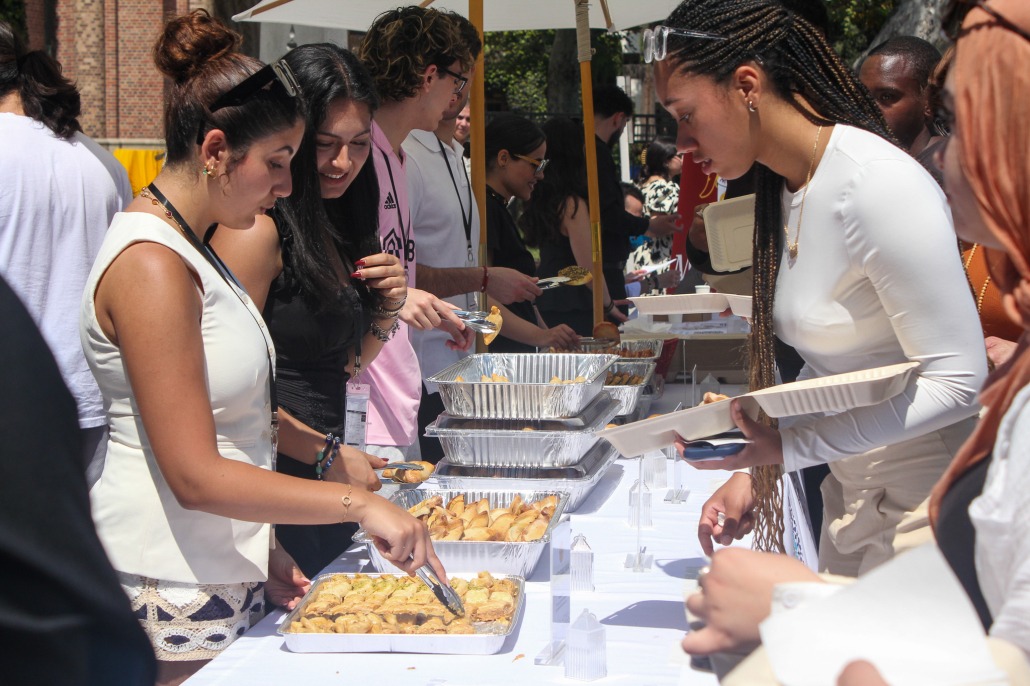
Festive Arabic music filled Hahn Plaza as students gathered around dancers and drummers donning traditional garments to celebrate Arab American Heritage Month on Monday afternoon. Along with a cheerful atmosphere, the event provided free food and henna tattooing to the hundreds of students who attended.
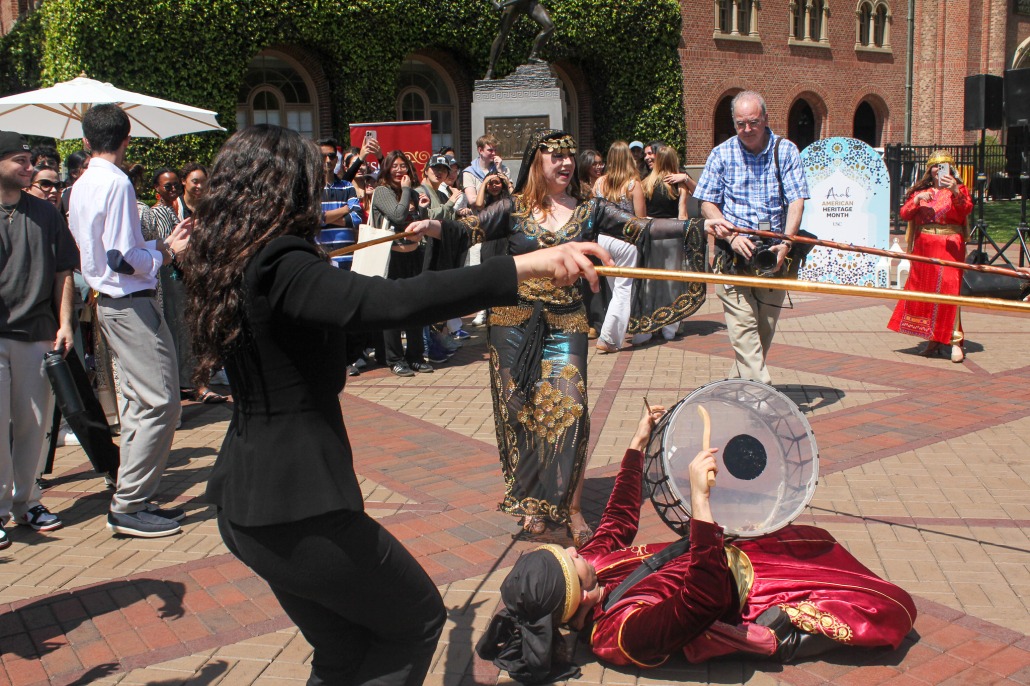
The dance group Famous Stage performed in front of Tommy Trojan, featuring a drummer and dancers in flowing outfits. As they danced, the audience’s cheers, hollering and rhythmic clapping mixed with the music and drums as audience members joined the dancers.
“You can see the way that people respond to it in real time,” said Nada Dalati, an alum, who helped decorate the event. “That community was formed all over again right here.”
To Adl Gamaladdin, director of programming for the Middle Eastern North African Student Assembly and a sophomore majoring in computer science, Arab American Heritage Month was a way to recognize Arab people and promote the culture.
“Arabs are all a part of our community, and a large part of that dealt with negative views towards Arab culture and history after previous events happened,” Gamaladdin said. “We’re just trying to get rid of the negative stereotypes that come associated with being Arab and allow people to feel proud of being Arab and American at the same time.”
Zeina Kaibni, co-executive director of MENASA and a junior majoring in business, also wrote and delivered a poem in Arabic. Kaibni said the poem was named after the event’s theme — “Roots Grow, Branches Reach.”
“[The poem] is a symbol of our strength and unity within our community,” Kaibni said. “Our culture is the root of our existence, and thus we’re an extension of that.”
Nour Myra Geha, the co-founder of MENASA and a senior majoring in international relations, said that three years ago, the University didn’t acknowledge the need for a Middle Eastern North African lounge because there was no definitive count of how many Arab students there were on campus.
Not taking “no” for an answer, Myra Geha and her colleagues organized, wrote proposals and went around campus to gather over 200 petition signatures that “proved to the University” there was a need for MENA representation on campus.
“These are the roots that we’ve planted at USC for our community,” Myra Geha said in a speech during the event. “This year’s theme is roots grow and branches reach, reminding us that we come from generations who have endured through war, exile, erasure and now genocide. They still found ways to sing, to build and to thrive. Our roots are deep.”
The assembly originally organized the event for April 3, but the University postponed the event in a campus-wide email.
“Last week, various weather forecasts were forecasting rain midday [Thursday], so we adjusted accordingly to mitigate potential disruptions to the program,” read the University statement to the Daily Trojan.
On Thursday, MENASA posted a statement on their instagram about the University’s postponement.
“MENASA, along with other registered student organizations, have invested significant time, effort, and financial resources into the event,” the statement read. “Moving forward, we urge greater transparency, inclusion, and the active centering of student voices in decisions that directly affect our communities.”
However, that delay did not sully the mood of the celebratory event. Lena Khouri, founder of entertainment company Between East, talked about the negative perception of Arab people in the United States and how she is trying to reshape it.
“Everyone plays a role in how we shape perception, but my role is to do that through artists and through talent and through music and through film,” Khouri said. “How do you do that authentically when the worst possible thing is happening to our people? I think that that’s probably the most challenging thing I could ever experience while doing this company, and it’s still challenging, but I just don’t stop.”
Behind the stage was a henna booth where students could get their hands decorated with natural dye. The tattoo is traditionally done before weddings or big celebrations in some MENA cultures.
After the event, Kaibni applauded how many students were “ready to celebrate” the event.
“Arab American Heritage Month is just a representation of my place on campus,” Kaibni said. “I feel like I always look for a community, and I find it with people that share the same background as me, and I’m really happy that I got to celebrate that today.”