THE (S)EXISTENTIALIST
Accepting uncertainty is crucial for letting go
Lessons from existentialism: anxiety is the dizziness of freedom.

By KEVIN GRAMLING

Lessons from existentialism: anxiety is the dizziness of freedom.
About a month ago, I sat in the In-N-Out in Huntington Park listening to two of my best friends discuss their futures. We were all seated on one side of a high-top table, so I was somewhat awkwardly shut out from the conversation. This was for the best because I have a hard time sitting on the sidelines when a topic that has been on my mind comes up in conversation, and I had been in a slow-burn existential crisis about my future plans — or lack thereof — over the past several months.
It was the fact that I contributed little to the conversation that made it special when they began describing the exact kind of existential anxiety I experienced from my own uncertainty toward life beyond college. It occurred to me then that this anxiety might be more than just relatable. In fact, some argue it is inseparable from human existence.
I wasn’t very clear on who the existentialists were when I came up with the name for this column, “The (S)existentialist.” I had a rudimentary understanding of their philosophy, but it seemed enough to me that “The (S)existentialist” is a clever play on the idea that someone can be equally concerned with the nature of existence as they are about silly situationships.
I was wrong to think that the name was clever, but not because the reference to existentialism doesn’t apply, rather because it is redundant. Existentialists were precisely the philosophers who thought just as deeply as they lived.
I have spent years trying to draw my own conclusions about life and existence, and even with all the lessons I have learned, my search for meaning has more often than not felt like a reeling spiral rather than a search. In reading about existentialism for the first time, I felt a sense of déjà vu, like I was finally landing somewhere.
As it happens, over a century ago existentialists like Jean-Paul Sartre and Søren Kierkegaard were already asking the questions I was just barely beginning to articulate to myself, devoting their lives to writing and discussing these ideas.
Existentialism isn’t defined by some single doctrine; the term refers to the works and ideas that emerged from a larger movement of many thinkers and writers, but has some identifiable tenets.
Existentialism’s main idea is that humans are free beings who must actively create themselves at every moment, responsible for everything we do. Kierkegaard, who contributed greatly to the existentialist body, asserted that our being constantly inundated with “either/or” decisions comes with a pervasive anxiety that can never fully be escaped.
We have the wonderful power of creating ourselves from scratch, but the dizzying anxiety that comes with formative decisions is the price for this freedom.
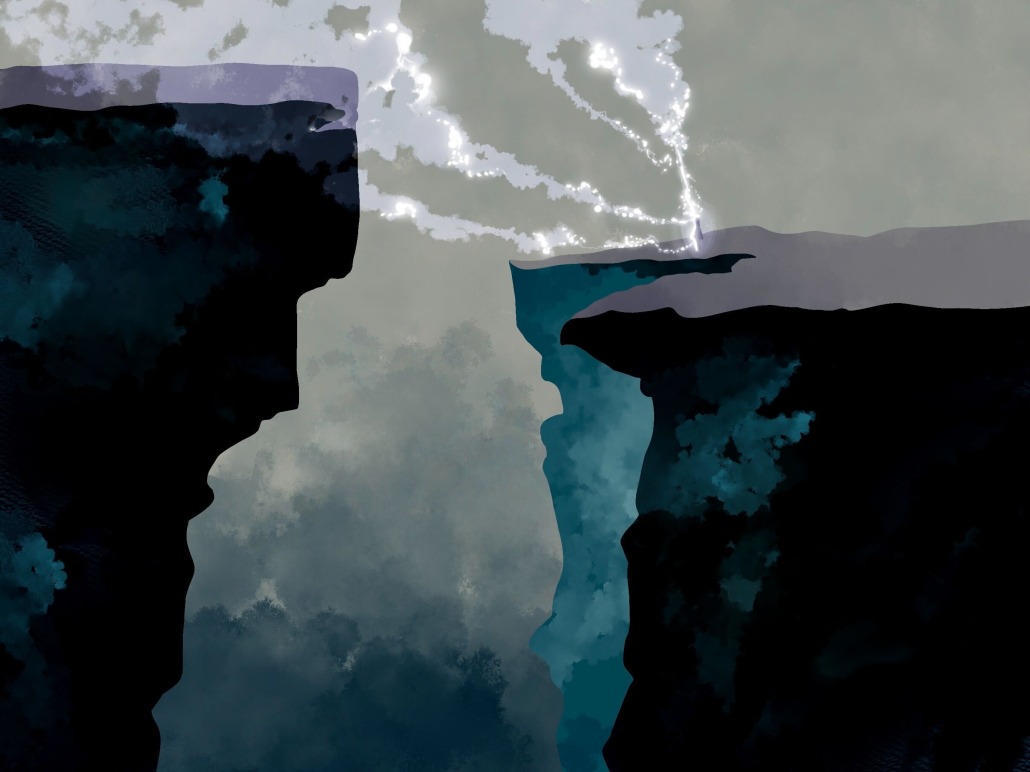
Sarah Bakewell puts it aptly in her book “At The Existentialist Café,” describing this anxiety as “not unlike the vertigo that comes from looking over a cliff. It is not the fear of falling so much as the fear you can’t trust yourself not to throw yourself off.”
College seniors know this well. My friends once described how, on the precipice of graduating, they were beginning to doubt everything they thought they had to be. Every plan that seemed like a given, every prescribed notion about their future, became suddenly up for question. Being free to do whatever you want to do comes with an unavoidable question: What do you want to do?
There is good and bad news. The bad news is that there is unfortunately no “right” answer. You can never be sure if the version of yourself you choose to become is your “truest,” most authentic version.
Before accepting this truth, my angst arising from my future’s uncertainty manifested as a paralyzing despair that I had to keep escaping. For example, I thought to myself, “If I want to be a social media influencer in five years, I will be glad that I posted more now, but if I decide that I want to enter the corporate world, I’ll be biting myself for creating an unprofessional digital footprint.”
Life is filled with decisions that potentially narrow your options in the future. In a state of ambiguity, the sense that each choice you make will destroy possibilities before they can even be realized can make navigating life akin to walking a minefield.
However, the bad news ends there, because the takeaway is really quite simple; if anxiety really is inescapable like Kierkegaard proposes, then we have one logical option: living anyway. Do, become, create — take steps into the dark. It is, in every sense, impossible to be certain about your life path, so it’s better to no longer think about the question, “What do I want to do?” in terms of destinations. Imagine it as a compass telling you what to do next, and set sail.
Kevin Gramling is a senior writing about his search for meaning amid the daily chaos of being a USC student. His column, “The (S)existentialist,” runs every other Monday.