Viterbi professor develops AI grading platform
The platform, Supaclass, follows rubrics to grade student assignments.
By APRIL MAO

The platform, Supaclass, follows rubrics to grade student assignments.
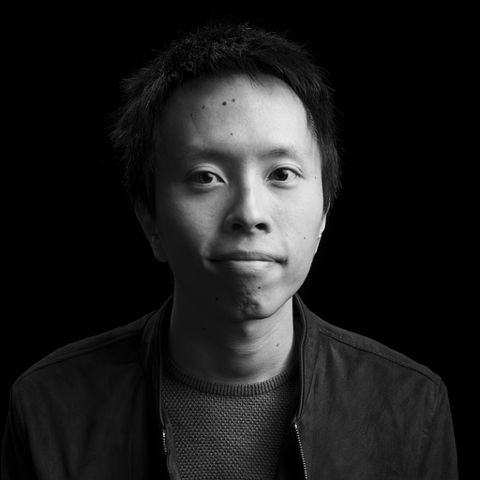
Bennett Lee, a part-time lecturer of technology and applied computing, typically took eight hours to grade midterms, which he said was common for USC professors. Now, thanks to Supaclass, an AI-powered grading platform he co-developed, Lee said he can grade the same stack of papers in one minute, which he called an “AI superpower” for educators.
“With all the AI technology and the timing of it, we think we can build some really incredible things to really disrupt the space and to build something for educators and to enrich the student learning experience,” Lee said.
Supaclass automatically generates a “grading draft” based on the grading rubric being fed into it. Tyler Watson, co-founder of Supaclass, said this will generate more teacher-student interaction.
“From our discussions with professors, the common pattern is that most of them seem to really enjoy the student interaction, the student engagement and connecting with students,” Watson said. “Grading a stack full of exams is not their favorite thing.”
After the AI gives a preliminary grade, professors should review and modify the generated result, Watson said.
Watson said the decrease in grading workload will allow educators to spend more time connecting individually with students. With this system, they can see which part of the class students are particularly struggling with, he said.
“It’s great to free up [teaching assistants] and professors to actually have more time to spend engaging with students in office hours and providing that kind of individualized mentorship,” Watson said.
Lee and Watson started building Supaclass in June 2024. The platform was used in Lee’s class at USC for two semesters. It has run through at least 800 assessments, Lee said.
Serena Li, a junior majoring in computer science as well as a learning assistant for Lee’s class, said the platform is helpful in the earlier stage of grading.
“The large language model [is] able to interpret the grading criteria and then go through all the student assignments and give a basic grade,” Li said. “That helps us in terms of giving an initial gauge of what [level the assignment is at] and gives us some pointers.”
Li said Supaclass being integrated into Brightspace would improve the system by making it a more “seamless experience for graders.”
The founders of Supaclass also recognized the controversy that revolves around the usage of AI in the grading process.
“I definitely do not see AI as a replacement for teachers or professors … It should free teachers up for higher value activities,” Watson said, “AI should be an accelerant or a partner with teachers to deliver personalized education in the classroom at scale.”
Walter said the platform is still in a development stage, with the founders attempting to spread the platform to more educators. They have interviewed 40 to 50 faculty members who are located outside of USC whether they would be willing to implement the platform in the course. This aims to spread the existence of this platform across California.
Watson said some people are “optimistic for what AI can do for the future,” while others could be “pessimistic on maybe negative impacts,” such as automation and job replacement.
“We’re starting with really thinking about assessments and how we make those richer, faster, more consistent, more accurate and better for students,” Watson said, “Overall, the focus we’re really interested in [is] how we improve student outcomes.”