‘A real blow’: Scholars lose federal humanities funding
National Endowment for the Humanities cuts have hit at least 11 USC projects.
By CHRISTINA CHKARBOUL
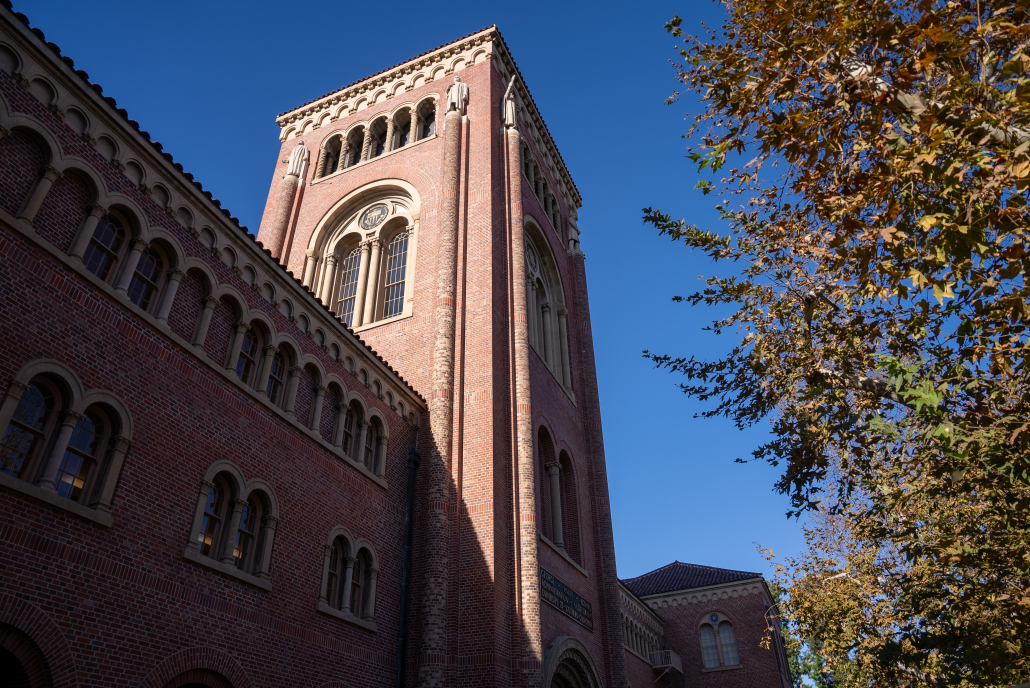

National Endowment for the Humanities cuts have hit at least 11 USC projects.
Receiving a grant from the National Endowment for the Humanities was a monumental, career-altering opportunity for Ginger Nolan, an assistant professor of architecture.
A $45,000 NEH grant gave Nolan the funding she needed to take time off from teaching and devote herself entirely to researching and writing a book for a year — something tenure-track faculty at the School of Architecture aren’t typically able to do, she said.
While most writing grants involve an in-person residency and relocation, Nolan said, the NEH funding would let her work on her manuscript without uprooting her life.
“I had specifically applied to the NEH, which is a very difficult grant to get, knowing my chances were slim,” Nolan said, “but knowing that it was one of the only grants out there that would allow me to just write without having to move across the country and abandon my family for a year.”
She planned to unpack the role Black insurance companies played in pushing back against segregation and providing Black Americans the opportunity to grow neighborhoods and generational wealth.
Nolan’s plans fell apart April 3, when she received an email from the NEH letting her know the grant she’d been awarded in late 2024 had been terminated “in light of the fact that the NEH is repurposing its funding allocations in a new direction in furtherance of [President Donald Trump’s] agenda.”
The Daily Trojan has confirmed at least 11 USC projects were hit by the Trump administration’s cuts to history and cultural programs as well as academic work funded by the NEH. At least 1,200 grants through the federal agency were canceled that day, The Washington Post reported, including those providing vital funding for state humanities councils, libraries, museums, individual scholars and more.
In a statement to the Daily Trojan Tuesday afternoon, the University didn’t provide a count of affected NEH-funded projects but recognized that terminations had affected “several awards in [USC’s] NEH portfolio.”
“We deeply empathize with the faculty impacted and want to express our utmost respect for their hard work and dedication,” the University wrote. “The humanities hold a significant place at our university, helping our community develop a deeper appreciation and understanding of the human experience.”
The NEH received $207 million from Congress in 2024, an amount Nolan described as a “rounding error” compared to annual budgets managed by other research-funding federal agencies like the National Science Foundation, which received $9 billion last year.
“This really is symptomatic of the Trump administration’s attack on intellectual life and academic freedoms,” Nolan said. “This is … simply motivated by the desire to suppress traditions of inquiry and questioning authority that are very much endemic to the humanities.”
Roughly 65% of the NEH’s staff and large swaths of the agency’s grant funding are the latest targets of Elon Musk’s Department of Government Efficiency, which has gutted federal departments in an effort to cut costs and weed out “waste, bloat, and insularity.”
Some of the cut NEH funding is slotted to be spent on a patriotic statuary park called the “Garden of American Heroes,” NEH acting chair Michael McDonald told members of the National Council on the Humanities April 9.
One USC-based project that lost its $300,000 NEH grant sought to memorialize a lost part of Los Angeles history. The Chinatown History Project, led by William Deverell, began several years ago as an effort to recover L.A.’s original Chinatown, which was established in the 19th century and eradicated in the 1930s to make way for Union Station.
The project, which involved dozens of researchers and community members over the years, created a historical exhibit at Union Station, hosted a podcast and was gearing up for an ambitious next phase: an augmented reality experience that would bring Chinatown’s history to life.
The significant NEH grant the project got in late 2024 would have supported technical development work through the School of Cinematic Arts. Without that funding, which had already been sent to a USC-managed account and must now be returned, the Chinatown History Project’s expansion is “dead in the water,” said Deverell, a professor of history, spatial sciences and environmental studies.
“Just having heard this news, at this moment, we stopped our work, and we don’t quite know how to rescue this project,” Deverell said.
The grant termination was “a real blow” for Deverell’s team and his project’s future. But he said he worries most about the cuts’ effect on his more junior colleagues counting on NEH funding to complete work that would help them rise through professional ranks, like achieving tenure.
“I hope that we can find ways around the country to assist the particularly vulnerable researchers,” Deverell said, “for whom these cuts are drastic.”