Virtual spaces deepen gender divides
We must reconceptualize identity beyond gender to foster shared belonging.
By ELEANOR XIE

We must reconceptualize identity beyond gender to foster shared belonging.
In the aftermath of President Donald Trump’s victory in the 2024 United States presidential election, a striking generational and gender divide in political preferences has become the subject of widespread academic and public discourse.
While listening to a recent The New York Times podcast analyzing these results, I encountered a particularly arresting statistic: Among voters under the age of 30, 18-year-old men were 23% more likely to support Trump than their women counterparts.
This gender gap — more than double the previous 10-point average historically observed in American politics — highlights a growing ideological chasm between young men and women that is contrary to the prior assumption that Generation Z would herald the end of Republican dominance.
New trends suggest that young voters may instead be ushering in a reinvigorated Republican movement, particularly among men.
“Young people have gone from being the most progressive generation since the baby boomers, and maybe even in some ways more so,” noted data scientist David Shor on the podcast, “to becoming potentially the most conservative generation that we’ve experienced in 50 to 60 years.”
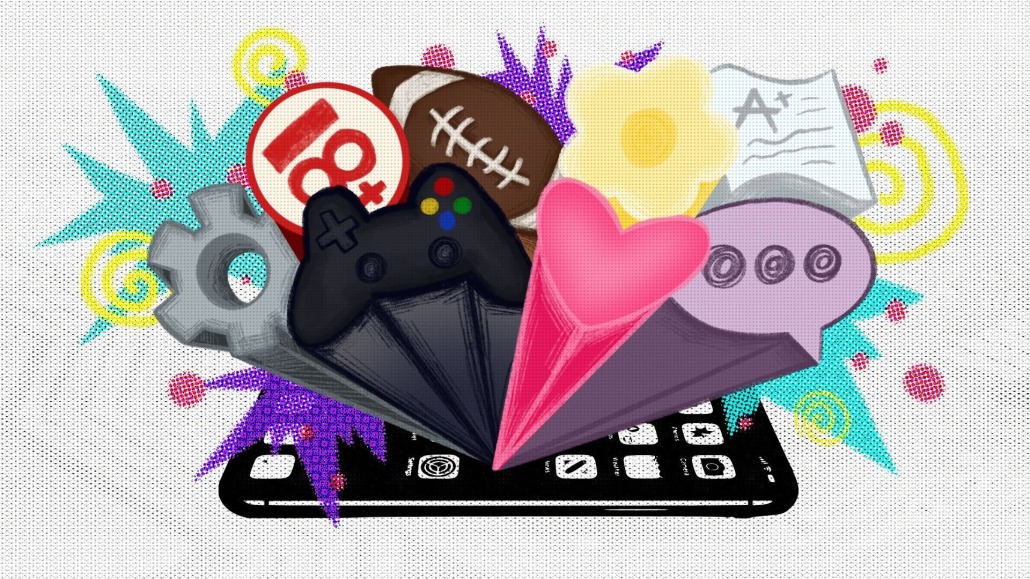
One of the most compelling explanations for this growing gender divide is the increasing ideological segregation of online spaces. Unlike physical environments, where mixed-gender engagement still occurs through education, work or socialization, the internet has become a site of deeply gendered consumption and interaction.
During the COVID-19 pandemic — a time that coincided with the peak of the #MeToo movement, the rise of the so-called “manosphere” and the perceived alienation of young men from a Democratic Party increasingly focused on women’s issues — online spaces solidified into highly polarized, gender-specific worlds.
A 2007 study noted that closing access gaps doesn’t eliminate gendered patterns of internet use, which often reinforce social divides. Moreover, researchers in 2000, after studying 843 U.S. college students, found men were significantly more active online than women for researching purchases, news, gaming and music. Bressers and Bergen’s research in 2002 further showed men more often engaged online related to games, finance, tech, politics and adult material.
These behavioral patterns, when scaled to a broader cultural level, result in a bifurcated media landscape. The New York Times commentator, Ezra Klein, summarized this divide effectively:
If you’re a 23-year-old man interested in the Ultimate Fighting Championship and politics, you’re being driven into a hypermasculine online world. Meanwhile, a 23-year-old woman might find herself surrounded by Brené Brown videos and content rooted in emotional literacy and self-care.
Algorithms reinforce these divisions, exposing users to increasingly homogenous and gender-aligned content, which over time cultivates distinct political identities and cultural worldviews.
Having lived both within and outside the U.S., I have seen that the digital gender divide is not uniquely American but rather globally mediated by cultural and ideological differences. Feminist movements, internet accessibility and gender norms vary across countries, resulting in nuanced forms of gender segregation online.
From my experience, ideologies rooted in second-wave feminism — which aim to dismantle patriarchal structures by rejecting traditionally feminine traits as socially constructed tools of oppression — coexist with postmodern feminist approaches that reclaim and revalue those same traits as valid and empowering expressions of identity.
Exposure to both waves of feminism has taught me how necessary it is to rethink manhood and womanhood by stepping outside of rigid gender categories. I would genuinely encourage people of all genders to step beyond the boundaries traditionally assigned to them and explore unfamiliar spaces — you might be surprised by what parts of yourself you discover there.
I’ve opened up a side of myself I hadn’t fully recognized before by exploring legal and political power structures, as well as engaging with combative sports and action adventure video games.
Some of these were interests I had held for a long time and had become somewhat familiar with, but I struggled to articulate or fully embrace them, partly because I had been intimidated by the perception that they belonged to male-dominated spaces. Others were newer to me, but over time, I developed a genuine connection with them and gradually came to feel a sense of belonging.
Expanding identity doesn’t require letting go of who we are; it means embracing more of ourselves while remaining open to change. I wish that when we talk about traits like insecurity, submissiveness or aggression, we could frame them as human struggles, not just as “girly” flaws or “manly” shortcomings. Because at the end of the day, we’re not fighting against each other — we’re all just trying to make sense of what it means to be human.