Student Health gives E. coli prevention tips
Influenza and coronavirus are “pretty much” gone at USC.
By ZACHARY WHALEN
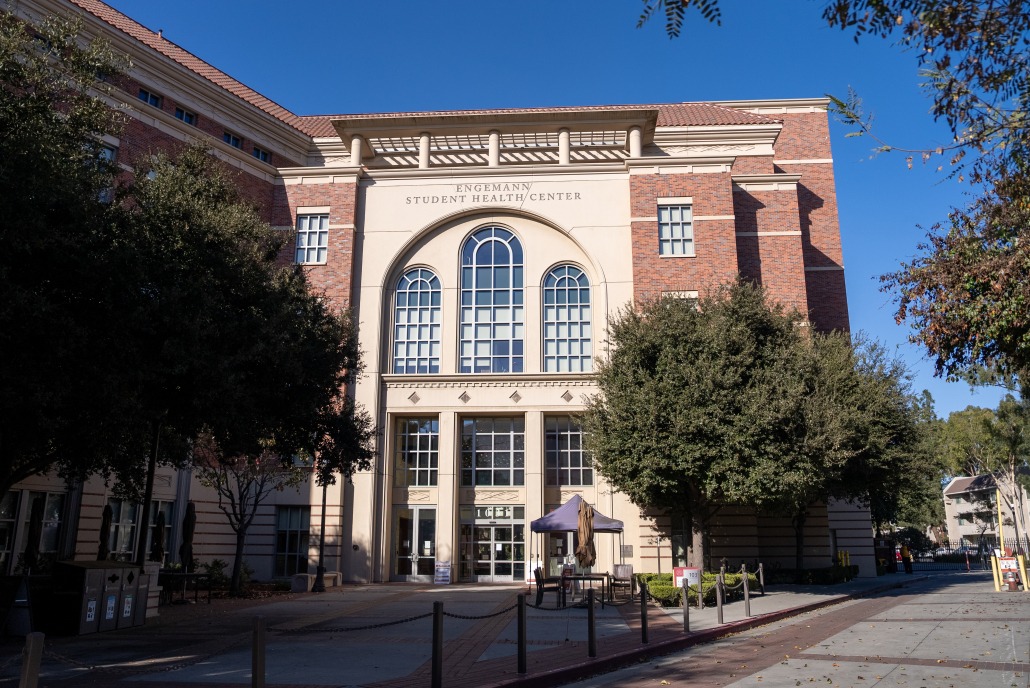

Influenza and coronavirus are “pretty much” gone at USC.
While students may be worried about an outbreak of “Coachella Cough” in the weeks following the music festival, Chief Campus Health Office Dr. Sarah Van Orman said in a briefing on Tuesday with campus media that the number of influenza A, influenza B and coronavirus cases on campus continue to decline.
“If people are experiencing respiratory symptoms, it’s more likely associated with what we think of as routine viruses,” Van Orman said. “Those tend to cause illnesses that are milder, where they’re not so severe that you seek medical attention, they just sort of linger.”
Gastrointestinal viruses such as norovirus, which spiked in March at USC, are also on the decline, Van Orman said. Student Health is seeing increased cases of students experiencing allergy symptoms, which Van Orman said was the root cause of many students lingering coughs and congestion.
NBC News reported April 17 that 15 states had experienced a previously unreported E. coli outbreak in November, leading to 89 hospitalizations. The report was based on internal documents obtained by NBC News, which stated that the Food and Drug Administration had chosen not to publicize any information about the outbreak upon their investigation’s completion.
Van Orman said while the majority of people who contract E. coli strains were “fine,” contracting the O157:H7 strain — the strain involved in the November outbreak — could result in life-threatening symptoms.
“E. coli O157:H7 can cause particularly severe disease, particularly among young people, children, elderly people,” Van Orman said. “It’s characterized by bloody diarrhea, and it can actually cause severe, in some cases, liver failure, heart [failure], kidney failure, so really, very systemic severe disease and sometimes even death.”
To prevent contracting E. coli, Van Orman advised students to wash their fresh produce — even salads labeled as “pre-washed” — and to ensure that any meat they consumed was cooked thoroughly.
“The risk is really with [undercooked] ground beef,” Van Orman said. “If we think about ground meats, where you might have surface contamination of the meat, and then you grind it up, so [the contamination is] through the whole meat. So ground meat should also always be cooked thoroughly.”
Van Orman said it’s easy for one contaminated farm to cause a national outbreak. She emphasized the importance of the FDA and the Center for Disease Control and Prevention’s surveillance in monitoring and controlling E. coli outbreaks.
“[The FDA and CDC] actually can look at genetic markers on the E. coli, and they can for all of these cases across the country, and they can tell they’re all related,” Van Orman said. “The importance of the FDA and the CDC, it’s hard to overstate in terms of tracking these sorts of things, especially when we look at the way that food is spread throughout our country.”