Celebrities will never be your friends
The frequent normalization of parasocial relationships with celebrities has to stop.
By ABIGAIL MANN

The frequent normalization of parasocial relationships with celebrities has to stop.
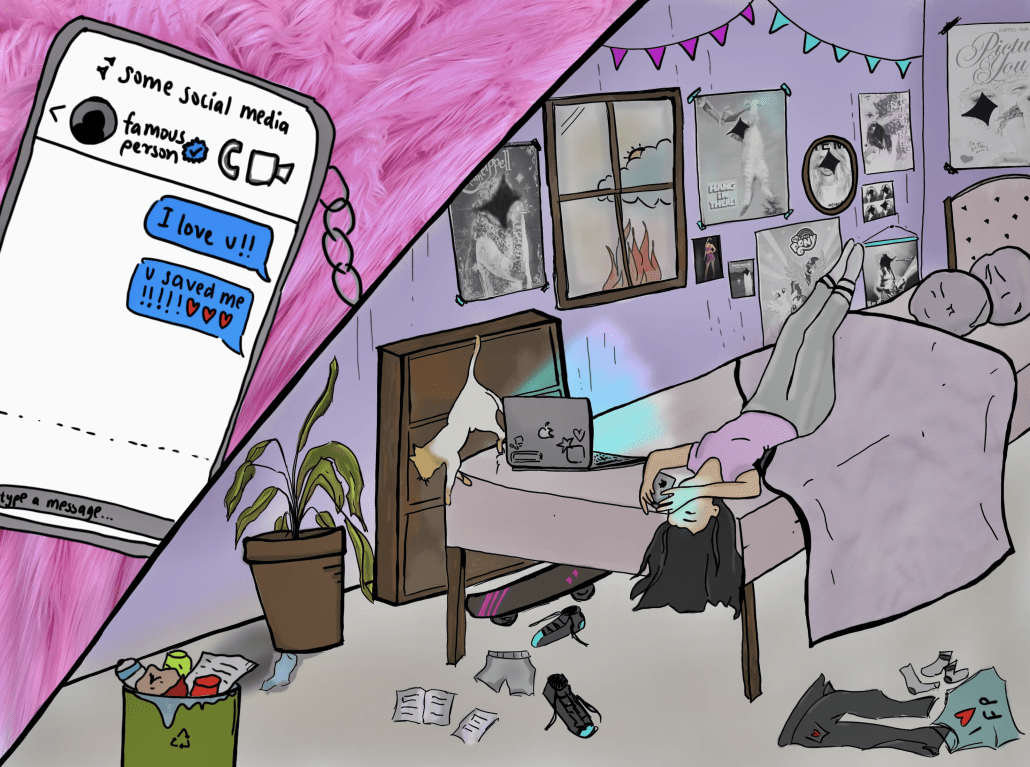
Whether driving through Los Angeles or scrolling through TikTok, it’s impossible to escape celebrity culture. From billboards over freeways to sightings on campus to Instagram stories dissected like personal diary entries, we treat celebrities as if we’re part of their inner circles. We know their houses, families, skincare routines and love lives. However, this perceived closeness could be toxic for both celebs and fans.
This phenomenon, known as parasocial relationships, has become so normalized that fans often confuse admiration with entitlement. For college students in the heart of Hollywood, that dynamic can feel especially natural, but it’s one we need to question before it replaces genuine community with one-sided delusion.
Parasocial relationships, as defined by the article “Parasocial relationships, social media, & well-being” in the journal Current Opinion in Psychology, are “nonreciprocal socio-emotional connections with media figures such as celebrities or influencers.”
Parasocial relationships with celebrities are nothing new: Think of the die-hard Beatles fangirls of the ’60s or the “groupies” of famous rock bands in the ’80s. However, in recent years, social media has pushed the popularity and intensity of parasocial relationships to another level.
The coronavirus pandemic had us constantly glued to our devices with little to no interpersonal interaction. We became increasingly dependent on the internet for a semblance of social normalcy, which caused us to gravitate toward online fandoms and forums.
In a 2022 Thriveworks study, roughly half of Americans showed signs of likely having been engaged in parasocial relationships. The study also found that a fifth of Americans have experienced genuine bereavement after a celebrity’s death, and 7% said they have “mentally suffered” when a celebrity didn’t respond to them on social media.
A false sense of interdependence can harm one’s real-world relationships. Another 2022 study published in Journal of Business Research found that individuals with strong parasocial relationships with celebrities may be less satisfied with their romantic relationships and less motivated to maintain real-life connections.
This disconnect reveals the core issue with parasocial bonds: They provide the illusion of intimacy without the grounding of reciprocity. When fans invest deeply in celebrities, they often displace time and energy that could strengthen their real-life support systems. Over time, this can create unrealistic expectations of friendship, vulnerability and access from people who will never actually know them.
The consequences extend beyond individual loneliness. Societally, parasocial attachments fuel invasive behavior because fans feel entitled to personal details about a celebrity’s relationships, health or whereabouts. The constant appetite for information feeds gossip blogs, paparazzi culture and endless online discourse, reinforcing a cycle where celebrities are expected to live under constant public scrutiny.
Social media accelerates this by lowering the barrier between the famous and non-famous, letting fans believe their tweets, comments or DMs are part of a reciprocal relationship when they are not.
The frenzy surrounding Taylor Swift’s recent announcement of her engagement to Travis Kelce on Aug. 26 is a prime example of how parasocial relationships can create emotional dependency: Millions of fans began dissecting photos, speculating about the proposal’s details and treating the private moment as public property.
Their journey from Swift’s first Kansas City Chiefs game appearance to the highly publicized proposal unfolded in an atmosphere where fans felt entitled to every detail, from her engagement ring to private celebrations. The announcement shattered Instagram records with over 30 million likes in 24 hours, highlighting how deeply fans invest emotionally in the lives of celebrities.
Several celebrities have come out against parasocial relationships. Chappell Roan made headlines when setting clear boundaries with her fanbase, urging them to recognize that admiration for a person’s art is not an invitation to invade their privacy. She has called out “creepy behavior” and said she “might quit” the music industry if said behavior continues.
Critics, including the pop culture commentary podcast “The Perez Hilton Podcast with Chris Booker,” have labeled Roan a “sourpuss,” but her comments do not devalue genuine support — Roan’s warnings are only aimed at fans who display transgressive fan etiquette and are unable to let artists have private lives outside of their stage lives and art.