Find your community within pages, not pixels
Social media forces teens of color into a mold; literature liberates them to be seen.
By ANAHITA SAXENA
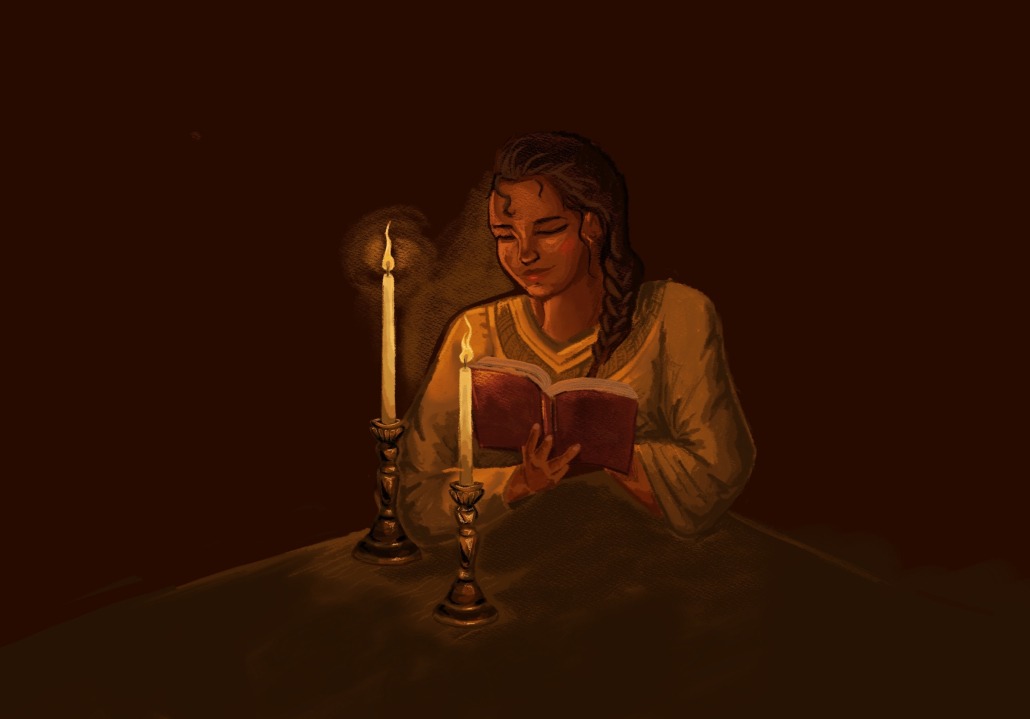

Social media forces teens of color into a mold; literature liberates them to be seen.
The teenage quest to find yourself has never been easy.
As teens of color, not only are we trying to claim our identity alone but we are surrounded by a nation that has decided who we are for us. This suffocating pressure to find yourself despite being already spoken for becomes isolating — it can seem like everyone around you has themselves figured out, and it can seem like you’re stuck in a self you don’t know yet.
The groundbreaking American author James Baldwin once wrote, “You think your pain and your heartbreak are unprecedented in the history of the world, but then you read.”
A Black, gay man who grew up as the son of a Baptist preacher in Harlem, Baldwin knew the grueling journey of finding identity in a country and world that found his very existence distasteful. Yet, he never succumbed to anyone else’s decision for who he should be: he found it, and passed that truth to his readers.
We live in a digital age where identity is tied to social media consumption. According to the Pew Research Center, more than 90% of teenagers aged 13 to 17 are active on social media, and a third report that they use social media “almost constantly.” Social media boils down to a culture of comparison and assimilation — peers and influencers curate a lifestyle so polished it feels impossible not to measure ourselves against it.
Teenagers have always placed insurmountable importance on the validation of their peers. However, when it is not just the people in their day-to-day lives, but an entire online community, the stakes are higher.
Demetra Dias, a white-passing, 18-year-old girl with 4.5 million followers on TikTok and 1.2 million followers on Instagram, has gone viral for having a look and a life that commenters obsess over. She is repeatedly asked what her workout routine is, told how she is “so perfect” and so on. From lake trips with friends to clothing hauls for sorority rush, she embodies an ideal many cannot afford or fit into.
Due to a phenomenon known as the “stereotype threat” — where people perform in accordance with the stereotypical expectations laid out for them — teens of color are pushed even further away from finding strong self-identity. It doesn’t help that roughly three-quarters of Black and Hispanic teens use TikTok, in comparison to just over half of their white counterparts, as found by a 2024 Pew Research Center report.
In a moment of disillusioned self-perception and trust in Baldwin’s words, I found a book that seemed like it would know me. I was 15 when I first read “Interpreter of Maladies” by Jhumpa Lahiri, a collection of short stories about Indian Americans caught between two worlds. I peeled through the pages like a devotee on a pilgrimage. For the first time, a book made me cry. For the first time, I saw myself on the page.
I once was served shorba at a family friend’s home as an appetizer before the heavier dinner. It was handed to me in a clay cup — a kulhad — that shatters when thrown against a brick wall, the way I’d been shown to do at a chai stall on a trip to India. My parents and their friends spoke of times they drank shorba at cold hill stations and on street corners in bustling markets in the wintertime. I was transported within their stories to an India I never truly knew.
The first story in “Interpreter of Maladies” is “A Temporary Matter.” Shoba and Shukumar have fallen out of love. My 15-year-old self was long from experiencing love — forget falling out of it — yet I mourned with them “for the things they now knew.”
But when I read the opening story for the first time, and every time since, my eyes misplace an “r,” and Shoba and shorba become interchangeable. Reading the story, I almost taste the soup. The writing, and the shorba, are deeply comforting yet biting, not horribly painful until the realizations sink in: Shoba and Shukumar will never truly love each other again, and I’ll never truly know my home country.
“Interpreter of Maladies” repaired the damage of the shorba. The book taught me the romantic India I longed for lived within me; I knew the flavors of the meals they ate and the thrill of power outages in India. In that book, I found my Indianness to be enough. Lahiri’s writing, and literature itself, taught me that great storytelling is when the rawest human moments are written with overwhelming care. She taught me that my parents’ stories are mine, and my stories are theirs.
I am sure I am not the first person to have told you to put down your phone and pick up a book; I’m also tired of hearing that. But for kids of color, our journey is a lot harder, and to truly find identity, we must also find community. Books remind us that identity can be claimed, not imposed. Community doesn’t have to be a packed room of people whose parents speak the same language as yours — it can just be a book you read on the way to school in the morning.