How does USG impact students at USC?
What initiatives has USG lead in the past, and what goals is it working toward?
By AIDEN PAVON

What initiatives has USG lead in the past, and what goals is it working toward?
With a budget of $2.5 million, the Undergraduate Student Government — funded by a mandatory $64 student programming fee — funds recognized student organizations and communicates with University administration to improve student life. Despite this, many students don’t know what USG does. The Daily Trojan looked at how USG operates.
According to the USG website, the organization aims to make the student experience better by advocating for students in front of administrators and other campus partners, as well as creating legislation and directing projects to improve student life.
USG has three branches: executive, legislative and judicial. It also includes four departments: advocacy, communications, funding and programming.
In the past, USG has advocated for projects like the shuttle to and from Los Angeles International Airport during breaks and fall recess. It also funds events, like the annual Welcome Back concert, which featured rapper JID this year, and a SpringFest concert in the spring semester.
The executive branch oversees the USG body and consists of eight members: the president; vice president; chief of staff; speaker of the senate; and the chief financial, programming, communications and diversity officers.
USG vice president Emma Fallon said the executive branch is focused on boosting school pride and fostering accountability and communication this year.
“For me and [USG president Mikaela Bautista], we mainly focused on in our campaign spirit, accountability and transparency. But we also are really focused right now on being visible to the student body, working for the student body,” Fallon said.
This branch is the most front-facing because it works as a liaison with University administration to advocate for policies to improve the undergraduate student experience.
The USG president and vice president are also responsible for determining the initial allocation of USG’s nearly $2.5 million budget, which is approved by the USG senate. The 2025-26 budget proposed by Bautista and Fallon and passed by the senate on April 15 included a roughly 12% cut in funding for programming assemblies within USG.
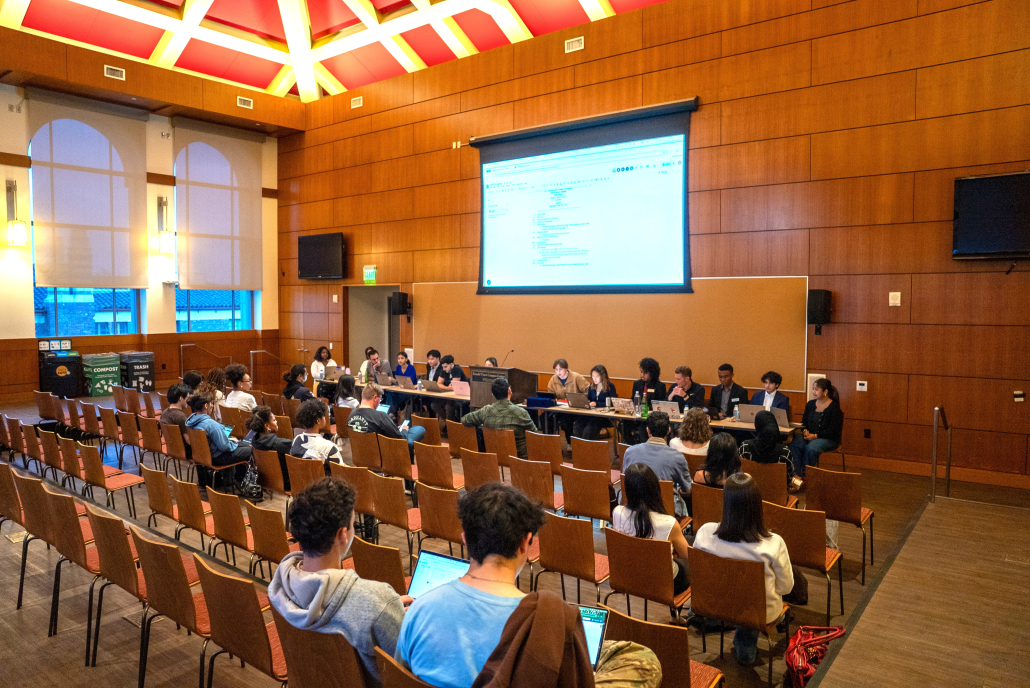
The senate, which meets every Tuesday, funds projects, promotes policies for student life and advocates for student concerns to administrators.
Fallon, speaker of the senate Jeremiah Boisrond and chief diversity officer Yasmeen ElFarra lead the legislative branch. They oversee the projects that senators work on and create some of their own. Students can find USG’s projects on its website.
Current projects include a textbook donation drive, a guide for accessible restaurants and businesses via the L.A. Metro, and a community newsletter that contains news about the USC and South Central community.
Last year’s senate recognized Jewish American Heritage Month in May, honored firefighters after January’s wildfires, worked to create accessible seating in Leavey Library and funded a wellness week event. The senate also proposed several projects that never came to fruition, including an ongoing effort to secure Waymo discounts for students and bringing Raising Cane’s to campus.
USG is also currently hosting its special elections for a vacant senate seat. The USG Instagram account posted all nine candidates’ platforms on Friday. Voting will open Wednesday for undergraduate students.
The judicial branch consists of the judicial council, which includes the chief justice and four associate justices. Its main priority is to oversee elections and moderate conduct within USG.
“We have [the] judicial [branch], which runs our elections and makes sure that everything in USG is fair — even their main priority is elections. But we refer to them a lot for our constitution, our bylaws and things like that,” Fallon said.
In the 2024-25 academic year, the judicial council heard nine cases — eight related to alleged election code violations and one related to officer conduct. The council has the power to apply sanctions to or eliminate candidates from elections. It removed candidates twice in the 2024-25 year.
On the USG website, the branch provides codes and policies, including the elections code, governing document violation code and personnel/disciplinary/impeachment code. It also includes complaint forms for each code.
Within USG are four departments: advocacy, communications, funding and programming.
The advocacy department keeps contact with both administrators and students to stay informed on issues affecting the student body. It includes liaisons with student assemblies, such as the Asian Pacific American Student Assembly and the Black Student Assembly, among others.
The communications department works as the primary group in charge of all of USG’s communications.
On its website, the department lists three goals it’s working on this year: creating more evergreen content, growing USG’s audience and increasing campus participation. The department coordinates USG’s social media and press releases.
The funding department distributes funding to recognized student organizations. Student organizations are able to submit applications to have events, projects or performances funded. Each organization is eligible to have up to four events funded if the total price is under $8,000 per year.
The department has four budgets to allocate funding toward: a professional and academic fund for funding events that push for career or academic development; a philanthropy fund for hosting community service projects; a social and recreation/startup fund for community-building events; and a performing and visual arts fund for hosting events that celebrate art and community.
Fall 2025 funding applications open Wednesday, according to the USG website. The department previously awarded $356,100 in the 2024-25 year. It exhausted funding in three categories by February 2025. During the summer, USG implemented reforms meant to create transparency in its funding guidelines.
The programming department focuses on helping student organizations coordinate activities. The department consists of programming assemblies, which work on promoting diversity and education on campus, and is considered an umbrella organization for many of the student organizations on campus.