USC weighs carbon offsets and sustainability progress amid budget constraints
The University is assessing whether it successfully met its goal to reduce certain carbon emissions by fiscal year 2025.
By FEIYU LONG
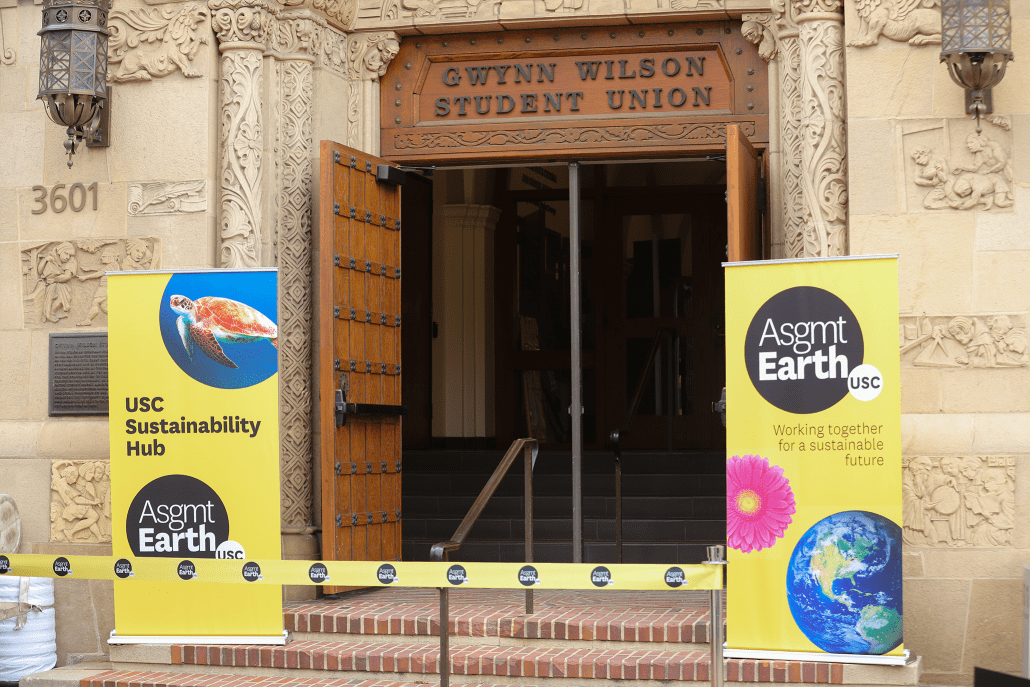

The University is assessing whether it successfully met its goal to reduce certain carbon emissions by fiscal year 2025.
The University is working to confirm whether it met its goal to reduce certain carbon emissions in the fiscal year that ended this June, Chief Sustainability Officer Mick Dalrymple told the Daily Trojan. He said carbon offsets may play a significant role in meeting the fiscal year 2025 goals as the University balances sustainability with financial constraints.
The University aimed to achieve climate neutrality for scope one and two emissions and offset remaining embodied carbon for construction projects in the 2025 fiscal year. Scope one and two emissions include direct greenhouse gas emissions and indirect energy purchases that lead to greenhouse gas emissions.
However, it typically takes six to eight months to calculate the relevant emissions data to confirm whether climate neutrality has been achieved. The initiative is part of USC’s Assignment: Earth Sustainability Framework, unveiled in 2022.
Carbon offsets are purchasable certificates that fund emission reduction activities elsewhere. The practice has been deemed controversial because it allows institutions to avoid cutting their emission directly, barring structural improvements in sustainability.
Dalrymple said the decision to use them comes down to cost and trade-offs. He said the University’s assessments have shown that converting its energy consumption system to be more sustainable would incur a significantly larger cost than purchasing carbon offsets.
“My philosophy is the planet doesn’t care where the carbon savings come from,” he said.
He said the University has made progress, cutting emissions in half in fiscal year 2024 compared to its 2014 baseline.
“Hopefully we’ll pass 50% [reduction in scope one and two emissions] because we continue to do energy efficiency work,” Dalrymple said.
The reduction came largely through implementing LED retrofits and reaching a 55% drop in electricity-related emissions through energy purchased from the Los Angeles Department of Water and Power, along with a separate renewable energy deal struck with the utility.
Scope three emissions, which include air travel, are another area of ongoing work. Dalrymple said air travel now accounts for about 35% of USC’s total emissions, making it the top source of the University’s emissions. The University is committed to a 50% reduction in scope three emissions by fiscal year 2028 as part of Assignment: Earth Sustainability Framework, using 2014 as a baseline.
Dalrymple said academic conferences and research collaborations make cutting flights difficult, but student workers and a collaboration with one of Price School of Public Policy’s classes aim to develop strategies to deal with the situation.
On the student side, representatives from the Environmental Students Assembly said the University is being transparent in advancing sustainability goals across campus.
Mia Moore-Walker, ESA’s advocacy liaison, said the University offers many avenues for communication in its sustainability efforts.
“The fact that we have a direct line to admin and direct communication for any change that we want to see or communication that we want to have about sustainability, is something that’s very, very useful,” Moore-Walker said.
Jon-Marc Burgess, co-executive director of ESA, said the student organization’s presence on the University’s Presidential Working Group on Sustainability has given them a considerable voice within the administration. He also said the student-authored sustainability bills that ESA presented to the Undergraduate Student Government have received active follow-up from administrators, rather than being symbolic.
USG passed several bills focused on sustainability, including letters to administrators advocating for fossil fuel reduction and sustainable boilers, which Dalrymple said was “impressive.” He said ESA is a great partner.
“As a former student activist, I love to see that stuff,” Dalrymple said.
Both administrators and students addressed the University’s fiscal challenges, with USC ending fiscal year 2025 with an operating deficit of more than $200 million. On the administrative side, Dalrymple said the Sustainability Hub has been a priority of the University despite cuts in operating money. He said the Sustainability Hub’s staffing situation is not impacted.
Moore-Walker said ESA is at a “standstill” as it awaits new University policies. She also stressed the importance of continuing collaborative progress. Burgess said that ESA continues to collaborate with USG and other assemblies to adapt to the budget cut the assembly received.
“Even though we receive budget cuts, the USG has our best interest at heart,” Burgess said.
Looking ahead, ESA leaders pointed to projects such as the annual Veg Fest this November, which invites students to explore vegan and vegetarian food options.
Meanwhile, Dalrymple said the University Committee on Curriculum is looking at a proposal to incorporate sustainability-integrated courses into the University’s graduation requirements. If approved, students would not need to take a separate class but would complete at least one course with integrated sustainability content.