Meet the USG special election candidates
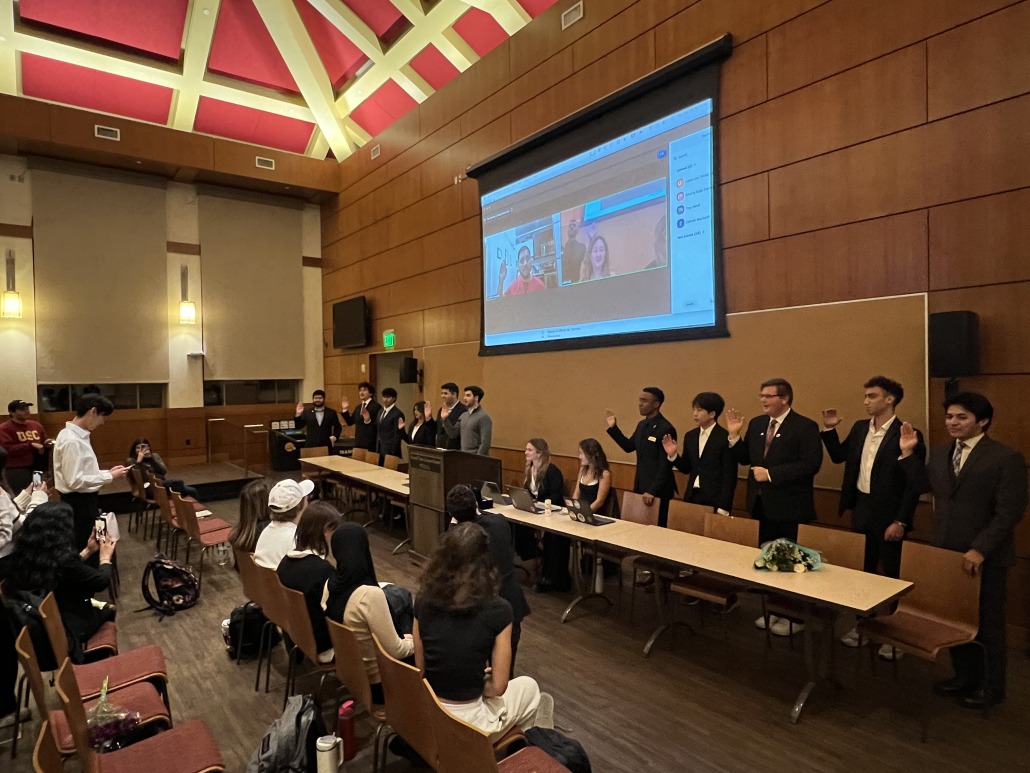
The voting period for the nine candidates running is from Sept. 10 through 12.
By BEATRICE CALALANG

The voting period for the nine candidates running is from Sept. 10 through 12.
Nine candidates are running for a vacant senate position after the sudden resignation of former senator Dakota Driemeyer on Aug. 18. Voting will take place from Wednesday through Friday, and each candidate submitted their vision of USC if elected.
The platforms centered around themes of accessibility, student engagement and transparency. Several candidates proposed projects that have been mainstays in USG elections, such as adding EBT to campus restaurants as well as implementing a mobile wallet-friendly USC ID. Others suggested projects that overlap with existing initiatives, such as extending library hours and adding more hours to the free Lyft program. The Daily Trojan summarized each candidate’s personal statement and platform.
Raquel Bell, a sophomore majoring in American studies and ethnicity, centered her platform on academic transparency, student well-being, sustainability and inclusion.
Bell proposed creating a centralized syllabus bank beginning with general education courses and expanding free textbook access through Leavey Library. She also supported negotiating more affordable digital bundles and increasing annual printing credits.
To improve student life, Bell’s platform proposed expanding counseling drop-in hours, bringing therapy dogs to campus and establishing peer mentorship programs through USC’s cultural centers.
“My goal as Senator is simple yet powerful: to serve the USC undergraduate student body and write effective legislation that creates lasting, positive change,” Bell wrote in her statement. “I want to ensure that every student – regardless of background, identity or circumstance – can thrive.”
Kaiden Garcia, a junior majoring in legal studies, summed up her platform with the acronym “T.R.U.E.,” which focuses on ensuring transparency, expanding resources and advancing equity.
As a former senate communications aide, Garcia wrote that she worked with senators to keep students informed about legislation and what happens at USG meetings.
Garcia also proposed creating affordable parking passes, expanding need-based scholarships and simplifying the scholarship application process to make it more accessible for low and middle-income students.
Her platform also included increasing women’s representation in USG.
“With only one woman currently in the Senate, it’s time to make leadership more reflective of the student body,” Garcia wrote in her platform.
Zachary Garcia, a senior majoring in political science, broke down his mission in three words: “Affordable, Accessible, Accountable.”
He proposed that he wants to coordinate with organizations such as USC Student Basic Needs and Trojan Shelter.
Garcia has previously served as a senator and committee chair for accessibility at Pepperdine University, according to his platform.
“Whether it’s addressing housing or parking in an already pricey city, or finding ways to combat food insecurity, I’ll always have my ear extended to the voice of our student body,” Garcia wrote in his candidate statement.
Benjamin Graham, a sophomore majoring in philosophy, politics and law, wrote that he is passionate about making USC a place where students are supported and connected both inside and outside the classroom.
Graham wrote that one of his top priorities is expanding safety and health programs across campus. He also wrote that he wants to make naloxone free and accessible, and partner with student organizations and sororities to address drink spiking and overdoses.
He proposed having more events co-created with South Central artists, leaders and organizations, which he hopes will break down the “‘walled campus’ divide.” He also proposed offering free- or reduced-tuition night classes on core topics to ensure that USC’s resources benefit the community surrounding it.
“I will fight for transparency, drug and mental health safety, stronger ties with South Central, and everyday wins that make student life easier,” Graham wrote in his statement.
Noa Foruzanfar, a freshman majoring in Middle East studies and real estate development, wrote that she is focused on uplifting student voices and fostering community.
Her campaign is centered around pushing for more affordable USC housing options and hosting open forums and roundtables between administration and students. She also proposed creating an open dialogue between students and administration.
“These conversations will bridge the gap between administration and students, creating productive dialogue where concerns from housing to academic policies are heard and addressed,” she wrote in her platform.
Foruzanfar also wrote that past student government experience before attending USC and experiences as a daughter of Iranian immigrants influenced her decision to run for senator.
“I’m committed to practical solutions that matter to ALL Trojans,” she wrote. “As your senator, I will work to ensure that every Trojan feels supported, represented, and empowered to thrive.”
Landon Lagesen, a sophomore majoring in business administration, focused his campaign on student life, dining and affordability.
Lagesen wrote that he wants to improve campus-wide Wi-Fi and to increase access to fitness facilities. He also proposed adding more bike racks and clearer markings for bike and scooter lanes.
When it comes to dining, Lagesen wrote that he wants to extend TCC restaurant hours and add menu items that cater to dietary restrictions. He also proposed developing cultural dining nights.
He advocated for financial transparency in USC’s funding allocation and a fund that would help students attend football games who can’t afford tickets. He also supported a change to allow unused rollover dining dollars into the following year.
“I want to get the most out of USC as possible, and I’m willing to work hard to get that for you,” Lagesen wrote in his statement. “If elected, you can expect that I will do all I can to get us the best experience USC can give.”
Brian Long, a sophomore majoring in political economy, divided his platform into two general categories: community outreach programs and general betterment programs.
Long’s outreach proposals include mandatory “meet-the-people” sessions for senators, relocating the USG debate to Trousdale Parkway near Tommy Trojan to increase student participation and setting up physical suggestion boxes across campus.
Regarding campus life, Long wrote that he wants to establish free hygiene supply stations, organize housing fairs for on- and off-campus USC housing and collaborate with student organizations for academic materials to lower costs. He also proposed diversifying dining hall menus and reducing food waste.
“No matter is it the individual students, USG, or the USC community at-large, there is so much more that could be done to make our lives better, and smoother,” Long wrote in his statement. “My proposed policies focus on the betterment of USG as an organization, so it may have more functions, carry more duties, and be more supportive to all of us.”
Troy Nevil, a junior majoring in political science, focused his platform on community engagement, increasing transparency at USG and affordability.
Nevil’s affordability plans included reinstating the Academic Achievement Award scholarship, expanding access to syllabi before registration and allowing unused meal swipes to be donated to food-insecure students. He also proposed extending hours at recreation spaces and creating new pickleball courts and a recreational pool.
As last year’s sustainability and campus infrastructure committee chair and a former USG general member, Nevil wrote that he has seen the positive impact of real and tangible change.
“I am running for USG Senate to be your number-one advocate,” Nevil wrote in his platform. “I’ve seen how powerful student government can be when it directly addresses student needs.”
Eric Ye’s platform called for his “Four A’s: Affordability, Access, Acceleration, Accountability.” Ye, a junior majoring in business administration, proposed launching a financial aid advisory committee that would consist of students, faculty and administration to improve transparency and make the financial aid process faster.
On Acceleration, Ye proposed creating a program that would build a network of alumni investors to mentor and fund student ventures. Ye’s platform also includes letting students vote directly on a portion of USG funds each semester and having “seat advisors” from every USC school report to the senate each month.
“As senator, I will bring a problem-solving mindset, foster dialogue across diverse groups, and ensure that USC’s student government reflects the needs and ambitions of all Trojans,” Ye wrote in his candidate statement.