Multigenerational wisdom can alleviate stress
Long division and sitting with my ammu taught me resilience and adaptability.
By ANAHITA SAXENA
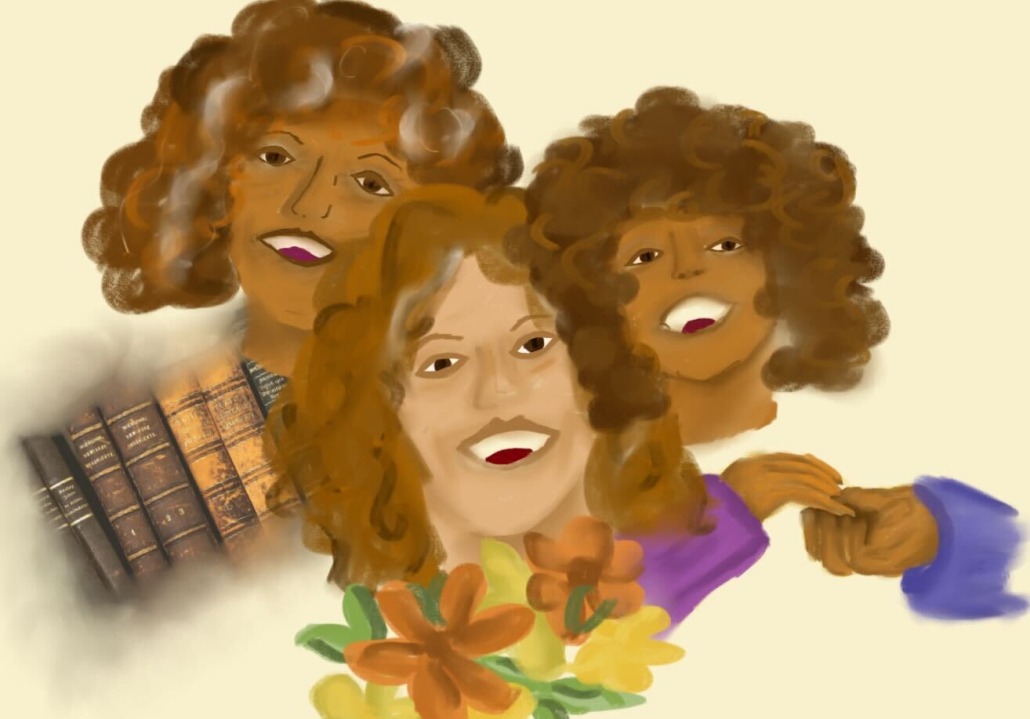

Long division and sitting with my ammu taught me resilience and adaptability.
Content warning: This article contains references to gun violence.
This summer, I spent my mornings teaching 11-year-olds struggling in the New York City public school system about long division and Muhammad Ali’s activism. I returned home at 2 p.m. just in time for lunch with my 84-year-old ammu, my paternal grandmother, who stayed with us over the summer, 7,000 miles away from her home in New Delhi.
My mornings were full of epic playground battles and heated grammatical arguments. My afternoons were much slower — my ammu’s failing memory resulted in the same conversation happening almost daily and I’ve likely explained the Flex 120 meal plan at least 50 times.
But with the right amount of prying, I uncovered which memories stuck with a woman who has most of her life behind her. Her son’s college acceptance, her husband’s stubborn negligence of her musical career, her father’s poker nights taking him away from Diwali celebrations at home.
I spent my money on bagels for students whose parents couldn’t afford to prepare them lunches, and red nail polish for my ammu, who spent her life pampering others and was never pampered. As the days went on, my anxiety over my course load for the upcoming semester and getting my driver’s license — which never happened — diminished.
College students face numerous stressors. The instability of college, managing finances, new living arrangements and the insurmountable terror of deciding what you’re going to be when you grow up, are only a few of them. One in five college students report feeling stressed all or most of the time.
We live in an environment where we spend an overwhelming majority of our time with people our age. Our stress resounds in this space; it is collective and it is deafening. Nearly half of college students report symptoms of anxiety and depression, and more than half have had suicidal thoughts. These numbers are unacceptable. This should be the most hopeful time of our lives, so why do many of us feel stuck in our own brains?
We are stuck in our space. In “Resilience: 10 Habits To Thrive In Work And Life” by Jo Owens, he presents the key to resiliency: An internal locus of control. You must believe that you are in control of your destiny. You aren’t the victim of fate.
It didn’t take reading a book for me to learn this, though — it was a month of biweekly meetings with one of my students struggling in math. Unlike the tears I shed when I struggled with worksheets, he’d shut off entirely. He pretended he didn’t care, disrupted class and didn’t attempt assignments. His apathy wasn’t novel to me. I’d seen it in my own friends, and in myself, nearly a decade older than him. A hopelessness that led to deprioritizing the hard things.
I tried everything to incentivize him to work harder at the problems: candy if he tried, no recess if he didn’t and distracted his classmates. After weeks of mutual frustration, I gave up on math, and spent one session talking. I learned about his favorite soccer team, his intense respect for his mother and his insecurities in his academic abilities.
In our next meeting, he was all ears, pencil and paper out. He passed his cumulative exam. He taught me that sometimes all it takes is showing someone that you care about them, holistically.
News travels fast in college. I watched Charlie Kirk die on my friend’s computer during my “Fixing American Democracy” class, admittedly ironic. Minutes after, every group chat was exploding over the news. The same moments matter, our insular communities recirculate and regurgitate the same talking points, quotes and opinions. We’re desensitized and overexposed to everything.
My ammu spent her days looking out of the window, watching cars pass by on the West Side Highway and boats float down the Hudson River. I would sit with her, silently observing the view I’ve had for years. Watching her eyes, I saw her reminisce about stories I’ll never know. Instead of forcing her to wear her hearing aid and talk to me as I often did, I practiced just sitting with her.
The ongoing news cycle is roaring, overwhelming and all-consuming. Ammu taught me to sit, breathe and just watch the world keep spinning, day after day.
I highly encourage us, as stressed, politically disappointed college students, to spend time with those older and younger than us. A third of South Central’s population is under 19 years old, and the neighborhood’s income is a staggering $19,492 per capita — two-fifths of the Californian average. Thirty-seven percent of the senior population in Los Angeles County doesn’t have enough income to meet its basic needs.
We have the resources to get involved, to provide support and to learn from others. From the Neighborhood Academic Initiative, a college access and success program for students from low-income housing run by USC Educational Partnerships; the USC Emeriti Center, an organization serving the University’s retirees and pre-retirees in living healthy and purposeful lives; and the Midnight Mission, a comprehensive homeless shelter and service provider.
There are more than enough programs and places that are accessible to USC students to learn how to listen, sit, breathe and believe.