The (im)possibility of intercultural communities
Intercultural exchange at USC is few and far between, but we can create more.
By FRANCISCO ESPINOZA MIRANDA
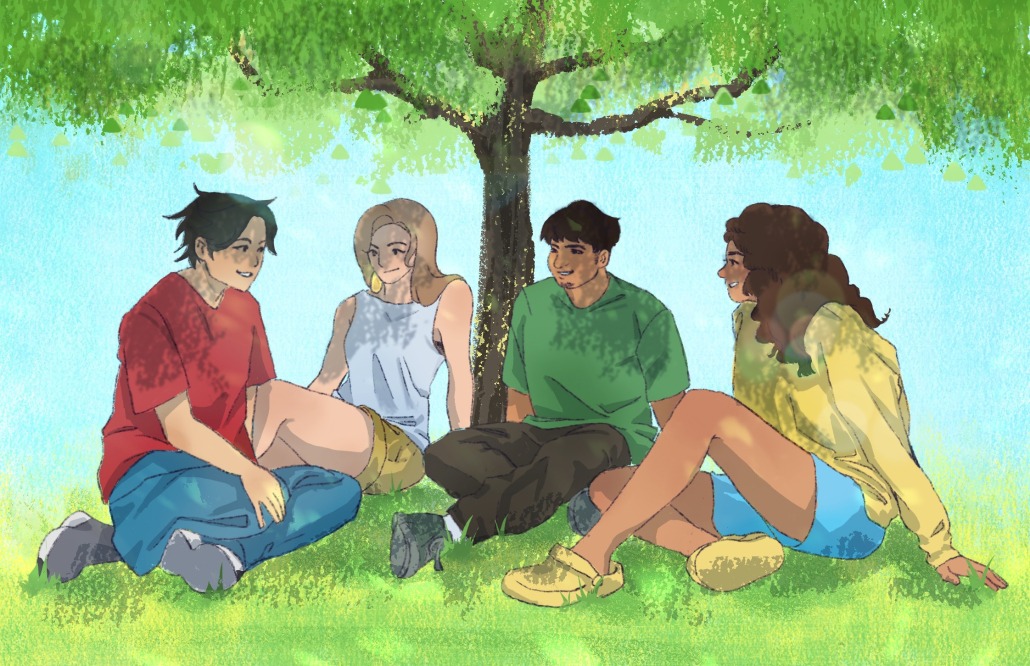

Intercultural exchange at USC is few and far between, but we can create more.
I’m from National City, California: where shades of brown intermix; where we’ve picked up certain rhythms and tastes from the Black, Mexican and Filipino members of our community; and we’ve become familiar with cultures of places we’ll probably never see.
Through this upbringing, I’ve felt my community’s pain, and they’ve understood mine. As I’ve grown, I’ve come to understand the importance of our intercultural exchange, soldering us together as a community with differences that share the same plight.
I carried this mindset with me when I arrived at USC in 2023. I wanted to create a space for myself that reminded me of home and shifted my ideas of what this formerly predominantly white institution could mean for me. But now, as a senior, I’ve come to realize this fantasy never came true. That dream was out of reach.
USC has done the bare minimum by creating physical spaces for different cultures to inhabit, as seen in the Wilson Student Union’s divided layout. Although I praise the cultural centers for creating places for minoritized communities, their potential as intercultural hubs is completely missed.
This is most blatantly clear on the fourth floor of the Student Union, where a mere sliding door separates the La CASA and Asian Pacific American Student Services rooms. What could be a perfect place for intercultural communication between Latinos, Asians and Pacific Islanders instead feels like it was created because of a budget cut that didn’t allow the two to have their own spaces.
This division is further heightened with the three floors that separate these two cultural hubs from the Center for Black Cultural and Student Affairs and the Middle Eastern and North African Lounge on the first floor. Although I’m sure some small exchange is bound to happen, what I’m looking for is critical intercultural communication between these groups.
Rooted in critical pedagogy — an educational approach that believes knowledge should be created jointly with students’ lived experiences and curriculum — critical intercultural communication examines “the multi-layered dimensions of power that
reside in specific contexts and operate beneath the surface,” according to the Center for Intercultural Dialogue.
This is the bridge between cultures where our similarities, differences and struggles can be shared and accepted. It’s important to understand, though, that within this definition, the aim is not to just simply connect and remain stagnant.
This form of discourse creates communities where we can acknowledge how we’ve failed one another and work together toward a better future. Additionally, it creates a space where we celebrate and uplift our different identities, working towards stopping one dominant culture from controlling our society.
The Student Union would be the perfect place for this work to start, as all of these different communities already call it their home.
Still, I do not blame myself or others for just associating with people who share their backgrounds and identities. Building community is a part of a life that is already so complex and intimidating; adding another layer of difficulty will understandably turn a lot of people away. But I believe that critical communication and understanding between groups is what can aid all of our struggles and create real change.
I dream of a future where diversity isn’t touted as something promised but rather something that is ingrained into our University’s culture and impossible to miss — a future where we don’t limit recognition to just heritage months but constantly uplift each other, making sure we all feel seen, a future where the buildings that fetishize a European fantasy are filled with multicultural people shaping a more equitable world for all of us.
With this in mind, I’ve come to realize that I still haven’t experienced the type of intercultural community I hope for. This work is highly theoretical and still hasn’t had a place to fully bloom for me.
I love my city and the strong base it gave me, but there was never a space for us to have these conversations. I welcomed them into my culture, and they welcomed me to theirs, but I never once asked them what it meant for them to be so far away from home or to never have one to begin with. We’re connected through struggle, but we still failed to understand one another.
Although I wasn’t able to create this dream of mine during my short tenure here at USC, this work doesn’t end here. I know we are capable of creating these spaces for one another. That way, in the future, when a student just like me walks through that Trousdale Parkway gate, they’re living in a world where this is no longer work to be done but rather the status quo.