Political violence is the first symptom of a dying democracy
Consumption of political violence reveals the fragility of American civic standards.
By JULIA HO
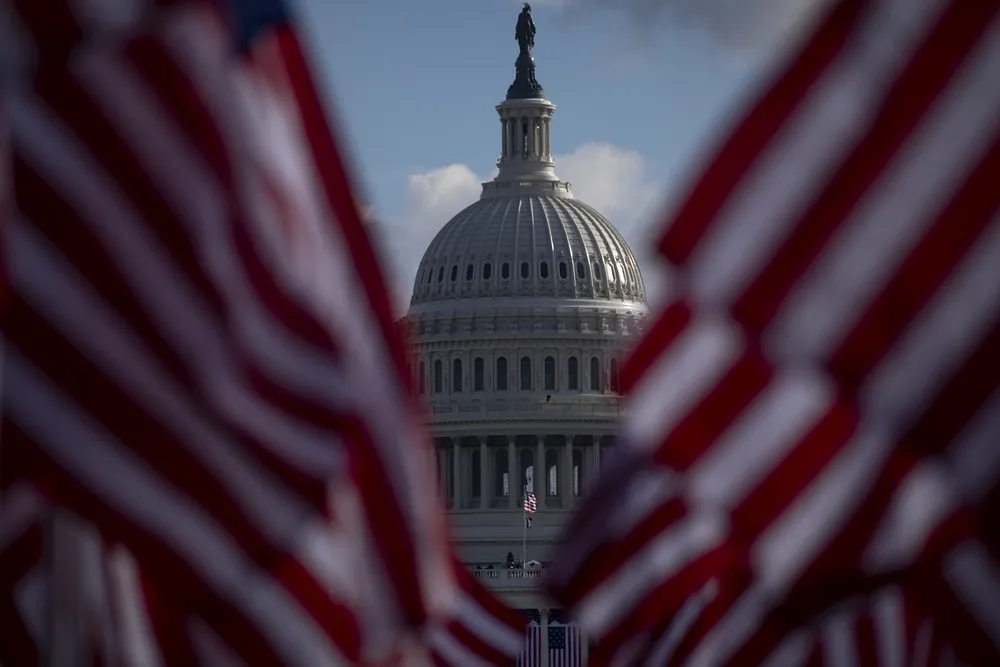

Consumption of political violence reveals the fragility of American civic standards.
Disclaimer: This article contains references to gun violence.
The footage spread faster than the facts.
Within minutes of Charlie Kirk’s assassination at Utah Valley University, shaky videos spread like a digital plague across social media, accompanied by snarky memes, grieving condolences and callouts of Kirk’s political ideologies. His murder was consumed in the way we consume everything now — like content.
By the time major media outlets were able to confirm Kirk’s death, social media had already done its work: Making a national tragedy into a trending topic, his death flattened into another round of polarization and spectacle.
The United States has always been a divided nation, but more than that, something more sinister, more corrosive, is happening: We are becoming dangerously desensitized to violence. A killing that should have been a moment of national reckoning has instead become an excuse for scoring points and pushing political views.
This pattern is not new. There are many troubling historical precedents that reveal the severity of our desensitization crisis. Some of the most infamous collapses of democracy began with the loss of reaction in the face of unjustifiable violence. Across dozens of democratic breakdowns, historians observe a pattern of a grim normalization of political violence, eroding the boundary between outrage and acceptance.
In 1920s Weimar Germany, political assassinations became so routine that parties no longer paused to grieve; instead, they used these instances as propaganda. Similarly, in 1970s Chile, escalating clashes between left- and right-wing groups normalized brutality, undermining civilians’ faith in their governmental institutions and softening the ground for a military coup led by Augusto Pinochet.
Violence stopped shocking people — and once it stopped garnering reactions, it became easier to excuse, paving the way for authoritarian takeover.
We are now moving in that direction. The Jan. 6 insurrection was one alarm ringing; Kirk’s assassination is another. The public’s reaction reveals less about him as a person and more about the U.S. as a nation. When a public killing becomes viral fodder instead of being acknowledged as a rupture in our civic fabric, democracy itself is at risk.
Charlie Kirk was undeniably a polarizing figure. He built Turning Point USA into a machine of culture-war politics, prioritizing confrontation over compromise. He pushed an absolutist view of gun rights even as school shootings mounted.
For some, he was a truth-exposer; for others, he was a bigot. But whatever one thought of him, his assassination sets a precedent that should scare us all. Once violence against political opponents becomes thinkable, it does not stop with one figure.
Already, both Democratic and Republican factions are gearing up to instrumentalize his death. Republicans will frame him as a martyr cut down by leftist extremism; Democrats will point to gun culture and demand reforms that will, for the umpteenth time, stall in Congress. President Donald Trump will use it to posture himself as the only leader strong enough to maintain order.
Meanwhile, the public is left with cynicism — and a social media feed that can treat political murder with the same levity as a TikTok dance trend. This desensitization affects young people the most: Kirk knew the potential of college campuses; he built his brand on campus tours, drawing both adoring crowds and furious protests. In March, he visited USC, where some students admired his ability to unabashedly spar in front of these ideologically splintered crowds.
That the newest leg of his tour began, and concluded, in violence underscores how universities continue to be symbolic battlegrounds — and how quickly those battlegrounds can spill into bloodshed.
The irony is impossible to ignore: Kirk spent his career insisting that more guns, not fewer, would secure American freedom. Now, his wife and two young children have to live with the fact that he became a casualty of the very culture he nurtured. They are left with grief, compounded by the knowledge that his death — in all its rawness — is immortalized online.
However, we don’t have to accept this. We can start by refusing to accept violence as content. Not every video should be shared, and not every tragedy needs to be lampooned. Even small acts of restraint repel the desensitization eating away at us.
But the harder work is cultural: As we ascend into adulthood, we must insist that violence, no matter who it targets, is not normal and never acceptable. We cannot let partisan loyalty blind us to the danger of letting political bloodshed fuse into the day-to-day. Otherwise, history is clear about what comes next: Societies that learn to shrug at political violence rarely stay democratic for long.
Charlie Kirk’s assassination was a tragedy: for his family, who lost a husband, a father and a son; for his supporters, who believed in his potential to be a leader; and for the country, which just took another step down a dark road.
Political violence is not just one man’s fate; it is a test of whether we are strong enough to stand on our nation’s founding principles — the belief, voiced by Founding Father James Madison in “Federalist Paper No. 10,” that factional conflict must be resolved through deliberation and words, not weapons.
So far, judging by our timelines, we are failing.