‘I Can See The Future’ is a subversive dissertation on grief
Leith Ross’s new album enchants as much as it devastates.
4
By SHOURI GOMATHAM
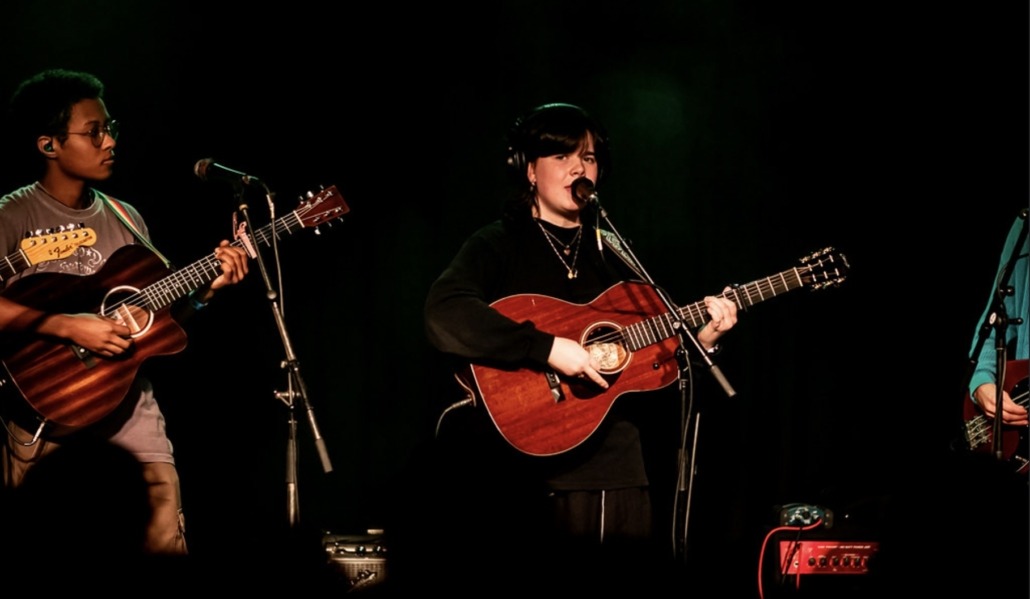

Leith Ross’s new album enchants as much as it devastates.
4
With their sophomore album, “I Can See The Future,” singer-songwriter Leith Ross has worked music magic into a sincere, intimate and subversive folk rock meditation on loss and love.
Hailing from Ontario, Canada, Ross’s soul-crushing lyrics first found fame in the indie and folk rock scene following the single “We’ll Never Have Sex,” which went viral on TikTok in early 2022, powered by Gen-Z listeners touched by the song’s emotional core.
After the song took off and garnered tens of millions of streams, they were signed to Interscope and Republic Records. In 2023, they released their first studio album, “To Learn” to critical acclaim.
For 2025’s “I Can See The Future,” Ross worked with acclaimed producer Rostam, evolving their intimate folk rock sound into a sonic exploration that celebrates everything from shoegaze to country and rock to R&B. This fall, they will embark on a national tour for the album, with a stop at the El Rey Theatre in Los Angeles this October.
Whether it’s the otherworldly waltz of “What My Love Is For,” the unexpected country jam of “Grieving” or the dreamy and deceptive alt-pop of “Terrified,” Ross’s authenticity lies in their deeply honest but ultimately hopeful perspective on their healing process and the healing process of the world at large.
It’s a perfect autumn album, laced with melancholy keys and chords and even a smooth, silky saxophone solo on the track “‘What Are You Thinking About,” where Ross sings, “It could be anger / or aching, or touching / It could be all over / It could be nothing.”
With restrained vocals and unrestrained lyricism, Ross taps into pure, raw emotions to turn what could be an easy listen into an introspective dissertation on grief.
On the woozy slow-jam “Stay,” Ross heartbreakingly sings about a partner, “My bread is your bread / And my water is your water,” later singing, “Baby on the way down / I’m gonna hold you up / and maybe on the way out / we can dissolve as one.”
It’s simple but rich, deeply romantic and casually devastating — Ross’ staple — the kind of melancholy found baring its soul all across the album. The song reinvents itself halfway through, turning the lovesick anguish into a relationship anthem.
On the classically inspired and strings-laden “What My Love Is For,” Ross writes “Oh lovе, you’re something ancient / From thе stars as if the stars / are a body I can touch / I can kiss forevermore / Oh, love, you’re what my love is for.” It’s a gentle and tender love song, and a sweet reprieve from the weight of heartbreak. As the celesta dominates the track — listeners take a joyride through outer space.
When Ross sings, “I, all my life / have been aching just to feed you / to eat from how you hold your sides” on the track “I Love Watching You Eat Dinner,” the intensity of their love/loss songs might begin to strike listeners as esoteric, but there is an unabashedly painful, almost universal romanticism that Ross embraces and retraces their way to by the end of the album.
In “Alone,” with deceptively upbeat instrumental with slightly somber lyrics, Ross writes, “And even now, with my baby in the kitchen / When I am capable of truly listening / There is a whisper in the coldness of the wind / And it’s sudden and it comforts me / I am alone.” By the end of the song, Ross deftly turns that final phrase into a mantra, their voice echoing and being drowned out by a barrage of rock sound.
Even going so far as to reprise opening track “Grieving” — now as a stripped-down acoustic prayer — in the penultimate track, Ross cements the journey of reconciliation with a thoughtful resolution — there is no big, burning, cathartic moment. The catharsis is found in little moments throughout, with Ross gently, thoughtfully nudging it over.
By the time the titular track “(I Can See) The Future” arrives, Ross writes about grief both haunting and driving the present, singing, “Flowers grow / in the brick and the stone / of the prisons and roads,” and “All the walls are just stone / All the people came home.” It is a message of renewal and resilience.
For Ross, who identifies as queer, non-binary and transgender, the political implications are not lost. For them, hope in dark times is as imperative as grief. They see a more compassionate and accepting future, because it’s the only way to true inner peace and healing. Facing loss and love head-on is the only option, and in “I Can See the Future,” Ross does it beautifully.