SILVER SPOON
Hama Sushi is a perfect 10
In a city that thrives on reinventing itself, the sushi bar reminds Angelenos that the essence of sushi is simple.

By DEON BOTSHEKAN

In a city that thrives on reinventing itself, the sushi bar reminds Angelenos that the essence of sushi is simple.
If you’ve ever had a lengthy, or frankly, even a short conversation with me, I’ve more than likely brought up Beli. If you aren’t accustomed, Beli is an app that allows you to organize restaurants in a ranked list, map every place you want to try, see where your friends are eating and even provides you with personalized recommendations and top-ranked places near your location.
Now, this isn’t an advertisement for Beli, nor am I sponsored — not that I would be against a sponsorship if offered — but Beli is simply my love language. I make all my friends join, partly because I think it’s fun to compare tastes, but also because food is a great way to understand people. Someone’s top 10 restaurants sometimes say more about them than any Spotify Wrapped ever could.
There are very few restaurants that I rank highly, and even fewer that I award a perfect 10. Hama Sushi in Little Tokyo is one of these rare 10s.
Hama Sushi is essential to understanding Los Angeles’ sushi history. This isn’t just another American city dabbling in Japanese cuisine — L.A. has one of the largest Japanese populations in the United States, and Little Tokyo is one of only three officially historic Japantowns left in the country. Sushi isn’t imported here as a trend; it’s woven into the city’s cultural fabric.
The California roll — a simple combination of avocado, cucumber and crab — was invented here in the 1960s, specifically designed for Americans hesitant about eating raw fish. Since then, sushi in L.A. and across the U.S. has spun out in every possible direction: spicy tuna rolls, deep-fried tempura hybrids, and sauces and garnishes that bury the very fish they’re meant to highlight.
If you want innovation, you can find it. But if you want purity, the real essence of sushi, it takes a place like Hama Sushi.
Unlike the omakase templates that dominate L.A.’s high-end sushi scene, Hama isn’t about ceremony or spectacle. At omakase, the chef dictates the flow; at Hama, you choose. You sit at the counter, glance over the menu and hand the order form to one of the chefs. The chefs then shape the sushi in front of you, quickly and precisely, without preamble. There’s no curated storyline, no theatrics, no Instagram-bait plating. It’s just sushi, the way sushi is meant to be eaten.
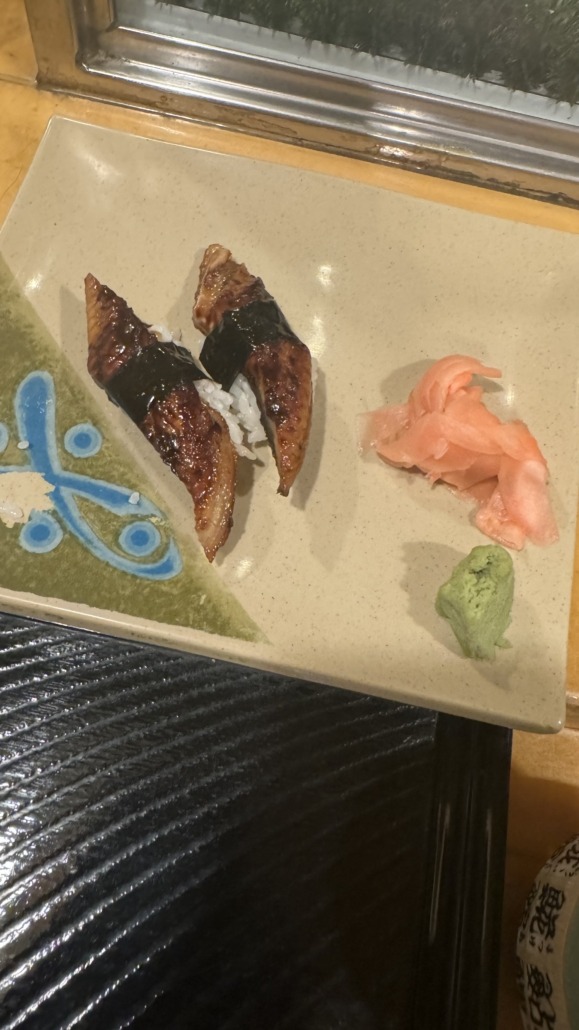
On my most recent visit, I ordered the sweet shrimp sushi, scallop sushi, eel sushi and a spicy tuna hand roll, along with the complimentary miso soup.
The sweet shrimp was tender and clean, with a small amount of wasabi spread between the meat and the rice. The scallops were lush, almost buttery, instantly dissolving on the tongue in a way only perfect scallops can. The eel was my favorite — glazed perfectly with unagi sauce. Even the miso soup, which in most restaurants feels like an afterthought, was rich and warming, and its umami depth grounded the entire meal.
The setting of Hama Sushi is part of its magic. The restaurant is small, almost cramped, with its U-shaped bar dominating the space. From the moment you walk in, you’re in the thick of it. One of Hama’s quirks is its strict no-photo-of-the-chefs policy. The intimacy of the bar is part of the experience, and cameras are discouraged to preserve that atmosphere.
What makes Hama remarkable is its refusal to play into the performance of sushi. It doesn’t try to reinvent itself every season. It doesn’t chase virality with wild flavors or avant-garde plating. It leans into what sushi has always been: pristine fish, fluffy rice and the skill of a chef’s hands, nothing more and nothing less.
In a city that birthed the California roll and pioneered so much of the U.S.’s sushi innovation, Hama succeeds by doing the opposite. It stays still.
That stillness is what makes it timeless. You could step into the restaurant today or 20 years ago and likely have the same experience. In a dining landscape that churns through trends at breakneck speed, that kind of consistency feels revolutionary.
When I give something a perfect score on Beli, it isn’t just about extravagance or luxury; it’s about alignments, or whether it answers my internal questions. Does it deliver consistently, does it leave me thinking about the meal after I’ve left, and does it know exactly what it wants to be? Hama Sushi answers yes to all of the above.
It isn’t trying to be the fanciest restaurant in L.A., nor is it competing with the $400-a-seat omakase experiences popping up across the city. It’s doing something far more difficult: staying true to itself.
Restaurants like Hama are rare; not because they’re inaccessible, but because they refuse to compromise. It’s a sushi bar where you order what you want, watch it being made in front of you and eat until you’re satisfied. Nothing more and nothing less — and that’s precisely why it’s perfect.
In my Beli rankings, Hama Sushi is a 10. In my mind, it’s even higher.
Deon Botshekan is a senior writing about special occasion dining and restaurants worth the splurge in his column, “Silver Spoon,” which runs every other Wednesday.