Poet laureate fellows of Los Angeles bring change
The new recruits of the Academy of American Poets in Los Angeles discuss their community-building projects.
By MIRANDA HUANG
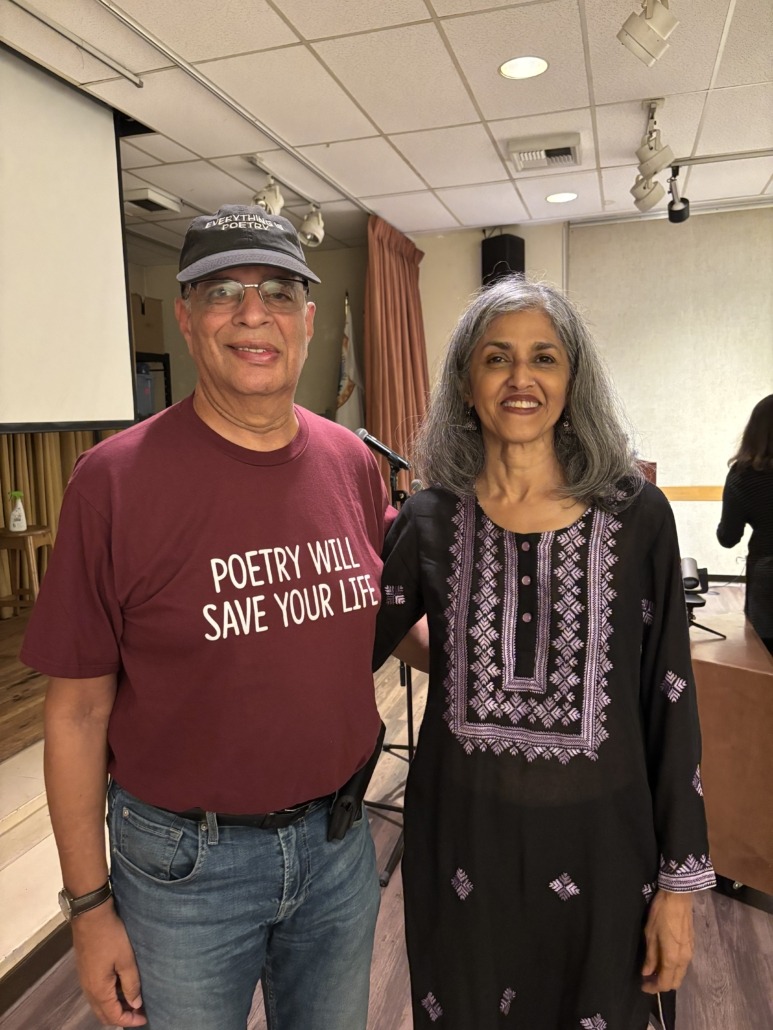

The new recruits of the Academy of American Poets in Los Angeles discuss their community-building projects.
When the Los Angeles fires rippled through neighborhoods, businesses and childhood homes in January, many communities were left with charred remains and wounded morale. In wake of this catastrophe, the poets laureate of Los Angeles County and recipients of the Academy of American Poets fellowships — like many others — grappled with ways of moving forward.
The five poets across Los Angeles county were already laureates for their respective cities when selected for the fellowship, a requirement in applying. As Academy of American Poets fellows, these artists were rewarded with $50,000 to embark on a project that engages the community in transformative art.
Each author’s project has a distinct focus, blending personal identity with artistry and employing different mediums to carry out the designed activities — whether that meant hosting writing workshops, practicing Feng Shui in the park or engaging in open discussions. The projects also range in their end products, culminating in an anthology, mural, magazine, performance or other mode of public demonstration.
To these artists, poetry offered a unique space for processing emotions and building unity. Through their fellowship with the Academy, each poet undertook a project that used the transformative nature of poetry to empower communities.
“Community is huge at this time. This is such a time of loss and fear and devastation on so many fronts. We are all feeling it. We are together,” said Sehba Sarwar, Altadena’s poet laureate fellow for community affairs, who handles outreach and communication.
For example, the poet laureate fellow of El Segundo, Kweku Abimbola, hosted a public poetry workshop series titled “The Land Remembers.” In his teachings, Abimbola used ecopoetry to reflect on climate change, giving participants the chance to engage in restorative gardening, reconnect with cultural practices and incorporate sensory imagery into their writing.
“What does it mean for us to change the lens through which we view nature by highlighting different Indigenous poets and Afro-Indigenous poets and write poetry that honors this natural world?” Abimbola said.
The Ghanaian dirge, a lament for the deceased, is one practice that Abimbola employs in his workshops. Through the lens of this Indigenous tradition, human bodies are associated with entities in nature, not made distinct from it.
As the poet laureate fellow of West Hollywood, Jen Cheng also integrated ethnic practices into ecopoetry, drawing from Chinese philosophies. In addressing this intersection, Cheng teaches students how to become eco-citizens.
“Knowing that native plants are important to our survival in the L.A. area and seeing and responding to the L.A. fires — which were so widespread because there are so many non-native plants here that are not drought-resistant — it’s important for me to pay it forward and bring my love of plants and nature through poetry,” Cheng said.
Through Feng Shui, a traditional Chinese philosophy that highlights five elements, Cheng provides students with different lenses to view their personal lives and the natural world around them.
Cheng’s pursuit of multiple subject matters reflects her own diverse makeup of identities and professions. As the queer daughter of Asian immigrants, she attempts to create space for marginalized voices.
Raffi Joe Wartanian, the interdisciplinary poet laureate fellow of Glendale, offers a similar sentiment on how labels are taken away from people by societal norms.
“Am I a poet? Can I claim that label? Yes. … I think a lot of writers sometimes will put those obstacles in front of themselves, but often I think those are internalized voices of other barriers. We’re all poets. We’re all born creative,” Wartanian said.
When applying for the fellowship, Wartanian wanted to work with refugee youth by collaborating with the International Rescue Committee. However, he pivoted after observing the destructive aftermath of the fires, proposing a project that served those affected.
“[People impacted by the fires] have a lot to say, and we have a lot to learn. In general, that’s really important for any democracy or civil society — giving people the opportunity to overcome the silencing, whether it’s the silencing of the literal or the figurative fires that are happening,” Wartanian said.
Among many themes covered by his work, Wartanian focuses on genocide, displacement and cultural erasure. His familial ties to the Armenian diaspora and lived experiences in the country led him to bring poetry to his communities and co-produce an Armenian-focused zine titled “Collective Voices” alongside Maral Tavitian, managing director of the Institute of Armenian studies within the Dornsife College of Letters, Arts and Sciences.
Sarwar touched on similar themes in her work, especially focusing on displacement. Raised by Indian parents in Pakistan, she noted how she never got to see her grandparents’ homes because of visa issues.
“Displacement is our family story, and it is a grief. Of course, I displace myself further by living in this country. … But I have very deep roots here, and I work very closely with the community,” Sarwar said.
In emphasizing the voices of those displaced by the fires, Sarwar connected her personal history to current events. With the help of her co-laureate, Lester Graves Lennon, the two provided workshops and readings with different focuses or themes, including “Fire and I.C.E.”
“I always thought of [poetry] as the most direct link from the heart and soul to understandable speech. Poetry provides that immediate outlet, and it also allows a person to be in conversation with themselves,” Lennon said.
Even as these poets recruit different teaching styles and mediums, they share a dedication to uplifting individual voices and offering tools to build autonomy and empowerment.
“Poetry is not necessarily healing, but it can be healing in the way that it provides social connections and a way for us to feel heard and seen and that we’re not alone,” Cheng said.