Playing ‘Little Nightmares III’ is a nightmare
Beautifully designed and atmospherically eerie, “Little Nightmares III” loses suspense to slow pacing and repetitive actions, turning tension into tediousness.
2
By KODY CHRISTIANSEN
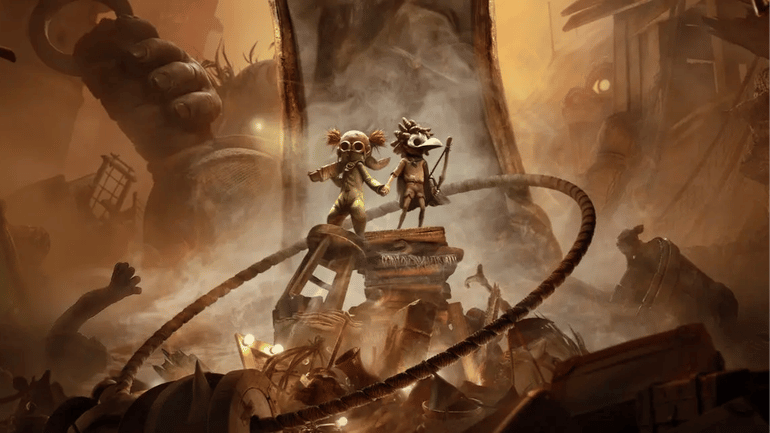

Beautifully designed and atmospherically eerie, “Little Nightmares III” loses suspense to slow pacing and repetitive actions, turning tension into tediousness.
2
“Little Nightmares III” promises a haunting world filled with horror but ultimately delivers more frustration than fearful fun. The game looks and sounds like a dream, yet playing it feels like a real nightmare. For a game designed to delightfully disturb, it struggles most with keeping players engaged.
The game, which was released Oct. 10, begins like a waking dream. The title screen hums with eerie music as waves crash against an unseen shore. Developed by Supermassive Games and published by Bandai Namco Entertainment, from its first flicker of light, “Little Nightmares III” feels designed to unsettle through sound, darkness and silence.
The “Little Nightmares” franchise began in 2017, created by Tarsier Studios, exploring childhood fear through quiet, surreal horror. While returning fans will recognize a few familiar elements linking the stories, this chapter stands on its own and introduces the Spiral, a new region within the Nowhere filled with eerie places such as the Necropolis.
Each chapter presents unique environments and threats, including the enormous Monster Baby, whose curiosity and size make it a constant danger.
Two small, ambiguous figures, Low and Alone, stand in shadow. The one in green, Alone, with red puffs of hair poking through their hat, is the chosen protagonist for this playthrough. No introduction follows. No text appears, just a cracked mirror and a swirl of portal magic that mark the beginning of the nightmare.
On the Nintendo Switch 2, the controls feel fluid and intuitive, even when the overall experience stumbles. In single-player mode,the AI-operated companion handles actions such as shooting arrows or pulling ropes to trigger switches. The combination of problem-solving and environmental observation can be satisfying, but frequent restarts after missed jumps or failed timing interrupt the flow.
The lack of camera control makes judging depth difficult, and the precision required often turns fun puzzles into frustration. Still, the early gameplay carries an eerie beauty: Red dust storms sweep across desolate terrain; dead crows sway from ropes; and shadows seem to breathe along the walls as soft creaks and whispers fill the air.
But the repetition sets in quickly. Hide-from-light puzzles return again and again, and the penalty for mistakes, a fast fade to black and restart, breaks the tension instead of heightening it. The first jump scare, a massive crawling hand emerging from the dark, lands perfectly, but it’s followed by too many restarts to keep the suspense alive.
The first battle, against flying beetles, is more frustrating than frightening, with repeated deaths that dull the atmosphere.
The Candy Factory level deepens the frustration. Its spider-like lunch lady antagonist prowls the room with mechanical menace, but the puzzle feels needlessly punishing. The “highlight interactables” accessibility feature in the game’s option menu becomes essential just to figure out what to do, yet even that offers misleading hints. The solution, simply hiding under a desk, feels anticlimactic. Crushing the monster in a candy press later offers brief satisfaction.
The story unfolds slowly, almost to a fault. Hours pass without dialogue or explanation, and the silence that once built suspense begins to feel empty. Nothing clarifies who these children are or why they wander through decay. The mystery could have deepened the horror, but instead it leaves the experience feeling distant, with long stretches where progress replaces purpose.
The final mansion level, The Institute, reaches for something grander, but the impact fades beneath repetition. The house itself feels alive, its corridors twisting and breathing with an uncanny rhythm, giving strong “The Fall of the House of Usher” vibes. Long, twisting limbs crawl through the halls, and giant hands with eyes in their palms reach across doorways as if searching for the player.
An old man’s face that finally appears, wrinkled, pale and framed by glasses, is revealed to be the creature those arms belong to. The battle against him is actually thrilling, one of the few moments where the tension and pacing finally align. Afterward, though, the story slips again.
The ending, clearly meant to spark a deeper connection between the player and the characters, could have been powerful but instead feels lackluster with its final moments landing without real emotional weight.
Even with its eerie imagination and stunning graphics, the game loses its way under the weight of repetition. The endless hatches and tunnels, the constant restarts and the overused mechanics turn fear into fatigue. By the end, what should have been a fun, spooky nightmare to escape turns out to be an actual nightmare to play.