JAM JOURNAL
My music taste is no longer a performance
In a world of gatekeepers, how can we return music to a communal practice?

By ANYA MOTWANI

In a world of gatekeepers, how can we return music to a communal practice?
Songs always incite a visceral reaction within me, taking me back to the first moments I heard the tune. I am reminded of the person I was, the company I held and what I felt when I used to listen to a given track. This is often a bleak experience.
Even listening to music in my own company, I find myself performing for some all-seeing judge: my peers, who I assume care deeply about the quality of my taste. When I reach for a personal throwback from Spotify’s shelf, I am embarrassed.
I imagine a single four-minute song can transform me into a previous version of myself, one I was glad to evolve from.
Lana Del Rey’s “Dealer” was the anthem of my sophomore year of high school. A track that for years after I could not bring myself to add to my queue. It brought me back to the impending dread of college applications and a tumultuous group of friends whose problems felt like the end of the world. I was so adamant to let buried emotions lie that I chalked up this neglect of old favorites to my shifting preferences.
But restrictions I place on my listening habits are not reflections of my free will. Rather, it is a practice influenced by this evolving consensus that to have the most underground playlist is to best your peers in some kind of music-listening competition. Who can you beat in the niche-off?
During the 13 long years I attended the same school, not once did I have the space to change how I was viewed by my community. There was no room for my identity to grow, so much of which was defined by the media I consumed. In this way, I felt comfortable listening to whatever music spoke to me at a given moment.
The rigidity of my social sphere was liberating as I never had to be intentional in how I presented myself. It was only after leaving that environment that I was humbled by the opportunity to curate exactly who I was to peers who didn’t know any better.
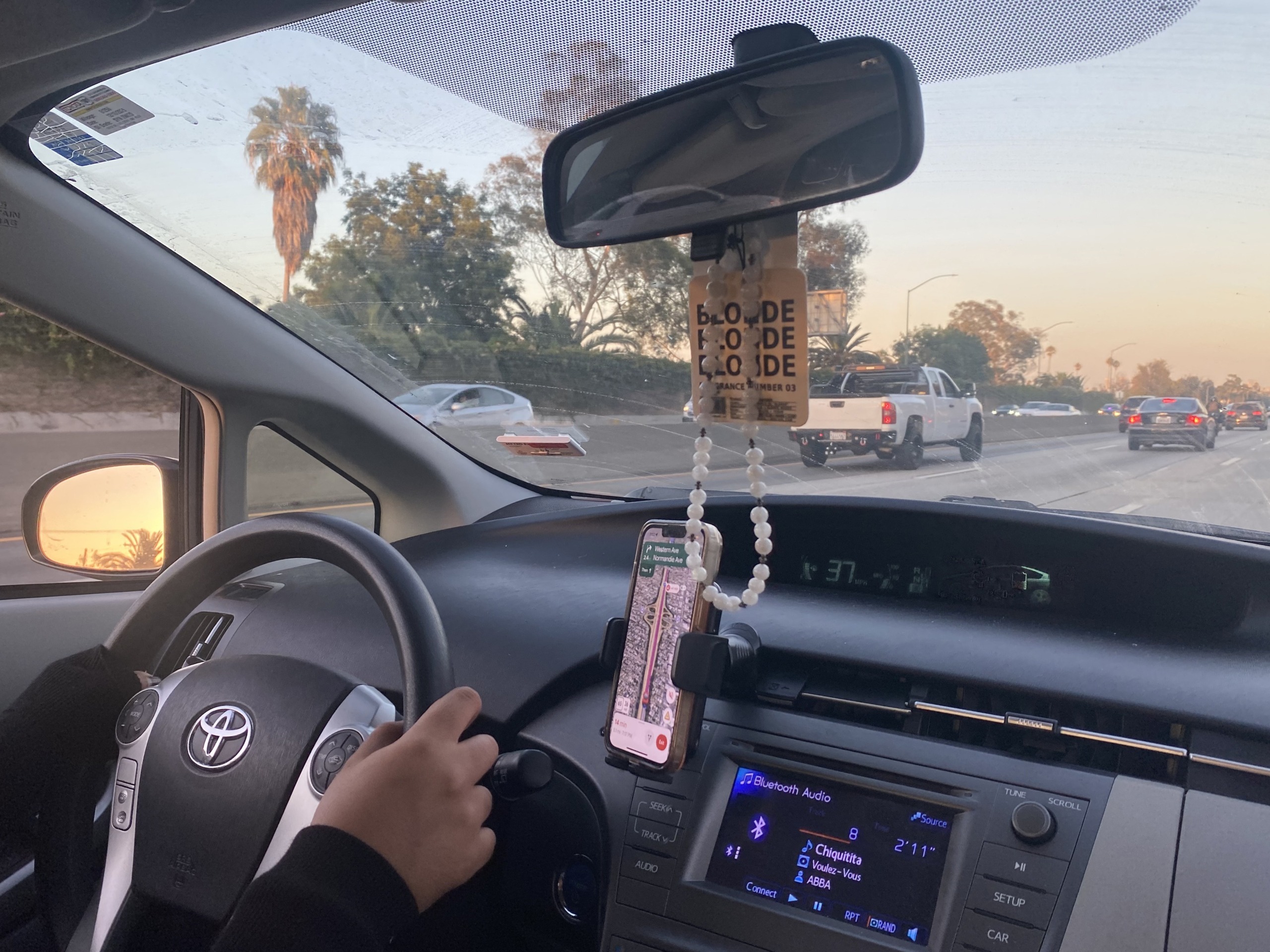
During my first semester at USC, I piled a group of new friends into my car. We drove along then-empty Los Angeles highways and headed to the beach after a long night of studying for our first set of finals. The age-old dilemma of what to play on aux seemed to hold more weight than normal, and I figured whatever music I played would solidify these almost-strangers’ perception of me.
I abandoned my usual favorites — the Faye Webster, Clairo and Lorde albums that once punctuated late-night drives with my high school friends — for artists I had just begun listening to at the time, ones I thought they might not know. The appreciation I had for artists like Midrift, Tacoma Radar, Whirr and the like was not ingenuine, but trying to use such music to gain social clout corrupted the real connection I felt to their tracks.
Music has long defined communal practices across temporal and physical boundaries, but in that moment, plagued with fear that they would suddenly decide I wasn’t cool or esoteric enough, the experience became an isolating one.
The car bubbled with conversations, but I was instead listening intently to the songs I had queued, almost holding my breath to see if someone would comment on them. It didn’t even matter what they thought; what struck me the most was how adamant I was in seeking others’ approval.
Looking back at this moment, I realize that I had never been so conscious of my tastes and how others may receive them. But these insecurities are bound to emerge with transitioning to new life-stages, especially ones where you feel you’re under the microscope of prospective best friends.
I can never shake the feeling that someone is watching, arbitrating every song I add to my library or play in the privacy of my room, but this imagined scrutiny should not have power over my listening habits.
Music has always had immense sway over my affective state, and only now, as a better-adjusted sophomore in college, do I recognize that to be its most important quality, regardless of how others might react to the music I enjoy.
Now, as I ready myself for Friday night plans, I don’t feel shame in dusting off an old playlist and blasting a 2010 Kesha vintage. Nelly Furtado and M.I.A. accent my Saturday evening drives to dinner, and I’ve stopped pressing skip when BROCKHAMPTON erupts from my earbud speakers as I traverse campus.
It does not matter what my friends see me listening to on Spotify’s slightly evil Friend Activity tab. Instead, understanding that forging identity will always be about marrying past interests, callings and experiences with current ones — rather than starting anew — brings me peace.
In releasing myself from the idea that what I listen to will dictate how I am socially received, I have been free to unearth songs lost to my playlists on daily rotation. I am no longer so restricted by the past experiences I had listening to specific tunes, because I am able to superimpose new associations onto them.
“Jam Journal” is a rotating column featuring a new Daily Trojan editor in each installment commenting on the music most important to them. Anya Motwani is the features editor at the Daily Trojan.