CHRONICALLY ONLINE
Country music isn’t supposed to be white
The Grammy Awards continue to exclude musicians of color in their categorization.

By ANNA JORDAN
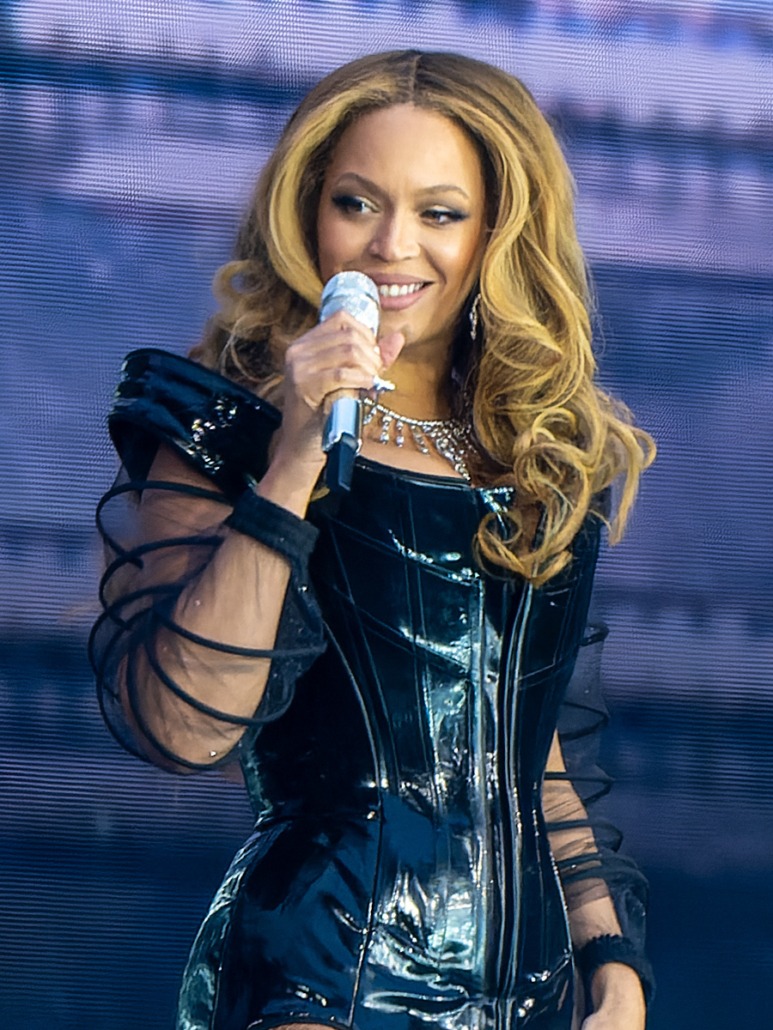

The Grammy Awards continue to exclude musicians of color in their categorization.
Whenever I ask people what kind of music they listen to, it’s always “a little bit of everything — well, except, like, country.” It’s a fair thing to say: Country is polarizing and unashamedly itself, for better or for worse. As we draw nearer to Nov. 19, the date of this year’s Country Music Awards, I can relate to that statement as someone who knows very few of the nominees, even as a fan of some country music.
However, my main criticism of this sentiment is that country is a beast with many heads — there’s country pop, country rock, folk country. In any genre, there’s something for everyone; you just have to be willing to explore the recesses of the category.
So when the Grammy Awards announced in June that they were splitting the Best Country Album Award into two separate categories — Best Contemporary Country Album and Best Traditional Country Album — it wasn’t without precedent.
As genres evolve, they take on their own identities. The folk category split to give life to Americana. Traditional R&B Performance got its own separate category from regular R&B Performance. Splits like this are how we can champion new and more diverse artists within emerging genres.
But this split didn’t exist in a vacuum: It came just four months after Beyoncé took home Best Country Album for “COWBOY CARTER,” a win met with endless backlash from country traditionalists and closeted racists.
Country purists like musician and open-racist John Rich were outraged, claiming that the album wasn’t country enough and that Lainey Wilson, another nominee for that year and the previous year’s awardee, should have won instead.
Just because she isn’t on the cast of “Yellowstone” or in an upcoming Colleen Hoover movie like Wilson, doesn’t mean Beyoncé — a Black woman from the South singing about the South and in the musical tradition of the South — is any less country. “COWBOY CARTER” even had the blessing of some of the most iconic traditional country artists, with features from Willie Nelson and Dolly Parton on it. What more do you want?
God forbid the first-ever Black woman wins Best Country Album — country must be dead now that it’s not culturally segregated! And yet, after touting their progressivism, the Grammys are choosing now to separate the old-sounding from the new-sounding.
Despite their claims that this decision was a long time coming, I don’t think the Grammys were slick with this split; it’s clearly an attempt to appease those who don’t like the awards show acknowledging the modern evolution of country music.
It’s inherently problematic when looking at a genre like country that — like most genres founded in the United States that make up a massive part of the nation’s cultural identity — was largely developed by the creativity and exploitation of Black people, just like the nation itself, especially in the South.
What makes something “contemporary” in the eyes of the Grammys is often incorporating influence from other genres into a project to make it sound new, but when looking at the queen of country pop, Taylor Swift — the person who presented Beyoncé with her win, I might add — suddenly being a pioneer of genre-mixing is iconic. Swift’s take on country rules, don’t get it twisted, but it’s just as valid as Beyoncé’s.
Making a new category is appropriate for the emergence of a new genre, but not when a record is a new, multifaceted take on a genre — that’s just a new lens through which we’re looking. If we made a new category for every time a great album was less traditional or mixed genres, there would be a million more, and there are already too many to keep track of as it is.
I’ll never forget that Tyler, The Creator put it best in reference to the Grammys categorization of Black musicians after winning Best Rap Album for “IGOR,” a record that was art-pop if anything.
“On one side, I’m very grateful that what I made could be acknowledged in a world like this, but it sucks that when we — and I mean guys that look like me — do anything that’s genre-bending or anything, they always put it in the rap or urban category,” he said. “And I don’t like that ‘urban’ word. It’s just a politically correct way to say the n-word, to me. When I hear that, it’s like, why can’t we just be in pop?”
I don’t expect much from institutions like the CMAs; take a quick look at the artists vying for prizes and you’ll find a sea of white people staring back at you. At the CMAs, people of color are the exception, not the rule.
But the Grammys have a responsibility to the music world as a long-standing, respected institution that handles the authority of multiple genres to make their decisions with sensitivity and intersectionality.
For those looking for a place where white people win everything and nothing ever changes, cry me a river and go to the CMAs. But real fans of country should continue to champion the genre as a place of inclusion and make sure to explore everything it has to offer — a little bit of everything won’t hurt.
Anna Jordan is a junior writing about pop culture controversies in her column, “Chronically Online,” which runs every other Thursday. She is also an Arts and Entertainment editor at the Daily Trojan.