USC team develops AI baby monitor to prevent SIDS
BreatheSafe prototype detects abnormal breathing and suffocation risks using only video.
By SUNG MEE KIM
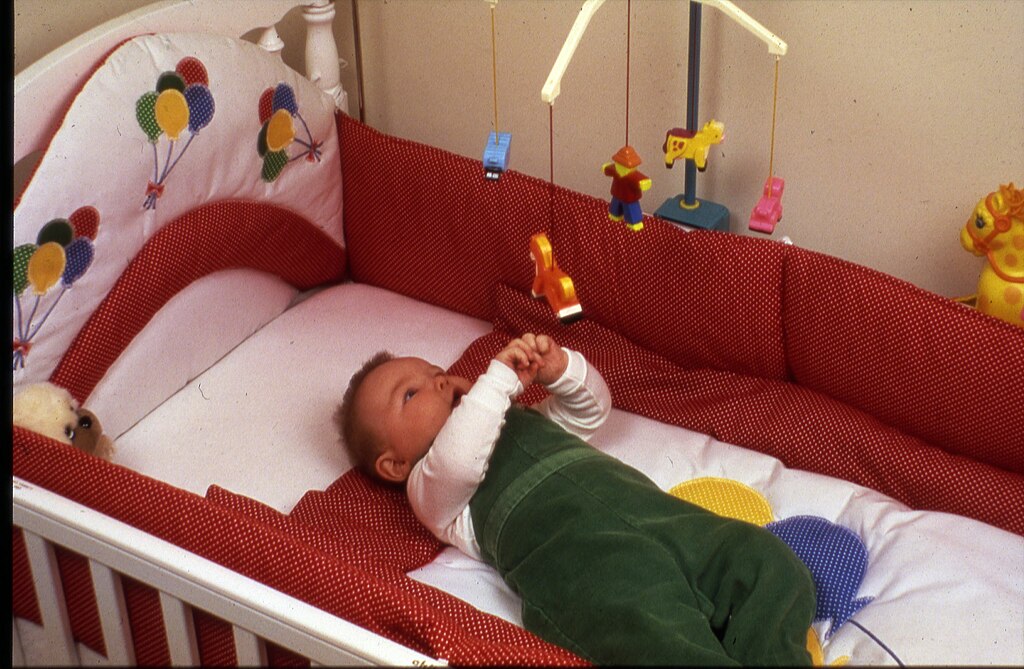

BreatheSafe prototype detects abnormal breathing and suffocation risks using only video.
Kriselle Tanhueco and her hackathon team had just 24 hours to develop a solution for a sleep problem using artificial intelligence. The team’s hearts broke when they found out about Sudden Infant Death Syndrome, the leading cause of death for infants in the United States, and worked to create a system to prevent it.
The team developed BreatheSafe, a baby monitoring prototype that uses AI to detect signs of abnormal breathing and suffocation hazards. Tanhueco, a 2023 USC alum who studied mechanical engineering, and the team won third place at the Sigma Eta Pi x Los Angeles Tech Week AI Hackathon and a $1,000 prize for their prototype on Oct. 17.
BreatheSafe allows parents to use videos they’ve already collected from a camera and input them into the system for the AI to analyze. George Zhou, a junior majoring in biochemistry and one of the BreatheSafe developers, said this technology represents a step forward in making AI technology affordable for parents.
“Other AI baby monitors in the market require special equipment and hardware that you need to go out of your way to buy,” Zhou said. “But we wanted to make BreatheSafe as accessible and affordable as possible.”
Because the team had only 24 hours to build and present a working concept, they prioritized making the product workable. Instead of developing a new model from scratch, they used an existing computer-vision model and fine-tuned it with roughly 200 sample videos showing infant breathing and sleep patterns.
Kalyan Krish, a junior majoring in human development and aging, said the hardest challenge was knowing where to begin.
“We spent hours brainstorming before coding through the night,” Krish said. “Some of our teammates even had 8 a.m. classes, including me, the next day, so we had to go to class and then come back and finish up the video.”
Carmen Palafox, an adjunct professor of entrepreneurship, said she was impressed with the team’s aptitude for the technology and consumer side of AI.
“Their technology is hardware-agnostic — it can plug into any existing baby monitor without developing new hardware, just through API integration. That’s smart,” Palafox said. “I also appreciate that they’re thinking about having diverse distribution channels — not just on the consumer side, but also how they can partner with different service providers.”
Because the product directly affects infant health, the team emphasized that clinical validation and regulatory approvals were necessary before any real-world rollout. Zhou said they hope to collaborate with hospitals to validate and build trust for the product.
“We really want to make an impact and reach out to families who need it most,” Krish said. “We’d love to keep developing BreatheSafe and turn [it] into something more polished and presentable.”