Students discuss politics at panel
USC’s political debate was shifted to a panel due to a lack of Republican speakers.
By DAHLIA BECK
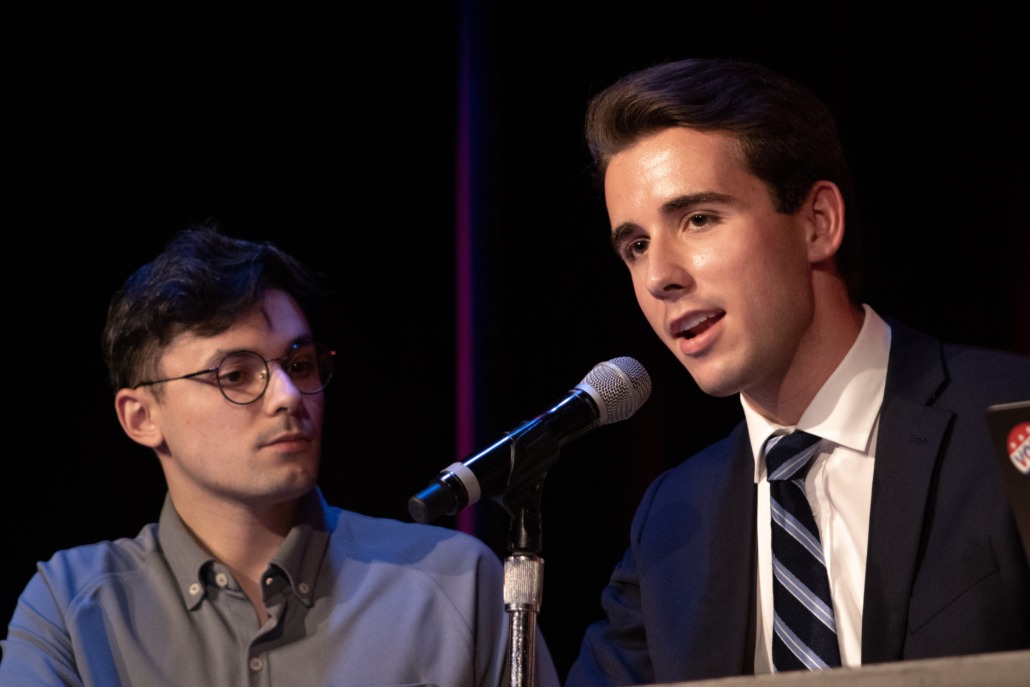

USC’s political debate was shifted to a panel due to a lack of Republican speakers.
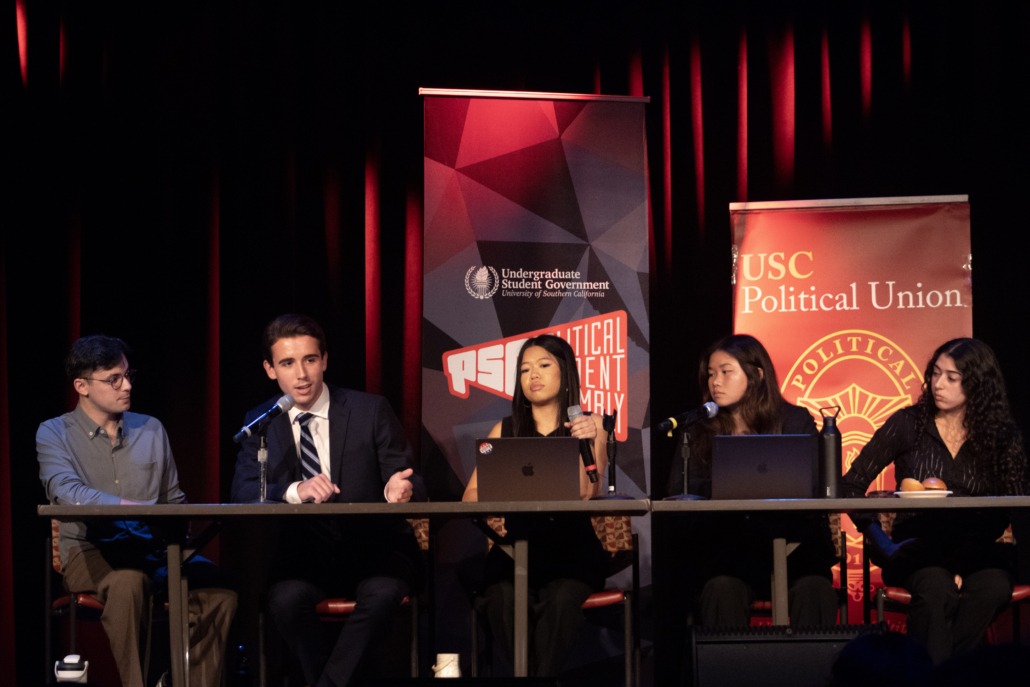
The day after Election Day, the USC Political Student Assembly and the USC Political Union hosted a panel to discuss the impact of Tuesday’s election results — including New York City electing Zohran Mamdani as mayor and California passing Proposition 50 — as well as the ongoing government shutdown.
Though originally described as the biannual political debate between Trojan Democrats and USC College Republicans, the event shifted to a panel conversation due to a lack of Republican representatives. In the modified event, two Democratic representatives and two Republican representatives discussed topics submitted via Instagram.
Proposition 50, passed on Tuesday, redraws districts in California with the aim to combat the five Republican seats in the House of Representatives that Texas redistricting created. The proposition passing was announced almost as soon as the polls closed on Tuesday, which, according to Diego Andrades, assistant director of the Center for the Political Future, is uncommon for a ballot measure.
Frank Lavin, a fellow at the Center for the Political Future and a Republican representative on the panel, said the passing marked a big win for the Democratic Party.
“The ultimate consequence of [Proposition 50’s passing] is yet to be seen. We don’t know how many seats Democrats will pick up because of this, but it’s going to be a win,” said Lavin. “[Gov. Gavin Newsom] led on this, and he made it happen, [which] helps define him as a person who’s willing to lead the fight against [President Donald] Trump. So, within that sort of Democratic establishment, it’s a very nice positioning group for him as well.”
Mamdani, a Democratic Socialist and mayor-elect of New York City, ran on a platform promising rent freezes on rent-stabilized apartments and fare-free buses. The opening lines on his campaign website read, “New York is too expensive. Zohran will lower costs and make life easier.”
Patrick Done, president of USC Trojan Democrats and a Democratic representative in Wednesday’s panel, said while Mamdani’s ability to engage young voters was “incredible,” he wasn’t convinced Democratic politicians in swing states could generate similar results by adopting Mamdani’s politics.
“Democrats should take lessons about being authentic, not just running candidates who can make a bunch of money,” said Done. “Around the country, I think the brand that [Mamdani] has will not be as successful. I think in urban areas, he was able to address the cost of living, to make things more affordable. But coming from a swing district, the brand of democratic socialism that he promotes will simply just not be as popular.”
Another topic of discussion, the ongoing government shutdown, which began Oct. 1, is now the longest in United States history. Andrades, also a Democratic representative on the panel, said Trump was attempting to portray Democrats as the group responsible for the shutdown.
“If[Virginia’s election results are] indicative of anything, it’s that Democrats are going to be able to win a long-term battle when it comes to the government shutdown. So I just wonder, can they hold out? Will they hold out? Because most of the public doesn’t think that [Democrats] are at fault. They’re winning the moral battle right now. So we just have to see whether or not they actually win,” Andrades said.
Ariella Kohanoff, a voting member of the United Nations Association at USC who identifies as a moderate Republican, said she believes that a change in the two-party system would depend on politicians working collaboratively and cohesively, which she views as unlikely to happen in the near future. The viability of the two-party system in the United States has become a contentious topic due to growing polarization in the country.
“I don’t think we’ll see a change to the two-party system, because I don’t think our representatives are capable of such fundamental changes right now, especially considering that we’re in a government shutdown,” Kohanoff said. “This culture of populism, or candidates who are split against their party, riding on charisma, like Trump and Zohran Mamdani, is going to polarize politics more.”
Audrey Draper, a freshman majoring in the business of cinematic arts who attended the panel, said civil discourse is important when discussing political topics. She said that the respectful disagreement among the representatives was an inspiring precedent to set for political conversations, especially in polarizing times.
“I’m one of those people [whose] … thoughts and opinions get pushed further when they’re challenged by the people around me,” Draper said. “Without having productive conversations and discourse around political issues, we’ll never find middle ground. We’ll never find compromise, and our country will stagnate if we can’t even talk about anything.”