Gould opens human rights center
Professor Hannah Garry will lead the new initiative to better justice education.
By MIRANDA HUANG
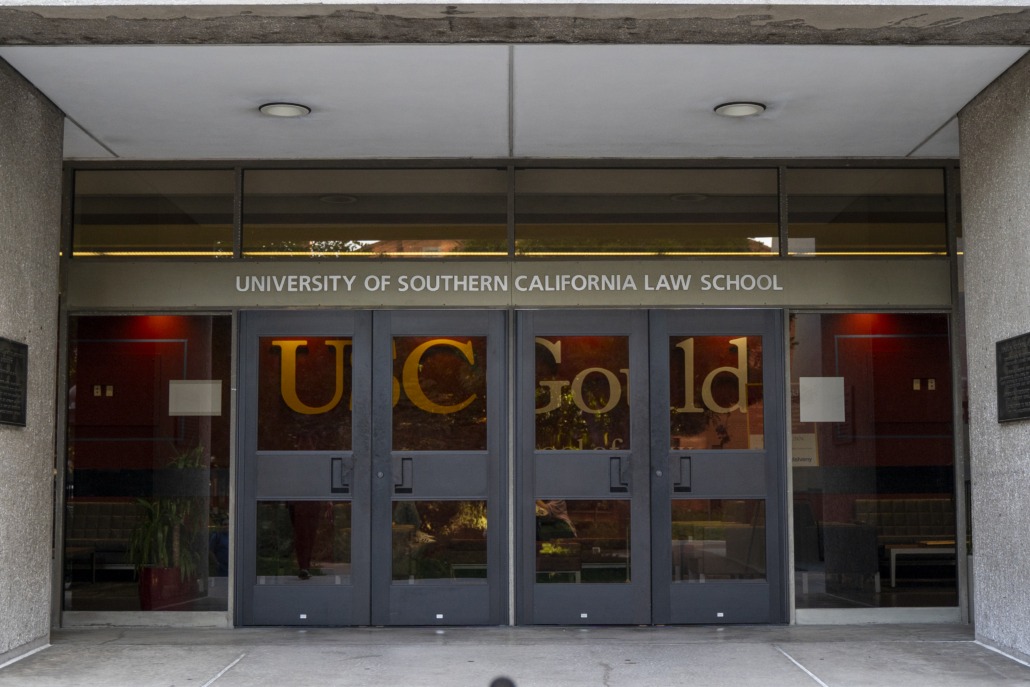

Professor Hannah Garry will lead the new initiative to better justice education.
The Gould School of Law will open the Donna and Spencer Gilbert Global Justice and Human Rights Center on Wednesday with its first event, “Centering Human Rights and Justice,” from noon to 1:30 p.m.
With a $5 million donation from the alumni family, the new center will train law students to become human rights attorneys, focusing on preventing antisemitism, racism, xenophobia and global persecution. Five of Donna and Spencer Gilbert’s kids attended USC.
In a statement to the Daily Trojan, Franita Tolson, dean of Gould, said the center is a crucial part of the school’s global mission to reflect a shared commitment to fairness and human dignity.
“This new center is able to engage students, scholars and practitioners in education, research and policy work that promote an enduring respect for human rights and strengthen the rule of law around the world — values deeply ingrained in our law school,” Tolson wrote.
Hannah Garry, clinical law professor and founding director of Gould’s International Human Rights Clinic, will lead the initiative. Garry said the center will draw from the International Human Rights Clinic’s core pillars.
“Human rights law can be a backstop or protection for individual rights, both domestically [and] internationally,” Garry said. “I want to commit my life to human rights and protection of individuals, no matter where they are or who they are.”
The center will also incorporate a Justice and Accountability Initiative, aimed at documenting war crimes, genocides and crimes against humanity, among other actions.
Garry plans to host conferences, symposia, visiting scholars and practitioners in projects and policy work, as well as a distinguished lecture series with accomplished legal scholars.
The center is also launching a summer abroad program affiliated with the Howard A. Kaiman “Nuremberg to The Hague” summer abroad program. The program will focus on educating students about the Holocaust and the Nuremberg Trials, where participants will gain insight into the broader international criminal justice and human rights law system by visiting historic sites in Poland and Germany.
“The vision that I had for this center predates the Trump administration, predates the current attacks on universities, predates the Israel-Palestine conflict, or at least this version of it,” Garry said. “The focus on antisemitism is not just about antisemitism, but all forms of xenophobia and hate and how those lead to atrocity situations if they are left unchecked.”
The center will also sponsor a fellowship that will provide funding to students to engage in externships with nonprofit, nongovernmental, human rights or United Nations organizations under the guidance of an attorney.
“Atrocity prevention has traditionally been a key part of the U.S. government. In fact, we’ve had whole departments and sections working on atrocity prevention efforts around the world … unfortunately, those offices have been shut down,” Garry said. “This is the time for universities to carry that work forward.”
Faith Armstrong, a sophomore majoring in international relations, said she was excited to learn more and potentially get involved with the center’s initiatives. She said the center will help stop the spread of misinformation by educating its attendees.
“Ensuring that students are informed about the basics of human rights law in such a critical time where we’re seeing constant violation of human rights would be incredible,” Armstrong said.
Neena Harris, a senior majoring in legal studies, said she hopes the center will bolster civil discourse and raise opportunities for individuals to conduct legal research, receive research assistance on international human rights and refugee law, and participate in workshops.
“Conversation[s] [are] where we grow. It’s where we are able to thrive and where we’re able to understand each other. But if those conversations aren’t happening, then … everybody is fighting against each other,” Harris said. “I think this clinic specifically will help foster that dialogue between different groups, and I think it will ultimately help us to grow and to progress.”
Garry said that universities must step up with initiatives to offer creative resistance to human rights violations.
“We need to harness the intellect, and the passion and the enthusiasm of faculty and students while they’re in their educational formative years to think about … the weaknesses of the system and how we can strengthen multilateral efforts for promotion and respect for human rights,” Garry said.