Report shows rise in athlete-owned media
New research reveals how athletes are taking control of sports content creation.
By APRIL MAO

New research reveals how athletes are taking control of sports content creation.
When JuJu Watkins dropped 51 points in a single game — the most in USC women’s basketball history — she stepped off the court as not only a generational student athlete, but also the main character of content creation. The record-breaking night became an Instagram reel posted by the USC women’s basketball account that has since racked up over 800k views, turning it into a viral celebration of identity, influence and athlete-driven storytelling.
This shift toward athlete-owned media and athlete-driven media is the focus of “Owning the Narrative,” a report composed over the past year and recently released by the Norman Lear Center on Oct. 9. The report found high-profile ventures like LeBron James’ SpringHill Company and Peyton Manning’s Omaha Productions helped athletes monetize their own content across digital platforms up to $725 million.
“[We’re] trying] to map something out that nobody’s really mapped out before,” said Adam Rogers, director of research operations at the USC Norman Lear Center. “We conducted in-depth interviews with critical stakeholders. We did an in-depth content analysis of athlete-owned video podcasts. We put a lot of our research tools in action on this one.”
The study, which includes content analysis and a newly developed taxonomy of athlete media ventures, framed this movement as a realignment in the media landscape of who gets to speak, who gets heard and who gets paid.
“There has been a continuum of change for athletes as media figures — from appearing in more traditional roles as sports broadcasters to content creators across a variety of topics, not just sports,” said Willow Bay, dean of the USC Annenberg School for Communication and Journalism and the co-principal investigator on this research.
Bay, a former co-host of a behind-the-scenes sports television show, said the media landscape and the innovations of the content need to be assessed.
“My early career in media was in athlete-driven storytelling. I worked for a show called ‘NBA Inside Stuff’ in the 1990s,” Bay said. “Today we see athletes telling their own stories, creating, producing and monetizing their own stories, which is a profound and pronounced shift.”
William Rosenberg, a recent graduate from Annenberg and a student researcher on the report, said that athlete-owned platforms also allow for more diverse storytelling.
“One of the things that really stood out to me was the ‘behind the scenes’ footage that college football programs had begun putting out. Seven of the 10 [teams I looked at] had started putting out week to week behind the scenes footage,” Rosenberg said. “In the world of sports, fans want to feel as close with their favorite teams as possible.”
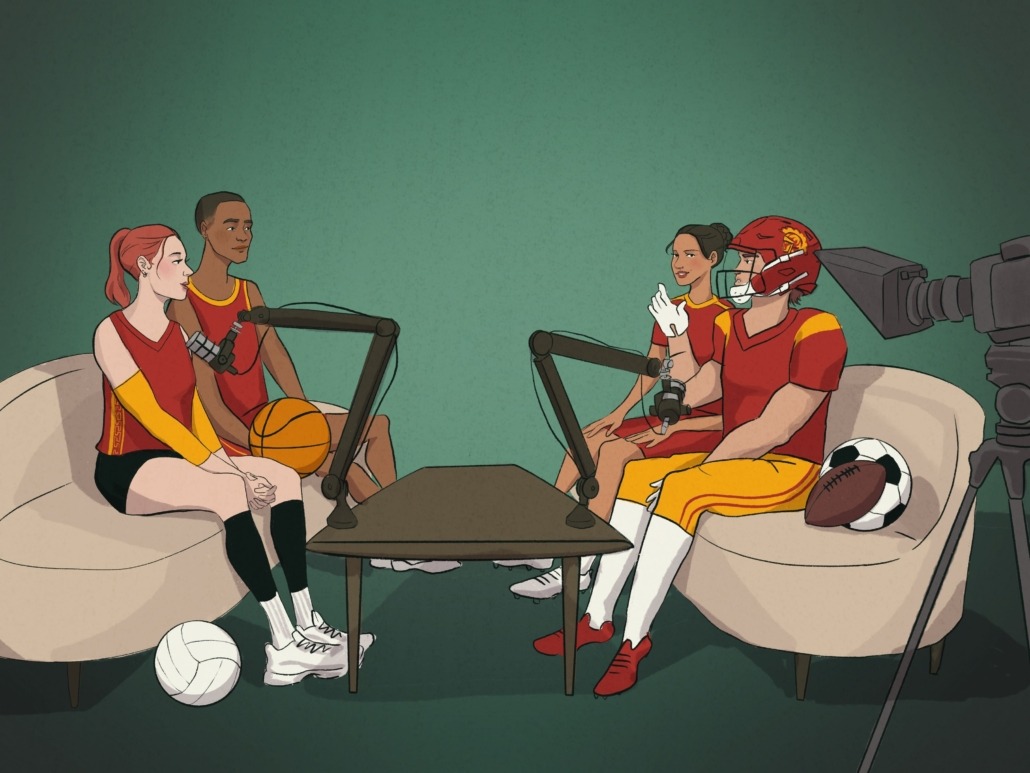
One example highlighted in the report is sports podcasts creating deeper and richer stories. Former NBA star Carmelo Anthony described his podcast “7PM in Brooklyn” as an “immersive journey” blending sports and culture through intentional storytelling.
This shift has allowed athletes to address topics often overlooked in traditional media — from mental health to discrimination — with figures like Kevin Love, Simone Biles and tennis champion Naomi Osaka using their platforms to share personal struggles and advocate for change.
Other examples include athletes turning to YouTube and TikTok to share recovery routines, behind-the-scenes vlogs and business ventures. For Annenberg, the report is also a product of a nuanced research environment and open conversation about athlete-owned media.
“USC, and specifically the [USC] Next Level Sports initiative, have really made us the natural home for sports scholarship and the intersection of sports and media and business and how it impacts marginalized communities and impacts society,” Rogers said.
The research progress also acts as a springboard for future investigations and the student researchers who were involved.
“This is really a big piece that made me rethink how I wanted to look toward my career, and it really made me dive into that strategy aspect from a consumer engagement perspective especially,” Rosenberg said.
In future research, Bay said she is determined to explore more topics in the media space for women athletes.
“I’m really excited to do updates on this study, to go back into the field in another year to see how much growth we can document, and particularly growth where there were gaps that we’ve identified.” Bay said, “I’m hoping to be able to trace the growth of [women-owned] media content, because that’s a persistent inequity that we determined.”