Your music faves will always be problematic
Loving musicians is a lose-lose situation.
By LEILANI YBARRA
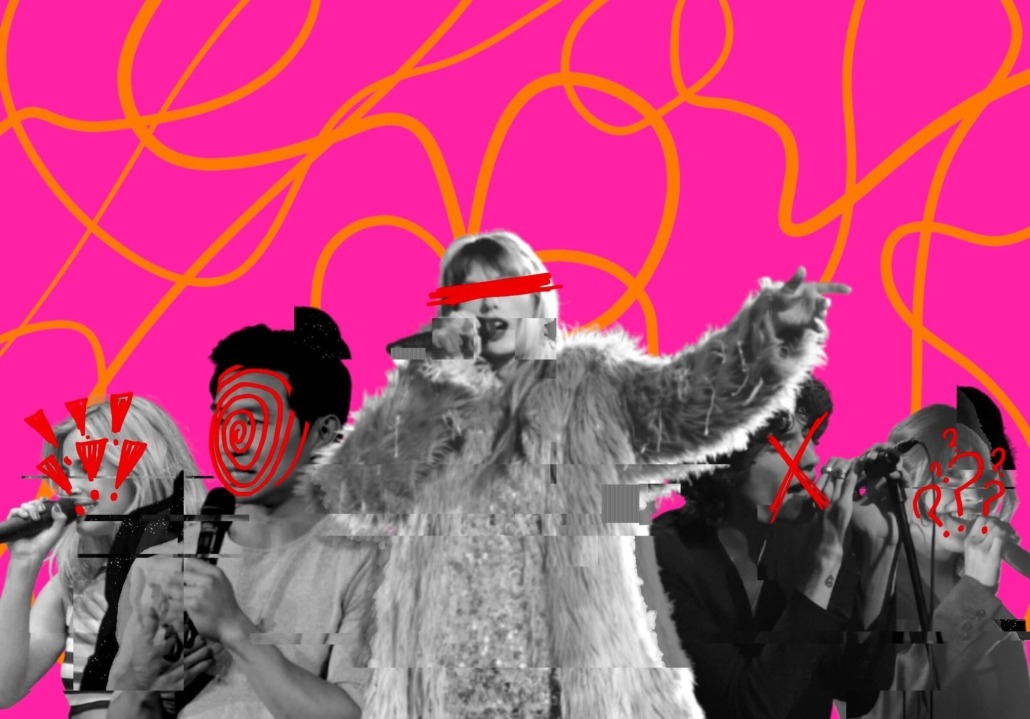

Loving musicians is a lose-lose situation.
I’ll confess: I never completely drank the Sombr Kool-Aid. I was too engulfed by the rapids of an Addison Rae summer to pay much attention to the curly-haired newcomer. Occasionally, I’d get the earworm of “back to friends” stuck in my head, but at no time listened to the singer-songwriter’s discography out of my own volition.
Yet, the lush crowds flooding the Shrine on Oct. 28 would leave you oblivious to recent online discourse surrounding Sombr.
To the dismay of 25-year-old concertgoers, the newly famed musician finds himself under fire for making suggestive comments during his Oct. 13 concert to his largely tween fanbase. This questioning of his moral complexion — whether substantiated or not — makes one thing clear: His once modest, spotless image has been fractured.
But Sombr is far from the last musician to face backlash for interacting with fans less than tastefully; Matty Healy was kissing fans onstage back in 2016, and before him, David Bowie did the same in the ’70s.
The cycle of cancelling problematic artists denotes a larger paradox at the center of the music industry: Musicians must be palatable enough to sell their art. They must be authentic enough to be relatable, but not too authentic that they’re susceptible to lapses in judgment.
We tie our media consumption to our identity, treating it as indicative of our moral values. When these musicians’ values are questioned, we feel as though our very own integrity is being doubted. No matter which artist you listen to, there will always be something to find problematic about them.
In curating this effortless persona, musicians turn to social media, with platforms like TikTok and Instagram harnessing the potential to launch entire careers overnight and shift the tide of the music industry.
But this dependence on social media predictably backfires for musicians, as every comment or action is forever embalmed on the internet. The easy accessibility to artists feeds into parasocial relationships, making fans feel entitled to police their character through this obscured lens of intimacy.
As a result, music culture has centered itself on cancelling artists who are deemed problematic. These routine cancellations have become so entrenched in our culture that their purpose and effectiveness in eliciting change have been diluted.
We probe at these artists, placing them under a microscope, hoping to reveal some rotten underbelly of moral transgression. Some artists try to beat their fans to the punch by publicly admitting wrongdoings or retiring songs, such as “Misery Business” by Paramore and “Brown Sugar” by The Rolling Stones.
This persistent anxiety to thwart controversy has led to a demand for media training, ensuring these musicians are equipped to minimize any associated risk, whether it be uncomfortable interviews or online feuds.
The challenge in determining who to cancel lies in defining what is, precisely, problematic. As cultural values shift, so does the standard. Therefore, what is considered “problematic” is always fluctuating.
The situation becomes foggier when we retrospectively look at artists who have passed yet left their indelible mark on the industry, even with skeletons in their closets. When does it become productive to impose contemporary standards for the sake of virtue signaling?
Of course, there’s an undeniable bottom line with racism, homophobia, sexism and bigotry. But regardless of which artist you pick, you inevitably must peel back the controversies and splendor to reveal artistic expression — and some artists may require more peeling than others.
At the end of the day, these artists are undeniably people; they are subject to the same imperfections and flaws as any other person. They are fallible beings in the business of convincing others they are anything but.
The issue isn’t that we’re holding artists accountable — if anything, we should invite it — it’s why we feel the need to do so. This desire to mass-cancel artists on our X-mounted soapboxes doesn’t purely arise from an appetite for justice or correcting misconduct. It’s what these artists’ failings reveal about our own shortcomings as consumers of their art.
This may brush against the “separate the art from the artist” argument, which is impractical and reductive in its reasoning; to omit the human touch in art ignores why we consume art in the first place. But no musician can fit this perfectly molded, morally correct paradigm. Simply put, the unproblematic artist does not exist.
Though millennials may have pioneered the practice of cancellation, with popular blogs like “Your fave is problematic,” Gen Z carries on this legacy with greater tenacity through call-out posts and media frenzies.
In realizing that becoming the perfect, ethical consumer is an unattainable feat, it is the plight of the modern consumer to reckon with the wrongdoings of the artists they enjoy.
Attempting to identify an artist as unproblematic lends itself to the deification of music artists by placing them on an arbitrary pedestal. Failing to acknowledge that artists are capable of error ignores the complications of humanity, but disregarding these errors entirely enables this corrupt behavior.
USC is a hub of musical artistry and expertise, with Thornton students honing their craft as they prepare to navigate today’s industry, with each encore and contract. As the new generation of music artists and professionals, we must lead these conversations on how the industry must evolve for the better.
The key is approaching these conversations with more intentionality and means to incite genuine change, rather than dogpiling on a musician for the sake of hopping on a bandwagon. True change comes from thoughtful engagement, not just outrage.

