USC researchers design powerful computer chip
The new technology mimics the efficient way brain cells learn and remember data.
By SHAAN MISRA
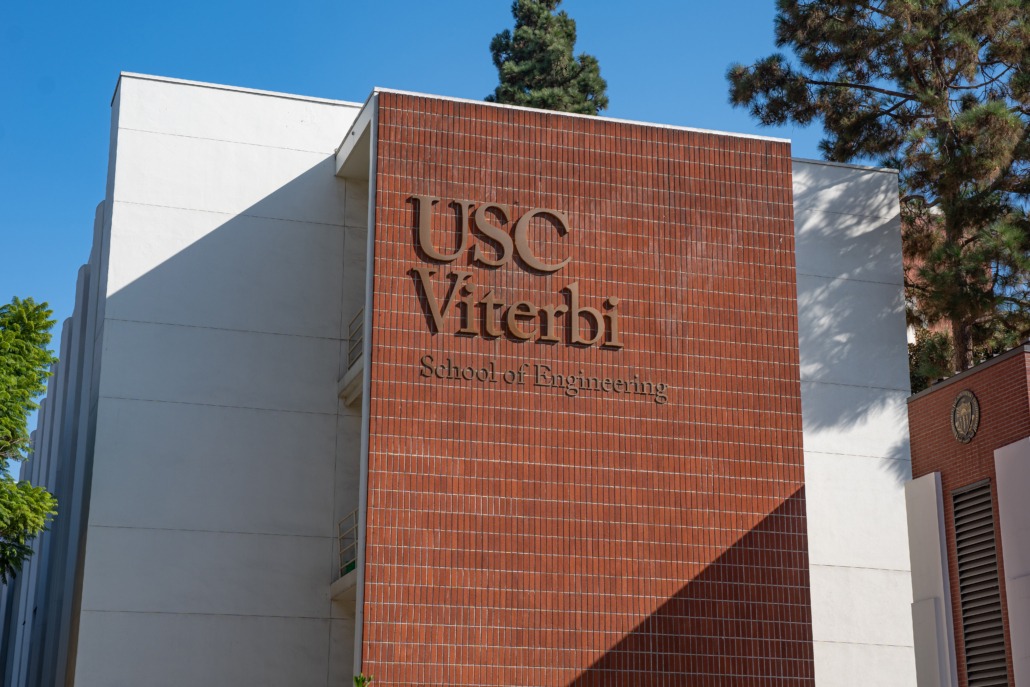

The new technology mimics the efficient way brain cells learn and remember data.
Today’s artificial intelligence systems are powerful, but they come at a steep energy cost. According to a recent estimate by Forbes, running ChatGPT for a single day uses about as much electricity as 180,000 United States households. So, researchers led by Joshua Yang at the Viterbi School of Engineering developed a new kind of computer chip modeled after a far more energy-efficient system: the human brain.
“If you ask a little kid to learn a handwritten digit, you just need to show them a few examples,” said Yang, a professor of electrical and computer engineering. “You need to give a machine tens of thousands of examples for it to learn.”
Yang’s team developed a blueprint for creating chips that physically replicate the processes of real neurons, rather than just mimicking them through software, like a typical smartphone chip would. Today’s devices only run mathematical models that approximate how a neuron would fire and react. Yang said their goal is to bridge the efficiency gap between machines and the human brain.
Andrew Liu, a freshman majoring in electrical engineering, said he was happy to see researchers tackling the issue of energy efficiency in AI.
“One of the major issues we have with AI is energy use,” Liu said. “So I think [Yang’s research] is a pretty good step in its advancement.”
Yang’s team intends to change the way chips represent information. Computer chips today use digital logic: processing information as 1s and 0s, representing “yes” and “no” inputs. However, the team is designing their hardware to be inspired by the brain’s “analog” system, where signals are more continuous and can contain numerous inputs anywhere between 0 and 1.
The team then wants to replace the ways computers process information. Sequential processing is how current computers do tasks: one step after another. Neurons in our brains, however, use parallel processing to do multiple tasks at once.
“Our approach is trying to build from bottom up, trying to build devices that can behave like our synapse, like our neurons,” Yang said. “If those devices are similar to the biological components, hopefully, when we put them together, they can give [us] surprises. They can implement the fundamental neuroscience principles we don’t even know yet,” Yang said.
Another change the team is making is combining the processing and memory systems. A smartphone has a dedicated processor and temporary storage system to which it constantly sends data back and forth. Yang’s new technology stores and processes data in the same location, eliminating the need to transfer it back and forth — a process called “in-memory” computing.
The chips will be built with special materials that move tiny charged particles, called ions, to send signals — similar to how the brain’s neurons communicate. Most chips today rely only on electricity, but Yang’s design adds this chemical movement to create an “electrical pulse” in the chips that mimics how real brain cells are powered.
Yang said that while building a single artificial neuron is one thing, building billions that can work together like a brain is a larger task. His research sits at the intersection of biology and engineering, which means experts in both fields must collaborate. Yang said his team often works with neuroscientists, but the two groups of scientists are still learning how to best collaborate.
“We don’t understand much of what they say, and they don’t understand much of what we say,” Yang said. “We need interdisciplinary, close collaboration to push this field forward.”
While the teams are still determining the best way to communicate, Eason Bai, a freshman majoring in electrical and computer engineering, said he was inspired by the interdisciplinary approach.
“Biology gives engineering a really good direction,” Bai said. “It’s really exciting to me.”
Despite the long and challenging road ahead, Yang said he remains optimistic. The professor said he believes that the most meaningful breakthroughs will take time and that lasting advancements in artificial intelligence depend on patience and persistence.
“People nowadays don’t have the patience to wait for more than a decade,” Yang said. “This is the last frontier of computing. It’s not going to happen overnight.”