Student passes entire exam needed for architecture license
No other person at USC has passed all six sections of the test as an undergraduate.
By ETHAN KELLOGG
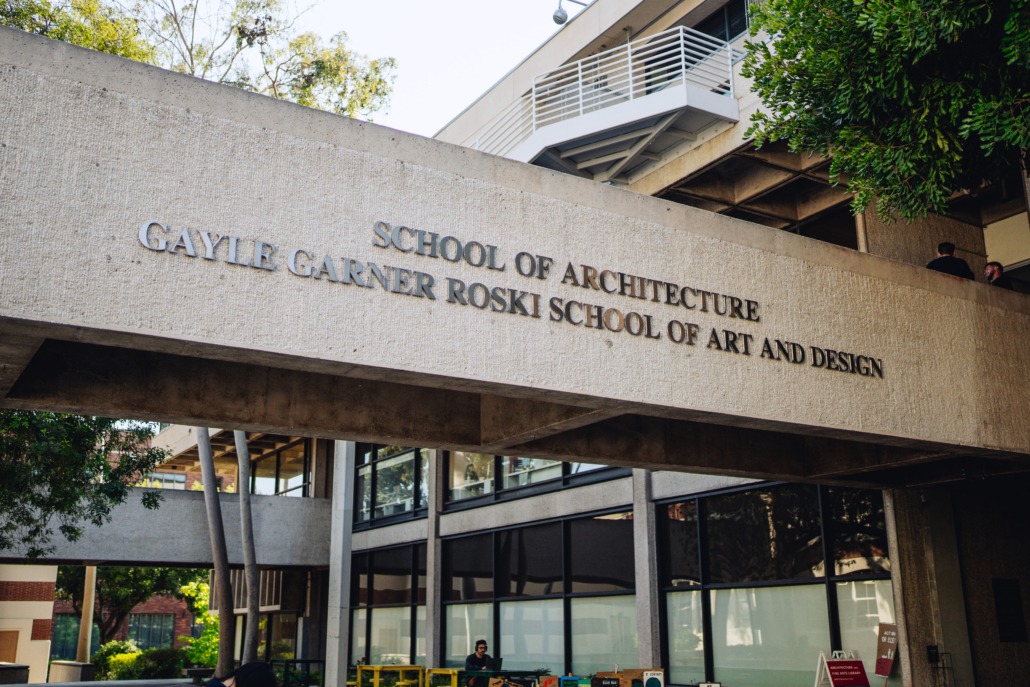

No other person at USC has passed all six sections of the test as an undergraduate.
In high school, Aaron Chang felt prouder of his work as a set designer than of his work as an actor. Through his high school’s theater productions, he developed a passion for design and model making, which now helped him become the first USC undergraduate student to pass all six divisions of the Architect Registration Examination.
When Chang, a third-year majoring in architecture, first learned in November 2024 that undergraduates could take the ARE, a multi-division exam to assess one’s knowledge and skills regarding the practice of architecture, he immediately began studying. He took his first test in February 2025 and failed it, but, undeterred, he kept taking a new test every month until he passed all six divisions of the exam by July.
Later, Douglas Noble, a professor of architecture who organizes study groups for the exam, heard rumors that an undergraduate student had passed all six sections of the ARE, and he did not believe it. To Noble’s knowledge, the largest number of sections an undergraduate had passed was two.
“I sit on these national committees with faculty members from the other universities … and nobody has anybody that’s passed all six,” Noble said.
Prospective architects must pass all six ARE divisions to become licensed. Traditionally, architecture students take the ARE after graduation, but USC is one of 28 schools that allows undergraduates to take the exam through the Integrated Path to Architectural Licensure program.
Chang said he did not want to sacrifice his sleep, social life or summer internship to prepare for the exams. Instead, he studied the exam materials when he had the time, and he studied rigorously a week and a half before each exam.
According to Roxanne Natal, a fourth-year majoring in architecture who works with IslandFOX, a group of architecture students dedicated to improving student exam scores, the exams require immense studying.
“We had over 100 people that were interested when [IslandFOX] first started,” said Natal, also the co-president of the American Institute of Architecture Students. “In the past … nobody would take their exams. We had the IPAL program, but it wasn’t very active. It’s really great that people are passing.”
Noble said he believed that one of the hardest ARE sections is Construction and Evaluation, which tests subjects like oversight of a construction project.
“If you’ve never worked in an office, then you probably haven’t been on a construction site, and now you have to pass an exam,” Noble said. “How does that work? And you have to do it from book learning. That’s just kind of crazy.”
According to the National Council of Architectural Registration Boards, it takes an average of 13 years to become a licensed architect. Chang said he believes he can meet the required total of 3,740 work hours across the six areas a year after graduating in 2028.
Chang’s future plans are to work in an architect position that combines his interests in design and construction.
“My personality fits construction a lot more, as in, how I want to go about my way of doing work, but then my interests are more aligned with design,” Chang said. “I want to try to find a way to hybridize the two of them.”
Even though Chang is the first student to reach this milestone, he’s not entirely sure if architecture is what he wants to do. He could just as easily see himself going into civil engineering, but said he still wouldn’t change a single decision he’s made.
“I don’t know why I’m in architecture, but I’m glad I’m doing it,” Chang said. “I like the projects we do. I like the creative stuff we do, but also I like the people in architecture. It’s like, ‘Yes, I’m pulling an all-nighter, but I’m pulling it with friends’ … I feel like being an architecture major has been a very defining part of my college career.”