A good man is hard to find, especially here
We all have to master our own emotional economics to avoid the evil men at USC.
By LUISA LUO
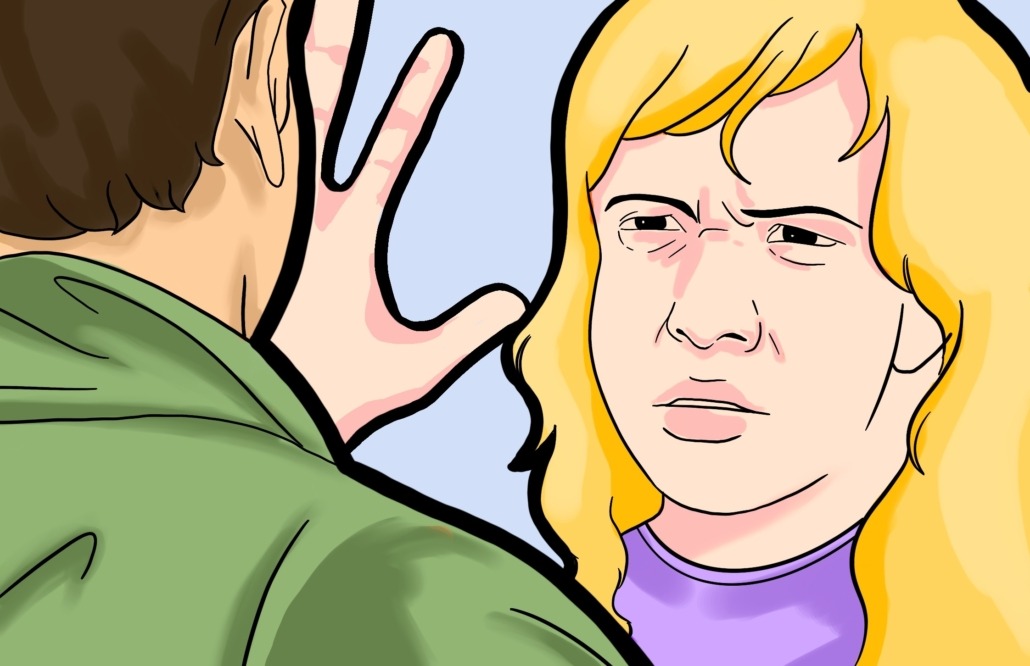

We all have to master our own emotional economics to avoid the evil men at USC.
Would you rather be close to a person who is capable of hurting you or keep your distance and endure loneliness?
In the Hedgehog’s Dilemma, popularized by Sigmund Freud but originally extracted from philosopher Arthur Schopenhauer’s parable, hedgehogs want to huddle for warmth, but the closer they come to one another, the more they risk being poked by each other’s spines.
This dilemma came into sharp focus when a British Vogue article published Oct. 29 insisted that it is actually “embarrassing to have a boyfriend,” under the pretext that being in a relationship is not the default. In this logic, the only path to being “cool” is embracing singledom — a stance that resonates since many find true fulfillment outside of romance.
The philosophical thought experiment captures the USC dating paradox with uncomfortable accuracy. Desire and ambivalence do not equal romance; they only trap us in limbo. Us young women are emotionally agile, but struggle to be honest with ourselves, and gendered expectations and interdependence amass this struggle further.
Broadly, USC’s dating pool leaves more people dissatisfied than actualized. On top of our shared troubling mentality of wanting intimacy but avoiding vulnerability, the challenge of male emotional immaturity only sharpens the tension. Part of the problem is that the “good man” is asked to fulfill hefty expectations: He must be decisive, open to partnership and egalitarian.
Ironically, many who claim to be good men are some of the worst you could meet. They assume key qualities such as self-awareness, accountability and generosity can be postponed until some imaginary future adulthood. So the “good men” turn into bad partners, incubating a masculinity polished on the surface, but underdeveloped underneath. To counter this, women preemptively lower their expectations to shield themselves from disappointment.
If you stumble into Bacari in West Adams at 8 p.m. on a Thursday, chances are you will overhear multiple “relationship-defining conversations” while enjoying your eight-course tapas. You will listen to these strikingly similar confrontations that involve the same painful irresponsibility: one side expecting answers while the other is unbelievably skilled at being just good enough to keep them hoping.
In fact, young single women should be selective about whom they date and invest their time in, but not to the point of worrying whether they are impressive enough or whether dating them would affect their social standing and reputation.
As transactional as it sounds, our ambitions drive us to focus on increasing our social capital, accelerating the pace of dating cycles. Ultimately, this poses the conundrum of being far more comfortable in retreat than in advancing toward a shared future.
But not everyone shares the same value on the importance of equality in relationships. Masculinity “scripts” — cultural expectations that dictate how men are taught to express desire, vulnerability and effort — could still be performed with dismissiveness and minimal labor. Men learn how to mask this detachment, relying on the structural imbalance that makes their ambiguity seem acceptable while casting women’s clarity as burdensome.
With that in mind, it shouldn’t be shocking to hear that women hope to be alone, not out of bitterness toward men, but out of a sincere desire to focus on their inner prosperity and find satisfaction through friendships and other forms of affection.
We have to acknowledge that sometimes someone isn’t even craving love, but is instead just hurt by the statistical improbability that, despite there being 20,000 young, eager-to-date people in their immediate vicinity, they don’t seem to ever come across “the one.”
Even with so many opportunities to meet people, these occasions themselves are not conducive to love. In a tight ecosystem like USC, emotional harm carries a public dimension — so men keeping their partners at arm’s length helps maintain a social equilibrium.
I also learned from my “Sex, Power, and Politics” class that to be organized and oriented around a man’s desire as a woman is a dangerous choice of submission that could lead us to a lifetime of slow career growth, unpaid domestic labor and years of childcare responsibilities.
Every time we hear of a new category of burdens that the institution of heterosexual marriage places on its prisoners, it pokes open a new hole in our conception of the intimate, interdependent relationships between men and women. No wonder one becomes resentful over the unequal division of labor. How could anyone volunteer to be in these situations when they could just be, well, free?
Saying “a good man is hard to find” does not mean that men at USC inherently lack value. Rather, it reflects a systemic shortage of empathetic, confident but not cocky, consistent partners in a culture that rewards the opposite traits.