‘He Was A Nice Guy’ film addresses aftermath of campus sexual assault
Alum Alexandra Cardona’s upcoming directorial debut translates pain into power.
By KIRA MANELSKI
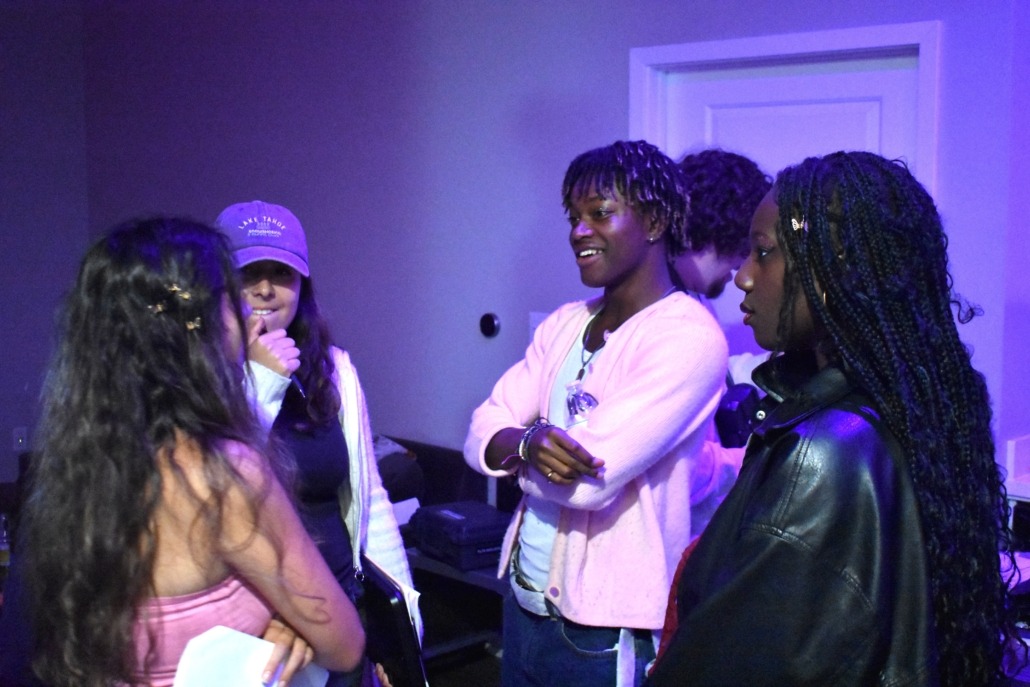

Alum Alexandra Cardona’s upcoming directorial debut translates pain into power.
Content warning: this article contains references to sexual assault and violence.
According to a 2015 study by the Association of American Universities, 26.4% of women on college campuses are sexually assaulted. In 2017, the United States Department of Justice found that 60% of rapes are committed by someone the victim knows.
Alexandra Cardona, a 2025 graduate of the Dornsife College of Letters, Arts and Sciences, became intimately familiar with this previously incomprehensible, but all too common, nightmare.
In the summer of 2025, she directed the short film “He Was A Nice Guy” about the aftermath of a sexual assault within a college friend group. The film, which is currently in post-production and set to be screened in February, explores the long-term impacts of assault on the victim and the community that surrounds them. Cardona especially focuses on interpersonal relationships and identity.
“I was sexually assaulted my sophomore year of college,” Cardona said. “I didn’t really recognize what was going on at the time. I didn’t grapple with it until a year after.”
Cardona, a creative writing major at the time, first conceived the idea of “He Was A Nice Guy” while taking a course on the aesthetics of violence. Realizing that the aftermath of sexual assault is rarely discussed in news and entertainment media, she wanted to use her art to approach the complex reverberations of sexual assault within a college community.
The film was based on an experience Cardona underwent a year following her own sexual assault.
Lola (Vanessa Cardona), the film’s central character, runs into her assaulter and former friend, Connor, at a party. The event induces a panic attack and propels her to open up to her friends, played by Kevin Rome, Rokya Diaby, Francisco Espinoza Miranda and El Belilty, all USC students or alums, who had all been friends with Connor. The friend group is then forced to wrestle with this admission and contemplate how their relationships with Connor will change.
Victims of sexual assault on college campuses may have to confront the perpetrators who may be in their classes, friend groups or clubs, Cardona said.
“I had a lot of friends that I showed the script to when I started writing it … I was really scared to open up to them,” she said. “But there were so many people that I talked to who said that something similar had happened to them, and they would see the people that sexually assaulted them all the time.”
“He Was A Nice Guy” grapples with the lack of resolution many survivors feel as they are forced to reckon with their sexual assault. Alex Delgado, a senior majoring in business administration and a producer on the project, said the filmmakers wanted to raise awareness about the victim’s experience of sexual assault.
“It’s something that they live with; it’s not just an incident for them. It’s something they might live with forever, and they have to deal with on an everyday basis, depending on their proximity to the perpetrator,” Delgado said.
Cardona said she suffered alone in the fallout of her assault, and that “He Was a Nice Guy” attempts to provide a safe space and a community for survivors to discuss how their assault affected their self-perceptions, friendships and experience at school.
The film explores Lola’s relationship with her perpetrator, as well as the delicate dynamics that are shattered within college social networks when a friend sexually assaults another friend.
Though Connor is never shown in the film — a deliberate choice by Cardona, who sought to center the film on the experiences of Lola and her friends — he haunts the weighty contemplations of his friends.
“Even though we want to be there for the person who was sexually assaulted, it’s really hard for us to change our lives immediately and drop the people we know,” Cardona said.
The psyches and reactions of each of Lola’s friends are explored with interest and compassion, as was the title of the film. Cardona said she wanted to emphasize the double standards society provides to men as a result of patriarchal beliefs.
Within an intimate college friend group, men are perceived as “nice” for actions like holding the door, helping with a friend with homework or buying a friend a drink, she said. However, when one becomes a victim of that violence, Cardona said their perception of the man as “nice” changes, and “nice” actions can’t exempt a man from the consequences of his violence.
“I always go back to the experience I had. … I had a lot of anger at [the perpetrator of my sexual assault], because he’s nice to everyone. Everyone loves him,” Cardona said. “I wanted to test the idea of what a nice guy is — a man who can be nice to other people can do something so wrong and violate someone, but everyone will see him as so nice.”
The refrain “but he’s nice” repeated in Cardona’s head as she struggled with her own sexual assault experience. Through “He Was A Nice Guy,” she wanted to challenge the excuses communities often make for family and friends who commit sexual assault, framing the character of Connor through his dual capacity for politeness and harm.
Despite the difficulty of the subject matter, the cast members were able to find pockets of joy in the shooting process to cultivate believable friendships for the characters.
“Everyone did a great job of finding the lightness within the story, because the story is not only very dark, but it’s also a friend group who don’t know what to do in a situation like this,” said Vanessa Cardona, Alexandra’s sister, who portrayed Lola in the film and also served as a producer on the project.
Vanessa, who also graduated from USC in 2025 with a bachelor’s in theatre, said her sister fostered a culture of healing, camaraderie and comfort on set, translating the suffering of her sexual assault experience into an empowering and educational artistic project.
“I hope [audience members] know that it’s coming from a place of healing,” Alexandra Cardona said. “I hope people feel connected to it and know that they have someone to talk to.”
If you are in need of support, here are some resources you can contact: USC Relationship and Sexual Violence Prevention and Services: Located at Engemann Student Health Center Suite 356. Individuals can call (213)-740-9355 and request to speak with an advocate or counselor. Services are confidential. Rape, Abuse & Incest National Network (RAINN): A free, confidential hotline that is active 24/7. Individuals can call (800)-656-4673.
Disclaimer: Francisco Espinoza Miranda serves as a staff writer in the Opinion section at the Daily Trojan. Espinoza Miranda is not involved in Arts & Entertainment coverage.