FEMININOMENON
Holding space for authentic friendship between women
The marketing strategy behind “Wicked: For Good” contradicts the film’s theme.

By FIONA FEINGOLD
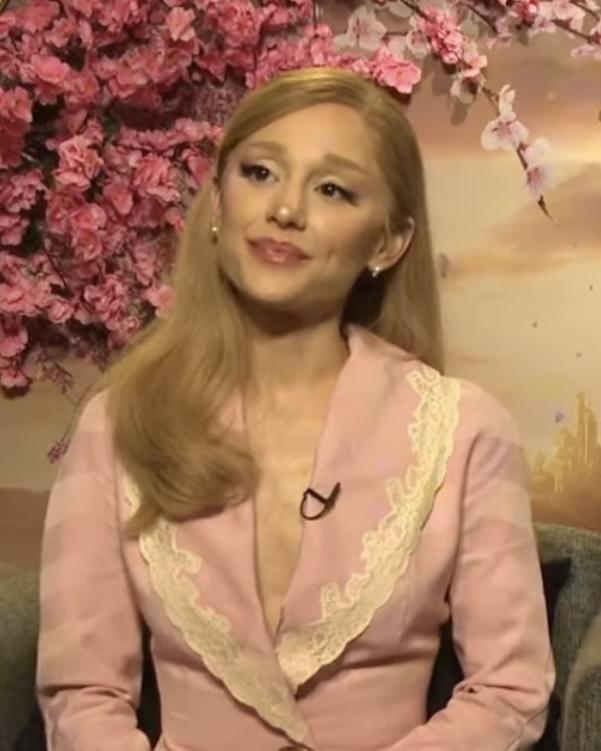

The marketing strategy behind “Wicked: For Good” contradicts the film’s theme.
“Wicked” is one of my favorite musicals because it succeeds on so many different levels of storytelling: The music, the character development and the spectacle interweave to form a heartwarming tale of friendship and identity.
With “Wicked: For Good” releasing in theaters Friday, I wanted to reflect on the film’s marketing strategy. The approach is much different from what we’ve come to expect of similar tentpole movie musicals, in which there is more distance between the actors and the characters they play.
Some of those differences are dictated by the film’s story. “Wicked” as a musical is unique in its focus on the relationship between the two female leads, Elphaba (Cynthia Erivo) and Glinda (Ariana Grande).
What makes the press for “For Good” just as interesting is that the actors’ relationship seems to transcend the film, seeping into public appearances. Their bond has proven to be integral to the marketing campaigns for both “Wicked” (2024) and “For Good.” The interviews leading up to the first film’s release were all unexpectedly laden with emotion.
Given the musical’s bittersweet ending, this wasn’t entirely unfounded — the story lends itself to tears.
When I first watched “Wicked,” I cried less than 30 minutes into the movie after Erivo’s outstanding performance of “The Wizard And I.” The same can be said for when I first watched the live musical at the ripe age of six years old; I hated how Doctor Dillamond was treated by the students of Shiz and began sobbing less than halfway through the first act.
I know the ending of “For Good” will leave me even more distraught, and I’m looking forward to that.
Clearly, I have no place to judge what emotions the musical may evoke, but it’s unusual that mere discussion of a film results in tears from its leads. I struggle to think of another press tour in which a film’s actors are so consistently and outwardly weepy when reflecting on their experience.
It’s unclear if this dynamic is completely staged, simply two big egos trying to “outemote” each other, or just a byproduct of pure emotional overwhelm from a pair of exhausted actors. I’m personally of the belief that these reactions are real, yet highly exaggerated, making the interviews an unsettling watch. I feel like I’m intruding on a private moment instead of engaging with a calculated vehicle to promote a blockbuster.
Granted, as a massive fan of “Wicked,” I still find myself following along with Erivo and Grande as they participate in the junket. But most of the clips I engage with make me feel like I’m the third wheel, even though I’m a member of their core target audience. Picture the most annoying couple from your high school, and you’ll understand the severity of their platonic PDA.
I’m sure Erivo and Grande are friends in real life, but I, and many other viewers, are definitely unconvinced that their tears are 100% authentic. I have a feeling that the “Wicked” marketing team saw the duo’s interactions in the film’s first slew of interviews and told the actors to keep upping the emotionality — because it clearly gets people talking.
This is not to discredit the very real connection Erivo and Grande may have or the hard work they have done to bring the world of Oz to life — which I’m sure has triggered many difficult emotions. But crying about “holding space for the lyrics of ‘Defying Gravity’” does the story a disservice.
The conversation surrounding the actors’ alleged performance of friendship undercuts the film’s very message, or at the very least distracts from it. We’ve spent more time talking about whether Erivo and Grande are actually crying that much instead of Elphaba and Glinda’s chemistry.
You could argue that their viral interactions will attract more audience members, and that might be true. But I also think their dynamic will disinterest another group of viewers from immediately seeing the film, if at all — which is a shame, because Elphaba and Glinda’s friendship is the true star of “Wicked.”
Erivo and Grande might know how to ham it up on the press tour, but their acting in “Wicked” is leaps and bounds more honest than any interview. Erivo’s poignantly portrayed the pain of being othered, and Grande nailed Glinda’s comedic timing.
There’s a reason that the first film, which made $758 million worldwide, set the box-office record for highest grossing adaptation of a Broadway musical, and it’s largely due to Erivo and Grande’s on-screen performances. It’s a shame that sincerity hasn’t translated to the “Wicked” junket, but all fans have to do is go to the movie theater this weekend to revel in the power of authentic female friendships.
The sequel’s title, “For Good,” refers to the musical’s final duet between Elphaba and Glinda. The song is a goodbye, but one filled with hope. It’s knowing that a connection, whether fleeting or permanent, has permanently altered your view of the world.
We all have someone who has irreparably changed our lives, for good. Maybe Erivo and Grande think about each other when they sing the duet, and maybe they don’t. That’s not really the point. Let’s focus on what the lyrics mean to each of us: “Who can say if I’ve been changed for the better? / But because I knew you / I have been changed for good.”
Fiona Feingold is a junior writing about women in the entertainment industry in her column, “Femininomenon,” which runs every other Friday.