PharmSC provides clinical care for Boyle Heights
The clinic has free services while preparing the future generation of pharmacists.
By FEIYU LONG
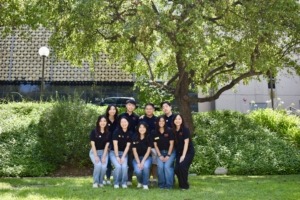

The clinic has free services while preparing the future generation of pharmacists.
For Michelle Hii, pharmacy has always been personal. Her interest in oncology was sparked by her family members’ cancer diagnoses. When she met an oncology pharmacist during her undergraduate years, she discovered the role of pharmacy as an avenue that would make a difference for cancer patients not only through medication management, but also through building relationships with patients to provide more personalized support.
Currently pursuing a doctorate in pharmacy, Hii serves as the president of PharmSC, a student-run clinic located inside the Botica Del Sol Pharmacy in Boyle Heights. Founded in 2009, the clinic allows USC pharmacy students to provide free health screenings and counseling under the supervision of a licensed pharmacist.
“I wanted to pursue pharmacy in the first place [because] I wanted to make a difference in people’s lives in a personal way,” Hii said. “[The] PharmSC clinic [has] all those opportunities. I can see patients one-on-one every month, develop a relationship with them, and also gain real-life clinical experience.”
Hii said the clinic is committed to providing equitable pharmacy access amid broader instability in the pharmacy landscape. She said Botica Del Sol sits within a “pharmacy desert,” an area with limited pharmacy access.
The challenge, she said, is compounded by chain pharmacy closures such as Rite Aid’s bankruptcy and the growing influence of delivery-based models like Amazon Pharmacy. She said many participants lack insurance and do not have a primary care provider, which makes the clinic one of the few accessible places for basic health support.
“Not only are they grateful for our presence, but we are able to make a difference in their lives,” Hii said. “I feel more needed in this population because I can give them recommendations, and I can work with them [on] their goals.”
Britney Pham, PharmSC’s president-elect and a pharmacy doctorate student, said the clinic’s importance lies in its ability to provide accessible healthcare to a community that faces large provider-to-patient ratios. With many patients finding it difficult to schedule appointments with their medical providers, Pham said PharmSC can help by offering basic screenings and counseling.
“We will be able to essentially act as frontline providers for patients,” Pham said. “By having this clinic, we’re able to divert more basic cases and help patients out in a more timely manner.”
Dillon Gonzalez, a pharmacy doctorate student PharmSC’s level-one representative who facilitates and advertises the group’s events, said the clinic’s community outreach effort drove him to join the club. Gonzalez said the presence of underserved communities in East Los Angeles, often caused by socioeconomic and language-based barriers, highlights the importance of the clinic’s work.
“It’s great to use whatever knowledge I have utilized in class to help screen patients for different disorders, whether it be high blood pressure [or] high cholesterol, [to] try and speak to them in a language that they understand to help them live healthier, happier lives,” Gonzalez said.
For the pharmacy students who staff the clinic, PharmSC offers a population setting that looks very different from what they typically encounter in the classroom, Hii said. She said differences in language and lifestyle, as well as the pharmacy’s local importance, can provide a great opportunity for students to provide more personalized services and suggestions.
“I like being able to talk with [patients] and see how I can make realistic changes in their diet, their lifestyle or their medication,” Hii said. “To gain some real-life experience talking to patients is very different from learning things in class.”
PharmSC operates from a combined effort of board members and volunteers. Board members supervise every shift, using a secure system to log participant data and counseling notes. After completing their training session, volunteers can select from up to fifteen shifts per month, with most students working on Fridays, Saturdays and Sundays. Attendance of these shifts vary, but the average is at least two per shift, Hii said.
Pham said she hopes to expand PharmSC’s range and magnitude of services during her term starting next fall and increase the clinic’s participant volume through targeted outreach to local Boyle Heights businesses. Pham said she also aimed to strengthen collaboration with ambulatory care offices, allowing pharmacists to refer participants to PharmSC for device education or initial screening services.
“Beyond just the clinic, I would like for us to be able to volunteer more in underserved areas to give back to [the] community,” Pham said. “I wanted to be able to touch on everything and get my hands a little more dirty.”