CHRONICALLY ONLINE
‘The Pitt’ is healing television
The award-winning show opts for weekly releases rather than a single release, something more shows should do.

By ANNA JORDAN
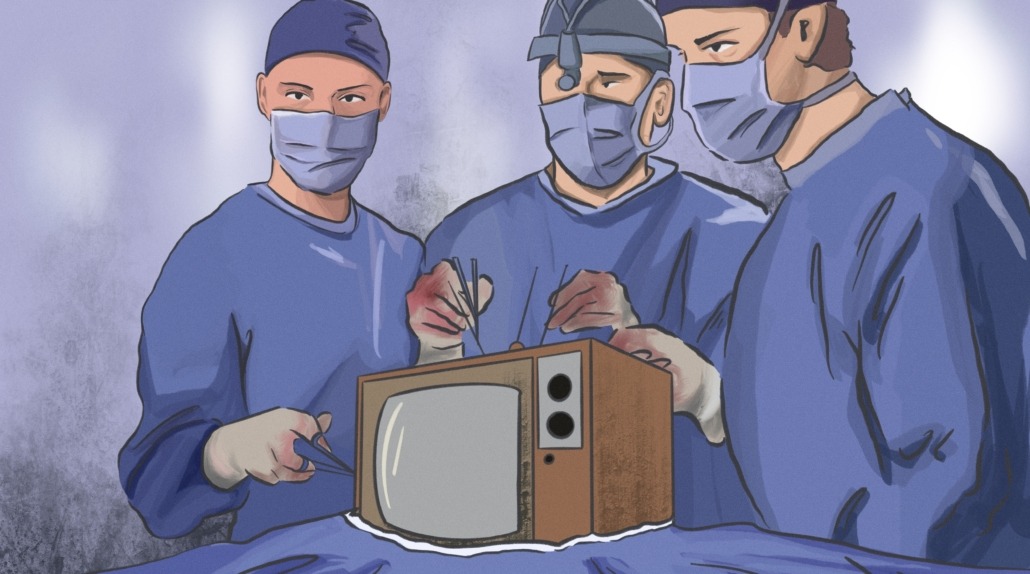

The award-winning show opts for weekly releases rather than a single release, something more shows should do.
Like lots of people over winter break, I watched a lot of TV. I rewatched “Castle.” I started watching “The X-Files” — just ask anyone I’ve interacted with since classes started. I rewatched “The Pitt,” and I watched the final season of “Stranger Things.”
Watching “The Pitt” and “Stranger Things” back-to-back struck a chord with me, as they represent two different major pop cultural moments while also representing different behaviors of television, with “The Pitt’s” weekly releases giving it an upperhand.
“Stranger Things’” previous seasons had a major effect on pop culture. ’80s nostalgia ripened and hit its stride. A new generation of notable child actors emerged. And suddenly, at least to me, everyone was talking about binge-watching something that had just come out rather than an established show with several seasons to blast through. Instead of waiting for a whole season to come out with weekly releases, all the episodes dropped in a day.
This production model became the standard for streaming platforms, especially on Netflix, where seasons of television desiccated into fewer than ten episodes per season. Those episodes became mini movies themselves, with runtimes stretching past an hour at times.
The process of filming the episodes also mimicked that of movies, in which all episodes would be made over the course of several months — or in the case of “Stranger Things,” years.
This production style seemed novel after decades of tried-and-true weekly releases created by the limitations of cable television, in which the only thing you could watch was whatever was on at the moment. Let’s forget about TiVo for a second; that was a blip in the space-time continuum.
Before the advent of streaming, seasons of TV shows were 15 episodes long if limited, 20-plus if well-funded and beloved by viewers.
I understand why the binge-watching format was popularized, both behind-the-scenes and as a consumer. From a creative standpoint, it allows everyone involved to have ample time to polish details like editing and acting performances before sending out the finished project. From a business perspective, you can build hype for the release well before the episodes are distributed, raising viewership before the show even comes out.
And I’ll be damned if I haven’t sat like a pig in the mud watching my shows for hours at a time with a little smile on my face and sloth in my heart. It’s fun!
But after years of having miniseries masquerading as full-scale television shoved down my throat, I’m starting to think it’s only fun in moderation. Because the all-in-one-go style seems to be wearing thin for viewers and creators alike.
The actors and crew receive no breaks during production — normal for a film, but abnormal when the production schedule equates to two or three films in total hours and effort. And with this extra-long filming schedule, years can pass before any peep is heard from shows. The work slows down, which isn’t fun for anyone involved.
The phraseology of binge-watching is also indicative of the effect it has on viewers; they get bloated with content and don’t digest the shows properly. This can lead to unrealistic expectations — #conformitygate — and shallow discussion, something I see on the internet more often than I see my family.
Not to mention that from an artistic standpoint, it’s hard to maintain consistency when the last time you wrote or acted for the show was years ago.
And now, we reach “The Pitt.” “The Pitt” is where I want to stay. As TikTok creator @taraswrld once infamously said, “I finna be in the pit.”
“The Pitt” releases weekly. What?! Yes, weekly. And to me, it’s provided a major revelation: The binge-watching format isn’t the future of television, it’s a tangential present.
Weekly releases are ideal for everyone involved. The writers have time to develop the characters and prioritize their vision for where they want the characters to end up by the end of the season. This champions character-driven stories rather than basing the length of the show around a plot that can most effectively span seven total hours of episodes, which in turn makes the stories evergreen: Circumstances change, but complex humans remain relatable.
And boy, do I relate to those ER doctors firing off chemistry and medical knowledge like it’s easy as pie when I’m a poetry major. It’s true, I do, and it’s because of good writing!
These weekly release shows that span multiple seasons can also act as a watering hole for technicians and crew members throughout their tenures. As episodes are shot week by week rather than all in one go, the shows continue to need crew members and provide continuous income for those staffing the set.
Weekly releases also allow viewers to digest each episode properly, leading to more meaningful viewing experiences and greater anticipation built in between episodes. I know I look forward to each episode more and more as each week passes.
Viewers love “The Pitt” because we’ve spent time with it. We’ve familiarized ourselves with the characters, and we’ve been able to pick up on performance and writing-based nuances. Writers pick up the thread of the last episode with ease. Each episode release is an event — it feels like my favorite movie is premiering every week.
Those kooky doctors aren’t just fixing people on screen; they’re leading a charge for returning TV to a place of artistry as opposed to profit. And I’ll be seated every Thursday until April, ready to return to Pittsburgh, of all places.
Anna Jordan is a junior writing about pop culture controversies in her column, “Chronically Online,” which runs every other Thursday. She is also Chief Copy Editor at the Daily Trojan.