I know that I do not know
Efficiency has become more prioritized than truly and deeply grasping something.
By JULIA HO
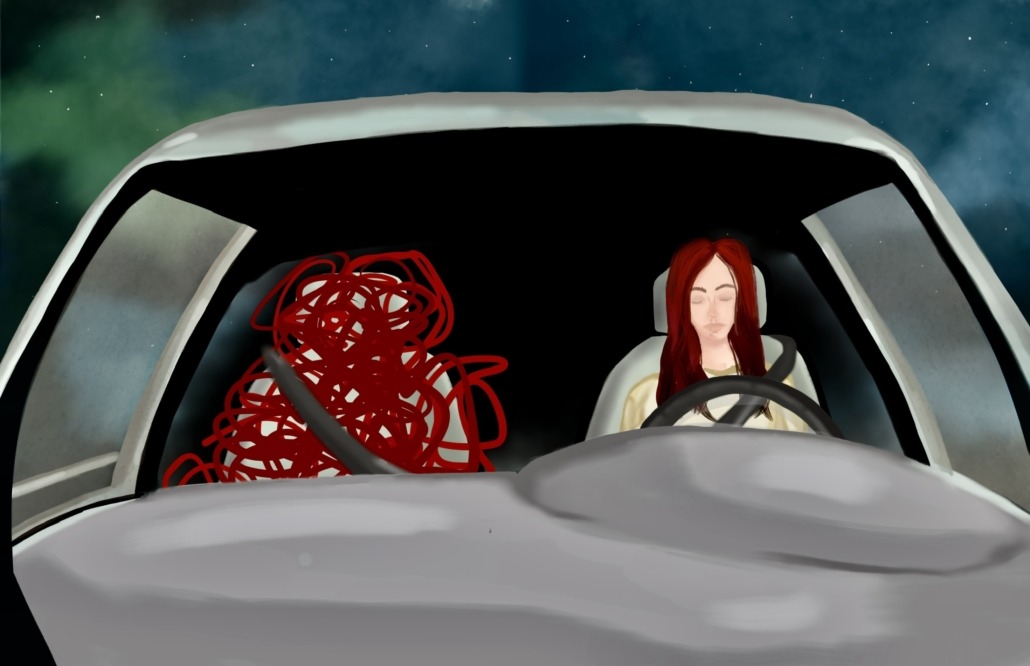

Efficiency has become more prioritized than truly and deeply grasping something.
Actually knowing seems to matter less than sounding like you know, which is unfortunate for people who are still figuring things out. Namely everyone, but more so, devastating for people like me, who would rather Google the ending than sit through suspense.
I do this with movies, books, TV shows. I start them earnestly, convinced I’ll let the narrative unfold the way it was intended. Then, something tense happens; the plot thickens; the music swells; a character makes a questionable decision — and I pause to look up spoilers. Not because I’m bored, but because I’m uncomfortable.
Suspense feels inefficient; uncertainty feels like wasted time.
This impulse doesn’t stop at media consumption. It leaks into how we learn things, how we write, how we pick up interests. Learning something new must lead somewhere. A hobby should eventually justify itself, ideally by becoming something impressive or profitable. We don’t just ask what we enjoy — we ask what it can turn into.
The performance of understanding has quietly replaced the practice of it. We live in a moment where hesitation reads as incompetence and admitting “I’m not sure” feels like confessing a moral failure. Answers are rewarded for arriving quickly, not for being good.
Philosophers have been annoyed about this for centuries. Socrates’ whole shtick — “I neither know nor think that I know” — wasn’t false modesty; it was an acknowledgment that certainty is seductive precisely because it feels like control. In the 1970s, historian Hannah Arendt drew a distinction that feels uncomfortably relevant now: Knowing is about accumulating facts, but thinking is something slower, less tidy and often destabilizing.
Naturally, we prefer knowing.
I certainly do. It’s why I gravitate toward writing on topics that give me something solid to lean on. Political analysis, cultural criticism, topical pieces — those come with scaffolding. There are sources to cite, frameworks to deploy, positions to take; it feels contained, responsible and respectable.
What doesn’t feel respectable is writing without knowing where the piece will land — or whether it will land at all. That’s why writing an article on how it’s okay to be corny unnerved me more than anything else I’ve had published. I didn’t know what I thought at the beginning — I just followed the discomfort and hoped it would resolve itself on the page.
It’s easy for me to connect my experiences as a queer Asian woman to politics; there’s language for that. It’s harder to admit that I’m inexperienced, awkward or unsure in other parts of my life. Writing about my views on relationships felt exposing in a way no policy argument ever has. There was no conclusion waiting for me at the end of the draft, just a question mark and the possibility that readers would sit with me instead of demanding an answer.
Around this time, I found myself thinking about when I decided to learn the harmonica.
For me, it wasn’t an act of self-cultivation. I learned it in high school because one of my friends insisted on performing a duet. She was singing Alanis Morissette’s “Hand in My Pocket.” I was on piano. At some point — I genuinely don’t remember who initiated this — it was decided that I should also play the harmonica. This wasn’t a strategic choice or part of a long-term vision for myself. It was just something that happened.
I learned enough to survive the performance, then kept going out of inertia. Years later, I still play it occasionally when I’m bored. Not to get better, not to show anyone and not because it says something interesting about me. It’s just something to do with my hands. Something that makes noise.
This feels almost suspicious now.
In his book “The Score,” philosopher C. Thi Nguyen writes about how scoring systems teach us what to value. When everything becomes a game with visible metrics, improvement starts standing in for meaning.
Self-teaching the harmonica, or for the reader, picking up a seemingly useless skill, resists this. My harmonica prowess isn’t impressive enough to capitalize on or productive enough to justify. It exists entirely outside the logic of optimization, which is probably why I only pick it up when I go home to Boston for breaks. There is no version of myself I’m trying to become by playing it. I do it because I feel like it; I stop when I don’t.
Uncertainty, it turns out, is where most things worth caring about actually live. Relationships form there. Creative work happens there. Growth happens there. But uncertainty is inefficient, and we are deeply uncomfortable with inefficiency. So we rush clarity, spoil endings and demand answers before the question has finished forming. People would rather sound like they understand than admit they’re still pondering.
I don’t have a clean solution, unless you count choosing not to spoil every movie for yourself. Or letting interests remain unserious. Or writing things without knowing how they’ll be received. Or allowing curiosity to exist without insisting it justify itself in advance.
I still crave certainty. I still want to know how things end. But I’m learning — slowly, and without a satisfying conclusion — that not knowing doesn’t mean I’m behind. Sometimes it just means I’m letting something happen.