UNDOCUTALES
The two realities in Los Angeles
Moving to Los Angeles means supporting your immigrant neighbors.

By HEYDY VASQUEZ
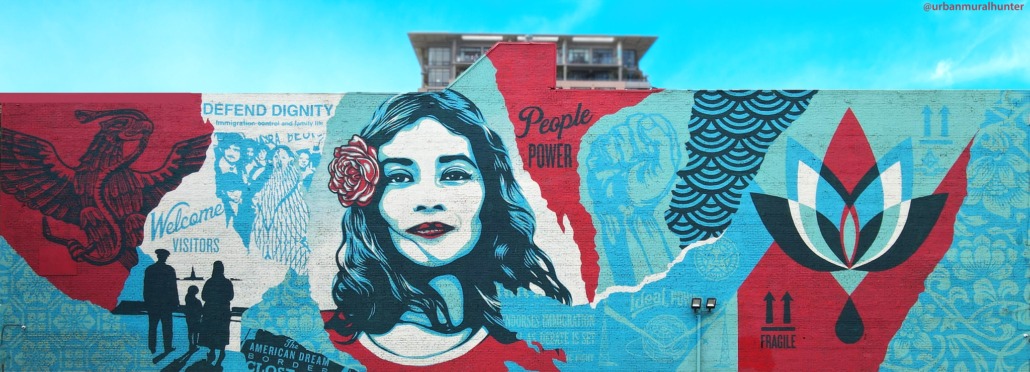

Moving to Los Angeles means supporting your immigrant neighbors.
Melrose Avenue’s iconic pink wall with a matcha from Community Goods has become a staple in being a “Los Angeles piece of shit” — an informal term from social media to describe a stereotypical shallow person from L.A. Undeniably, there are two kinds of Angelenos — the ones who grew up here and the ones who moved here. Someone who moves to Los Angeles is never fully spared from criticism for moving here, no matter how long they have lived in the city.
Despite the criticism and the struggle to find a place in the city, transplants often fall in love with Los Angeles, but not with its people. Although many arrive for similar reasons — a new campus, a career or a fresh start, these shared experiences can feel distant.
On USC’s campus, it’s well known that students live in a red-brick bubble. Outside of campus, many who join neighborhoods in Northeast Los Angeles — such as Glassell Park — remain in that bubble.
Within these bubbles, reality looks like aesthetic Instagram photos with a Rio De Janeiro filter. But there is another reality — one based on survival. Especially as United States Immigration and Customs Enforcement has ramped up its mass deportation tactics in every corner of the city.
The removal of Los Angeles residents is juxtaposed by the many communities that have seen rapid gentrification. Community landmarks turned into coffee shops, with newcomers completely unbothered by the crises that lifelong residents face. Neighborhoods in Northeast L.A. have been glamorized by popular shows such as Rachel Sennott’s “I Love LA,” because who wouldn’t want to live in a beautiful neighborhood like Echo Park or Silver Lake?
For years, these communities have been glorified on the internet for famous brunch spots and local bars. Yet earlier this month, L.A. TACO reported that 10 individuals were taken by federal law enforcement in these very neighborhoods during an immigration raid. Watching immigration raids unfold on video, one can look away, but in L.A., one cannot turn a blind eye.
The councilmember for the 13th district, who represents Echo Park, stated that people were taken while painting a wall for a new Mexican restaurant in the area, one while sweeping outside Rodeo Mexican Grill and others at a local gas station. Another video depicts masked agents detaining a man in front of stairs. He is heard yelling as agents pull him along the steps.
A nightmare is unfolding behind the swan boats in Echo Park. For many natives to the area, such as myself, watching the restaurants that give me a taste of home go empty brings me pain. A couple of blocks down, Lowboy — a trendy bar — overflows with people.
This surplus presents how gentrification gives newcomers the privilege of social clout, allowing trendy businesses to thrive while pushing out cultural anchors built by generations of working-class immigrant families.
This city welcomes everyone, but discovering whether Los Angeles truly suits you shapes your character in profound ways. The motivations that draw transplants here — for opportunity and escape from their past — mirror an immigrant’s journey, chasing a better life while leaving behind what once defined them.
Moving to a new studio apartment in Echo Park or Los Feliz means becoming a part of a community, one built by longtime residents and immigrants. Choosing not to care about the issues affecting your community is plain ignorance.
Many who are not directly affected fear the unknown, not knowing what to do, what to ask or how to respond. Do not fear asking questions and learning from your immigrant neighbors. In the end, that is what makes you an Angeleno, allowing yourself to learn from the city’s diverse community.
Instead of remaining in a bubble filled with TikTok spots, visit the small businesses that are hurting due to the fear of immigration officers detaining them. Simply enjoying Latin dishes used to mean sitting in the restaurant, savoring a meal with the lively presence of family and community members.
Now, it has been reduced to to-go orders, hastily grabbed to avoid being caught in Latine spaces targeted by immigration raids. I encourage you to actively support these businesses, to use your privilege to occupy and give back to these institutions.
While the lifeblood of the city never leaves, moving here doesn’t mean funding your favorite brunch spot or uploading your “I Love LA” fantasy — it means taking responsibility for the space you occupy.
Heydy Vasquez is a senior majoring in legal studies writing about immigration to provide an understanding of the experience and its fracture to cultural identity, her column runs every other Friday.