FEMININOMENON
We’re losing women authors to ghosts
Ghostwriting benefits the privileged and neglects the most underrepresented voices.

By FIONA FEINGOLD
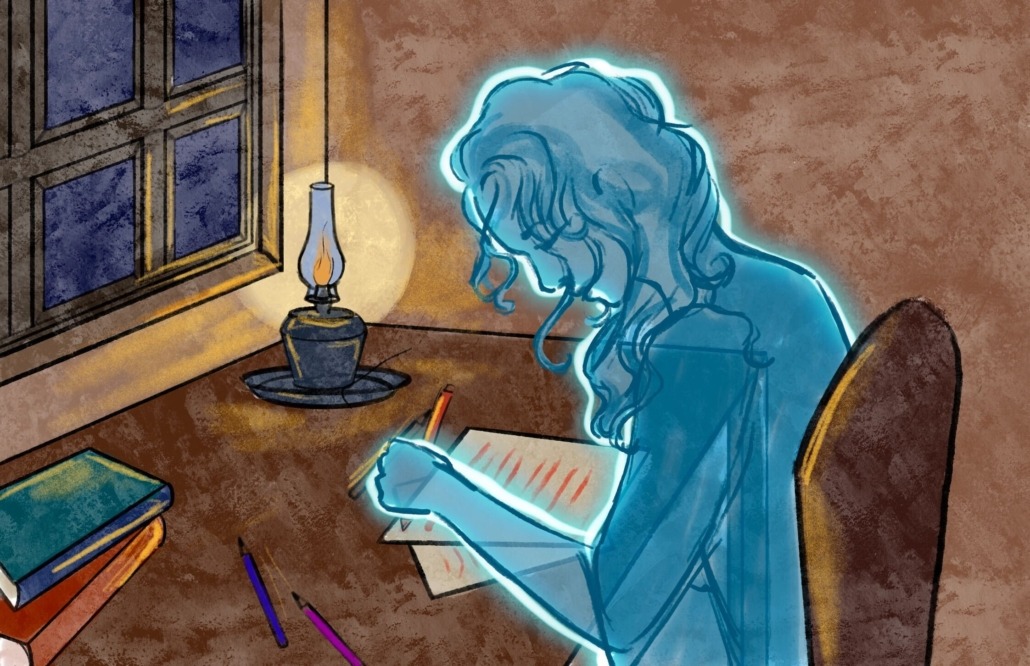

Ghostwriting benefits the privileged and neglects the most underrepresented voices.
Anywhere from 50% to 80% of nonfiction bestsellers were at least partially written by someone other than the name on the front cover, according to ghostwriter Jonathan Williams’ blog, “The GhostWriter.” Chances are, your favorite celebrity memoir was written by a ghost woman.
Ghostwriters are authors-for-hire who pen works attributed to other writers — typically public figures — and they’re more common than you might think. Anything from popular blog posts to political speeches can be the work of so-called ghosts.
There’s nothing morally wrong with ghostwriting. Today, many communications firms offer ghostwriting as part of their typical consulting services. On an individual level, the profession can be quite lucrative, with the highest-paid ghosts earning salaries exceeding six figures, according to writer and writing consultant Josh Bernoff’s blog.
I have no issue with celebrities’ use of ghosts. Most of them don’t have the time, energy or, frankly, skill to write their own memoirs. We would probably enjoy Hollywood tell-alls a lot less if they were actually written by the public figures who claim their authorship.
Just because you have a story to tell doesn’t mean that you know how to tell it, which is where ghosts come in. But what about ghosts and their stories? When did we decide that they matter less than those of movie stars who can’t write a paragraph?
Ghostwriting remains a largely women-dominated field, even more than you’d expect. 52.9% of best-selling ghostwriters are women, who make up as much as 66.4% of ghostwriters according to a 2021 Zippia study. For comparison, around half of U.S. authors are women — a smaller percentage compared to their ghost counterparts. I wonder how many talented women authors have sacrificed their passion projects to support someone else’s.
Women ghosts are done a massive disservice when the only voice they have is credited to another “author.”
How many writers lost their identities to Carolyn Keene, literature’s most famous pseudonym? Keene is the pen name for the many ghostwriters behind the beloved Nancy Drew detective series. Mildred Wirt Benson is the author responsible for 23 of the 30 original novels and was the first to adopt the Keene moniker for “The Secret of the Old Clock.”
I vividly remember my childhood heartbreak upon discovering that Keene was, in fact, not a real person, but a concept. Obviously, I now understand that writing 175 full-length mystery novels over the span of 73 years could never have been accomplished by one author. But I feel for the little girl who was so inspired by the idea of such a prolific woman writer.
You could argue that the stories we tell are more important than the people telling them. It’s not like anyone has forgotten about Nancy Drew. But the storytellers — and the women behind Keene — matter too. Don’t we owe our ghosts more than just existing in abstraction?
One of the joys of reading is getting to know the authors behind your favorite books. When ghosts don’t exist outside of their pen names, the world is robbed of getting to know these real, talented women. I bet our ghosts have more to share than their rendering of someone else’s thoughts.
I learn the most when I read works by authors who are different from me, regardless of their exact cultural backgrounds. I’d rather have the chance to hear and understand ghosts’ perspectives instead of the most privileged public figures’ life stories.
Today, ghosts are everywhere — in music, politics and even on the screen — and they’re not disappearing any time soon. I’m not asking women ghosts to boycott their careers or only publish under their real names. The best ones are earning more than I could ever dream of making, and I wouldn’t demand that they give up their paycheck to prove a point.
I just encourage ghosts to enter the publishing world as their real selves every once in a while. Most of us would rather read a ghostwriter’s confessional over a B-list actor’s self-help book any day. Whatever stories ghosts want to tell, we’re ready and willing to listen.
Fiona Feingold is a junior writing about women in the entertainment industry in her column, “Femininomenon,” which runs every other Friday.