Does the pursuit of individuality make us lose ourselves?
The end of authenticity is the obsession with being different.
By EFRAIN LANDIN
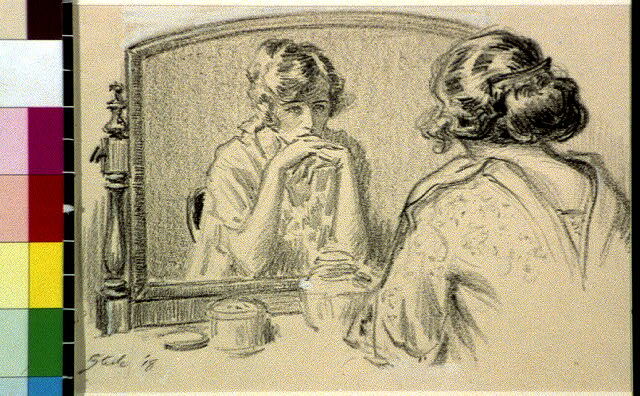

The end of authenticity is the obsession with being different.
There is something inauthentic in our generation’s air, something forced, something unnaturally polished. The pursuit to maintain the image of someone who’s mysterious, hates popular culture, has niche interests and can’t be “put on” to anything, for example. Individuality attracts people through its creation of distance between itself and the mainstream: A space inundated by superficiality.
Too many people now are relinquishing self-discovery and authenticity in fear of obstructing the image they’ve curated for others. As it appears, people have become “viewers” instead of participants in public spaces — hyperaware of judgment and willing to forgo personal growth in exchange for a distinct public image.
It is, of course, entirely natural that we, as people in constant change, are constantly concerned about what others might think about us. However, it has become increasingly apparent that these concerns are no longer about the judgment we could potentially receive when we do something embarrassing, instead our concern is entirely about performing who we actually are.
“Our age is essentially one of understanding and reflection, without passion,” wrote 19th-century theologian Søren Kierkegaard in his book “The Present Age” — arguing that society and media cultivate a culture in which people would rather be seen than known in any meaningful way.
“We all know which way we ought to go and all the different ways we can go, but nobody is willing to move,” Kierkegaard followed in reference to the morality of those who adopt performative identities. In practice, performative identities remove the need for action because the morality that would otherwise catalyze action doesn’t truly belong to them. It is not necessary for people to act upon their “interests” or desires so long as their facade looks “cool” to others, such as having a perfectly curated music playlist that you don’t actually enjoy. This inaction is paralyzing when there’s no more audience, and you don’t know who you are.
We are constantly in a race with one another to get to where there are the least amount of people; we all want to be special. Being different makes us believe we’ve gotten there. Though that too will be co-opted by superficiality, and we’ll have to keep on trying to be different.
Circumstances have now changed how and where people choose to perform, in part due to inescapable algorithms. Across targeted ads, shopping hauls and vlogs, very few people I know are immune to being influenced. Resisting against influence becomes harder when it can alter our public image to be one that is far from mainstream.
People see others being validated for doing something we believe to be cool, regardless of its authenticity. So we follow in their steps, believing in its power to get us where we want to go and be who we aren’t; unknowingly perpetuating cycles we were trying so hard to get away from.
But being “cool” takes more than Tom Ford Gucci, an amazing Instagram profile and good music taste — it takes trust in your own intuition, not your For You page. Of course, this blind following isn’t about actually wanting to be cool; it is simply about trying to look it. But that isn’t possible either.
The attitude and lifestyle of being cool emerged in jazz circles in the 1930s and ‘40s with musicians such as Miles Davis and Lester Young; a word originally used to describe someone who had emotional self-control. The movement was then co-opted by other artists such as the Beatniks, Twiggy and Patti Smith, making coolness about opposing the mainstream and less about the original culture that Davis and Young created. The idea of being cool became a look, something obtainable if you made the right decisions, rather than an attitude.
Algorithms obviated the original movement of “coolness” by subjecting everything once niche into being mainstream: Uniqueness garners the most attention. This pattern of consumption kills all room for subcultures with depth or that haven’t been reconstructed into performance.
I say all this not as an attempt to deny mainstream media’s ability to inspire, but simply to demonstrate that there is more value in authenticity and intention than in any given look. Intentionality allows us to stop burning out in attempts to find an escape from ourselves and instead find a space where our authenticity is enough.
We no longer believe in the conviction that trial and error is honorable, we fear ourselves to be lacking in discipline. It reveals that one of the most essential components of authenticity is self-respect. It is proof that we have enough faith in ourselves to be who we are meant to be instead of putting on an act.