DUGOUT DIARIES
Everyone’s worth $100 million these days
Major League Baseball owners don’t seem to care about money anymore.

By BENNETT CHRISTOFFERSON
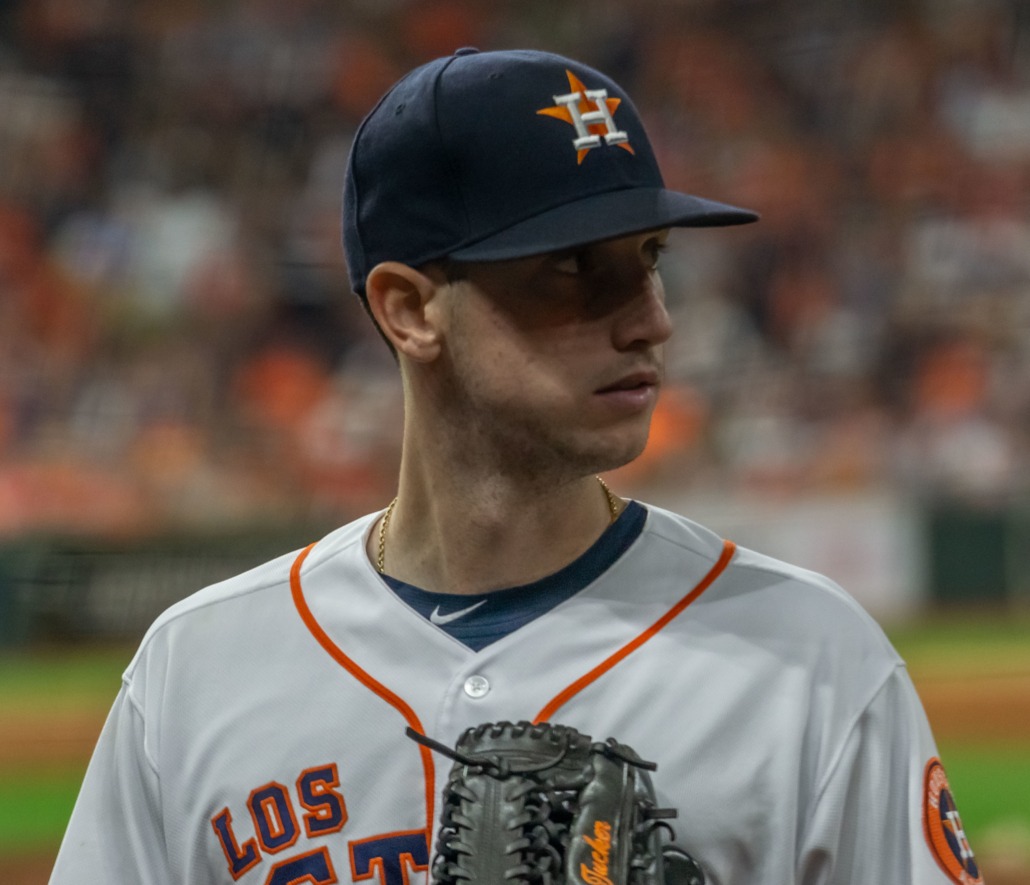

Major League Baseball owners don’t seem to care about money anymore.
Fine. If nobody else is going to say it, I will: Major League Baseball has a money problem.
I know. I’m very brave.
You see, back in my day, massive contracts used to mean something. They were a novelty. When Bryce Harper signed a 13-year, $330 million deal with the Philadelphia Phillies after the 2018 season, baseball fans talked as though the world was ending; all that money for Bryce Harper? A mere MVP and six-time All-Star?
In today’s free agent market, however, no amount of money seems to draw that type of outrage — because everybody else is getting paid an outrageous amount anyway.
Two weeks ago, outfielder Kyle Tucker signed with the Los Angeles Dodgers on a four-year, $240 million contract. That is $60 million per year — more than double the annual value Harper got just a few years prior.
While Tucker’s a fine player in his own right, he doesn’t have the same accolades as Harper did. Tucker’s been an All-Star four times but has only one top-10 finish in MVP voting; not to mention he’s missed 110 games across the last two seasons. His 4.6 Wins Above Replacement in 2025 don’t come close to the top 10 in MLB, a place one would expect to find somebody making $60 million a year.
Sure, you can make the argument that it’s just the Dodgers being the Dodgers; after all, superstar Shohei Ohtani’s $700 million deal is likely what comes to mind for many when thinking “gigantic baseball contracts.” And yet, Ohtani’s annual average comes out to $70 million — a mere 16.7% higher than Tucker’s. There is nothing you can possibly say to me that will justify “Kyle Tucker” being worth more than 85% of what Ohtani is.
It doesn’t stop there, either: The day after Tucker’s deal was announced, shortstop Bo Bichette signed with the New York Mets for three years, $126 million. That is $42 million per year for a guy who has never cracked the top 10 of an MVP vote and was worth negative WAR just a year ago.
Ranger Suárez, a one-time All-Star who has yet to earn a Cy Young vote in his career? $130 million.
Cody Bellinger, who hasn’t made an All-Star Game since 2019? $162 million.
Hell, Alex Bregman just signed with the Chicago Cubs for $175 million, which is nearly double the money he got from the Houston Astros years ago after a season that was substantially better than anything he’s done since.
What can we gain from this information?
Well, besides the fact that you could drive down to Dodger Stadium right now and walk away with nine figures if you smiled wide enough, it’s clear that MLB owners — some of them, at least — simply do not care about saving money anymore. The bigger the wallet, the better the team.
I’ve whined about the Dodgers and their spending habits ad nauseam at this point, but it is hard not to blame them for the current state of the sport. When they shell out over a billion dollars in free agency during one offseason and immediately win the next two World Series, I can’t imagine most front offices are scratching their heads over what the correlation could be.
With that in mind, part of me is somewhat relieved that teams outside of this city are starting to follow suit in an attempt to catch up. As Tyler Glasnow — who signed with the Dodgers last year for, believe it or not, $136 million — said after winning the 2025 World Series: “If you can’t beat ‘em, join ‘em!”
Poor Bryce Harper. Once a fierce topic of debate and target of “overrated” accusations, he’s been relegated to the club of Guys Who Are Just Really Good At Baseball And Lowkey Got Paid A Fair Amount. If his free agency had happened today, the Dodgers might’ve offered him a billion; instead, his $25-million average doesn’t even break the all-time top 30 anymore.
Where do we even go from here? That’s mainly a question I’m asking myself as I search for a way to wrap up this column, but it’s also a worthwhile question for the baseball world. At what point do we look in the mirror and say, “Hey man, maybe $60 million a year is too much to be paying some guy who isn’t even a top 10 player in his sport?”
Maybe it’ll be after the 2026 season, when MLB owners meet with the players’ association to strike up a new collective bargaining agreement. That is, assuming they can come to an agreement in the first place, instead of arguing about salary caps and floors for the next year — as they’ve been doing for several years now — while the game reaches a lockout and nobody gets paid in the first place.
Maybe it’ll be in 2034, when Ohtani’s contract ends and the Dodgers are left paying $68 million in deferrals every year for a guy who’s been retired for a decade.
Or, maybe, it’ll be never. Maybe they’ll just keep handing out blank checks to any player with a pulse for the rest of time.
In that case, I’d better go hit the cages. It’s never too late to follow your dreams!
Bennett Christofferson is a junior writing about baseball’s biggest stories and controversies in his column, “Dugout Diaries,” which runs every other Thursday. He is also a sports editor at the Daily Trojan.