DOWNLOADABLE CONTENT
Serving reheated nachos isn’t always a crime
Without inspiration and imitation, there would be no innovation.

By AUBRIE COLE
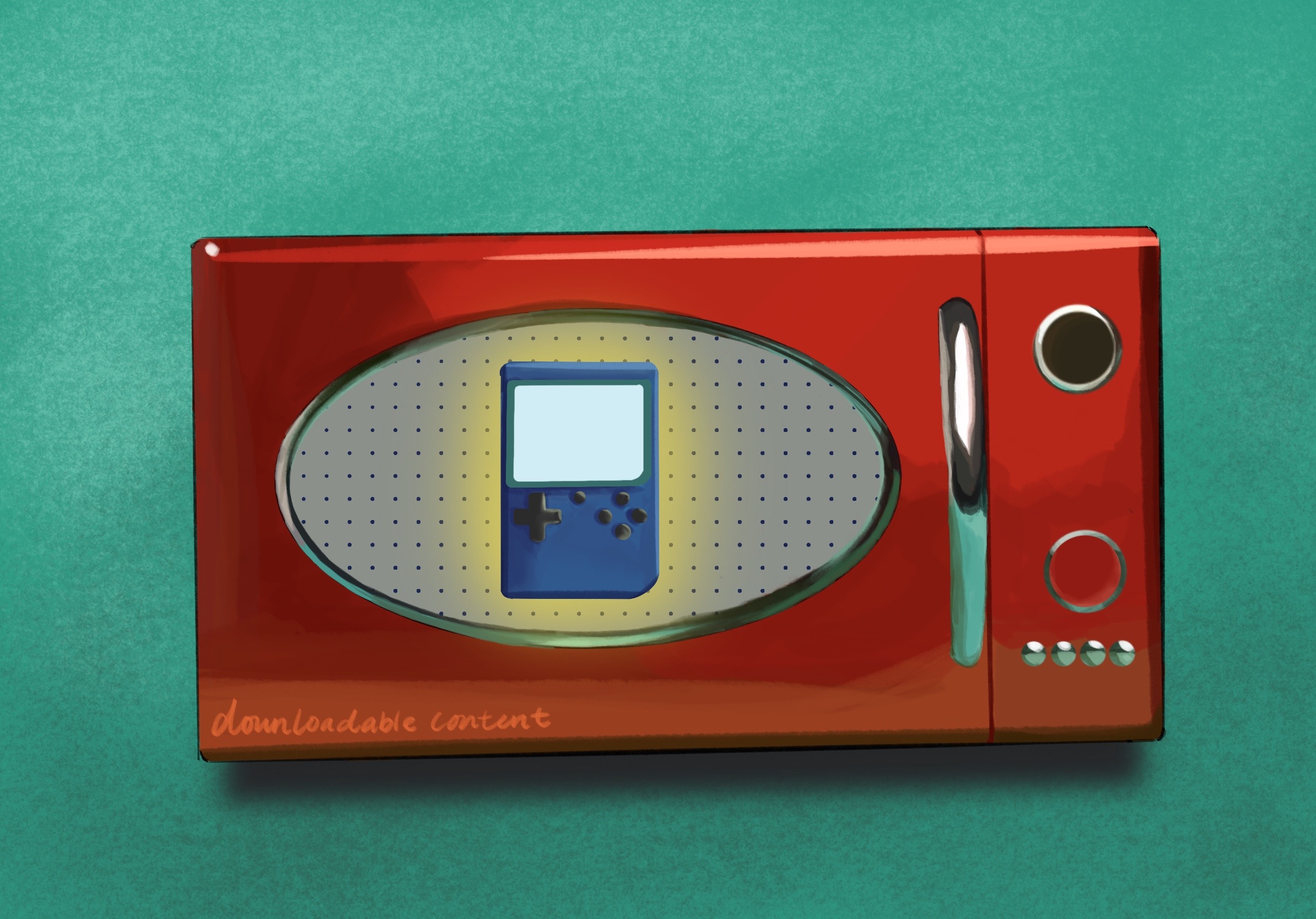

Without inspiration and imitation, there would be no innovation.
“She’s reheating her nachos.”
Wow. Profound. One of my favorite bits of unoriginal X vitriol, boiled down into humorous condescension. I can’t lie, this phrase has crept its way into my day-to-day vocabulary; it communicates just the right level of pretension that I often seek when calling out boring, repetitive imitations.
I don’t think there’s much wrong with feeling bored and irritated by blatant copies of previous material. Art may be subjective, but an obvious copy is plagiarism; yet, not all derivatives fall under this umbrella.
This is part of the basic life cycle of art and popular culture: Sabrina Carpenter may have many “disciples” in the music industry in 2026, but it’s undeniable that she took a leaf out of the 1960’s hyperfeminine playbook à la Brigitte Bardot and Marilyn Monroe.
However, in an era where every social media user is obsessed with originality and uniqueness, no corner of the internet has gone untouched by this mindvirus of individualism — including the gaming side.
Those who work at game companies will be the first to admit that they’re not huge fans of the gaming community. Gamers have a tunnel vision idea of what they want. When they aren’t given what they’d imagined, they often drive online hate campaigns toward anyone who they deem responsible for letting them down — whether it’s developers, publishers or content creators.
In seriously understated terms, gamers — specifically, a loud online minority that exhibits toxic behavior — are simply a difficult demographic to please. Speaking realistically, these users can be a group to fear, lest you misstep in development or marketing.
So naturally, when toxic gamers feel as though a newly released game is far too similar to a previously released title, it’s common practice for them to make a stink about it. One of the most recent examples of this in the gaming zeitgeist is the phenomenon of “friend-slop” — seemingly low-quality, absurdist, co-op games that are easily clippable and postable.
The earliest iteration of popular friend-slop I can think of is “Among Us,” an internationally recognized title that took the gaming community by storm, thanks to a mixture of design genius and an external factor that no one could’ve predicted — COVID-19. Those isolated at home due to lockdown had a quick and fun way to stay in touch with friends and family.
The cute yet competitive premise of the game offered the same charm as physical party games like “Secret Hitler” and “Mafia,” remaining palatable for general audiences due to its simplicity and engaging for gamers because of its casual nature. The popularization of “Among Us” sparked a worldwide craving for fun, remote interpersonal connection, which many, many other game companies have attempted to capitalize on.
Since then, more and more games have come out, built on the principle of online co-op enjoyment — playing with friends, most often on the same team to achieve a common goal. “PEAK,” “Lethal Company” and “R.E.P.O.” are all notable examples of the phenomenon that has been dubbed by the internet as friend-slop.
Though these releases were all met with fanfare and flowers, taking the internet by storm for a few months, they then slowly fell to the wayside. People online have grown fatigued by the cycle of friend-slop releases, which is how the condescending name for the genre was coined in the first place.
“Ugh, this is just another friend-slop cash grab,” users would complain in developer comment sections on TikTok and X.
To an extent, I understand: It can be annoying to see the same type of game released every few months with a massive hype train behind it. However, as someone who’s worked on multiple indie titles and understands the time, effort and love that these games require, the constant criticism rubs me the wrong way.
Oftentimes, the studios making these small, quirky co-op games are micro-developers with extremely limited budgets and time. As many students and faculty of USC Games would say, every shipped game is a miracle in and of itself.
This isn’t to say I think game studios should be able to get away with copying. I just think gamers should be more aware of the effort it takes to develop a game, familiarizing themselves with what makes each title special, before making a snap judgment based on a 10-second clip.
Games rely on their unique features and hooks to draw players in; if a game has nothing distinctive about it, then consumers won’t buy it. So, the success of numerous friend-slop games is a testament to each one’s originality, its ability to take something old and evolve it further.
Perhaps the introduction of this new genre is just what the industry needed. After all, without unashamed imitation, we wouldn’t have roguelikes, soulslikes, metroidvanias and numerous other genres — all of which were named after the games they originated from. Some may call this reheating nachos; I call it iterating and innovating.
Aubrie Cole is a senior writing about video games in her column, “Downloadable Content,” which runs every other Friday.