Metrolink proposes train station near HSC
The station would directly connect the Health Sciences Campus to Union station.
By SEAN CAMPBELL
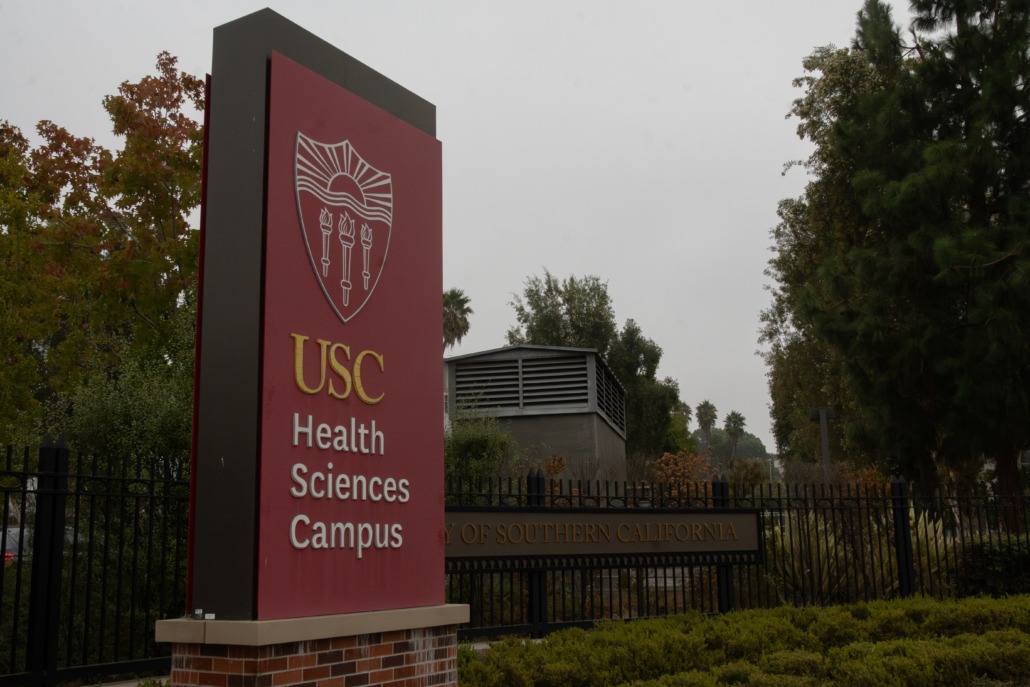

The station would directly connect the Health Sciences Campus to Union station.
A Metrolink train station expected to cost between $100 and $150 million and located less than a mile from USC’s Health Sciences Campus is in the planning process, potentially expanding commuting options for students. Students get a 50% discount on Metrolink rides.
The station will be located at the Los Angeles General Medical Center — formerly known as the LAC+USC Medical Center — which USC’s Keck School of Medicine has a longstanding partnership with. HSC, the Keck Hospital of USC, the Norris Comprehensive Cancer Center and other USC facilities are all within a mile of L.A. General.
“[The LAGMC station] really provides connection to the larger rail network, especially overall transit connectivity,” said Jay Fuhrman, senior manager of transportation planning at L.A. Metro, in a Tuesday virtual webinar about the proposed station. “In terms of mobility options, [it will be] a benefit for the local community and just another way for people to have an option to not have to drive their car.”
Metrolink, a commuter rail service connecting six counties and overseen by the Southern California Regional Rail Authority, is separate from L.A. Metro, which includes trains and buses within L.A. County. However, the Metro is one of Metrolink’s member agencies, so it will play a big part in the project.
Until the project is 30% designed, the project will be funded by the Measure R sales tax, which collected well over $1 billion in the 2025 fiscal year to improve and expand transportation projects in the county. Metrolink projects will receive 3% of the funds, according to L.A. Metro’s website. The tax was approved by L.A. County voters in 2008 and will continue to fund transportation projects until 2039.
Chris Hicks, a principal project manager with Mott McDonald, an engineering and development company working on the project, said the project is approaching the 30% designing threshold, so it is uncertain where the funding for the next phase will come from. He said L.A. Metro will look into other funding sources to utilize for the next phase.
The LAGMC station would be located on the San Bernardino Line, which serves around 60 miles east to Redlands. The line has two other stops in L.A.: at CSU Los Angeles and at L.A. Union Station.
Six Metrolink lines meet at Union Station — Antelope Valley, Riverside, Ventura County, Orange County, Perris Valley and San Bernardino — meaning the stop at LAGMC could make long commutes across L.A. County possible through Metrolink alone. Amtrak train lines also run through Union Station.
USC currently offers a shuttle from Union Station to HSC as well as one from University Park Campus to HSC, though both do not operate on weekends and operate in a limited capacity during the summer. The Metro’s J-line as well as multiple bus routes already stop at or near LAGMC.
Hicks said initial assessments found that there will not be increased traffic or environmental impacts in the area if the station is built.
Angela Albanese, Graduate Student Government senior vice president and a Ph.D. student studying medical biophysics, said the stop would be “extremely helpful” for students, in particular for those with long commutes who may be able to avoid long drives and traffic through Metrolink.
“Some of my friends are med students, and I know they need to get there even at crazy hours every day or over the weekend, so I feel like it would be a very convenient stop,” Albanese said. “I feel like a lot of people will take advantage of that.”
Albanese, who works in a lab at HSC, said where HSC students live often varies based on the program and how often they have to come in-person to attend class. She currently lives near UPC and relies on the Intercampus Shuttle to get to her lab, though she said she had to pay for Ubers at some points during the summer due to the shuttle not being available.
Officials are currently seeking community input on the project as its designing stage continues.