Black Women of Kaufman opens up community for dancers
The new organization will be focused on community and inclusivity in dancing.
By RUBY MATENKO
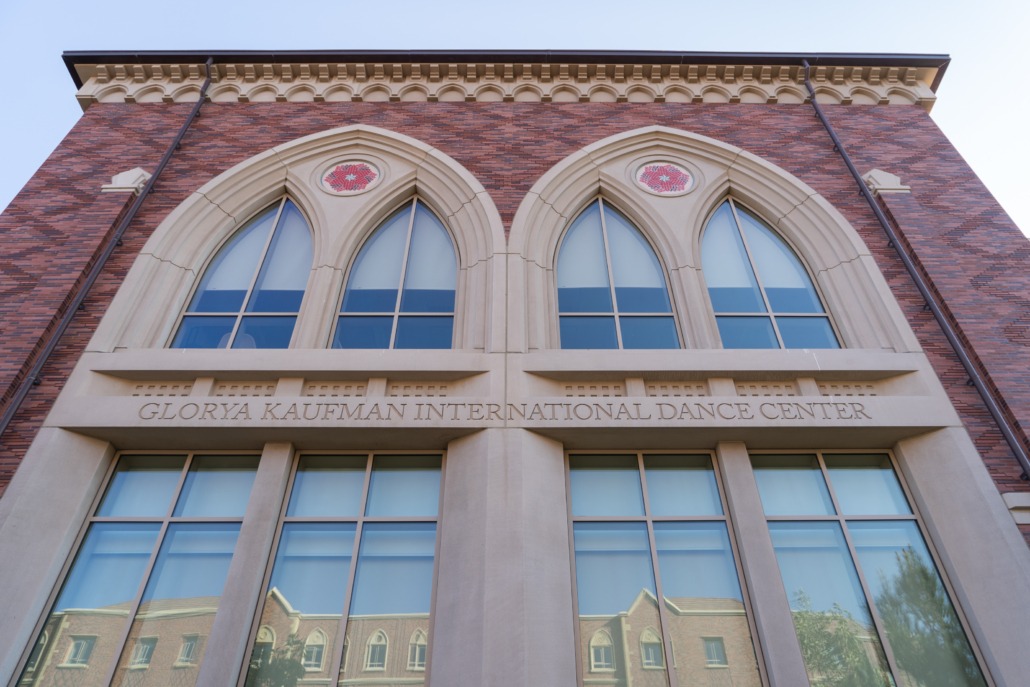

The new organization will be focused on community and inclusivity in dancing.
When Layla Alexis White auditioned for the Kaufman School of Dance, she noticed a commonality between each cohort of BFA students: only around three Black women in each. The few spots given to Black women inspired her to start Black Women of Kaufman, a community formed to ensure students saw themselves reflected throughout the dance school.
On Jan. 19, an Instagram post announced the new collective, formed under the leadership of White, a sophomore majoring in dance and the president of BWOK. It intends to provide a community space for Black women in dance at Kaufman.
“Black Women of Kaufman is a collective that I was surprised wasn’t already available in Kaufman,” White said. “We are a minority in Kaufman, and forming a collective accountability for shared community is something that I’m really passionate about.”
White said the idea for BWOK came when she noticed the limited representation of Black women within Kaufman’s curriculum. She said BWOK aims to build bonds among students who share similar experiences within the school.
BWOK’s formation comes less than a year after Kaufman faced allegations of fostering “a rich culture of racism,” including a freshman calling another student the N-word in a ballet class.
Ryan Pecorella, a sophomore majoring in dance and vice president of BWOK, said that the previous year’s events contributed to the group’s decision to formally organize.
“There was a lot that happened in our school that just made this club necessary,” Pecorella said. “We knew we wanted to do something to bring the Black women together in Kaufman.”
Kayla Uwagbai, a freshman majoring in dance and the organization’s secretary, said she was drawn to the group because of her desire for a community within Kaufman.
“I come from a predominantly Black space, and although Kaufman is so multicultural, I really wanted to find a bunch of people who have the same identity and background as me,” Uwagbai said. “I feel like it’s very, very important to get connected with Black women, especially in the dance space, because sometimes you’re the majority, but you’re not always treated like the majority.”
Pecorella said the organization’s work begins by supporting members at the individual level and encouraging confidence within the broader Black dance community at USC.
“If you’re confident in yourself and you believe in yourself, and you believe in yourself and your abilities, that allows you to be so much more to anything and anyone around you,” Pecorella said.
Uwagbi said the organization hopes to expand its programming to include service initiatives and alumni engagement.
“We speak about doing care packages and stuff like that for any Black woman going through anything, like if anybody has lost anyone in their lives, or anything like that,” Uwagbai said.
The club’s first meeting is titled the Solidarity Circle, which White said will be a rhythmic and dialogue- based event. White said the meeting will be a space for members to name needs, set intentions and hold each other accountable.
“Anyone is always welcome to come if you feel like you need some solidarity and some support, even if you’re not a Black woman,” Pecorella said. “There may be a specific demographic that it’s [toward]s and that is intentional, but we welcome everyone and anyone’s ideas.”
White said that she hopes for the organization to make Black women’s voices “seen and honored.” White also said the organization will feature mentorship and networking opportunities, as well as panels that will discuss the “intersectionality of Black womanhood,” in the dance community.
“The most important goal is that everyone that’s a part of this community feels seen and heard and supported,” Pecorella said. “I think that’s the one of the worst things we go through in life, is feeling invisible, or feeling like you’re not being seen … especially in such an intense environment as dance and art forms in general. I just hope that any member feels loved in and outside of the club, and knows that they have a community to fall back on.”