USC CFO ‘really optimistic’ after Fiscal Year ‘25 report releases
The financial statements included the first year of Big Ten revenue and start of cutbacks.
By NICHOLAS CORRAL & ADAM YOUNG
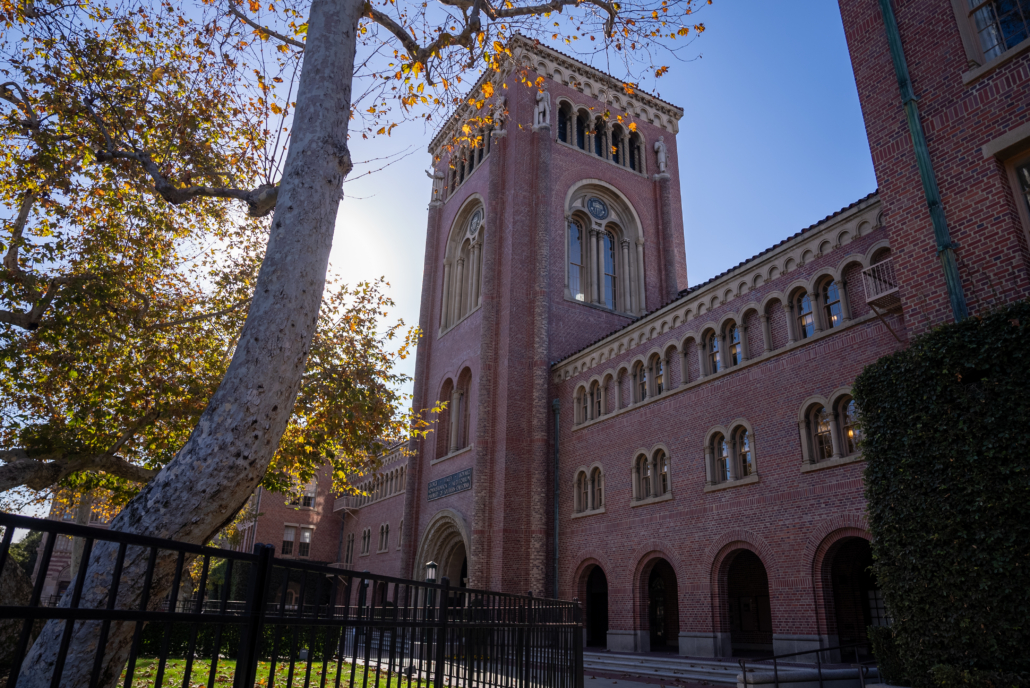

The financial statements included the first year of Big Ten revenue and start of cutbacks.
Content warning: this article contains references to sexual assault and violence.
The University released an expanded version of its consolidated financial statements on Friday, reflecting for the first time Big Ten revenue, a restructuring of USC’s health care footprint and growth in USC’s endowment.
The report expands on USC’s consolidated financial statements released in December 2025. It and the statements cover USC’s finances from June 30, 2024, through June 30, 2025. The University released the expanded report for the first time since 2018, but has released the consolidated statements every year in between.
“This is a report that we haven’t done for several years. President [Beong-Soo] Kim, in his commitment to transparency and really talking about what’s going on and sharing, his goal was, ‘We got to get back to issuing this report,’” said Eric Brink, USC’s senior vice president of finance and CFO.
Revenue mix remains steady
At the top level, USC’s mix of revenues remained similar to the year before: Healthcare made up almost 42%; tuition and fees were nearly 24%; contracts were almost 12%; other sales were around 7%; donations, endowment spending and other enterprises were each around 5%.
Auxiliary services saw the largest increase from FY24 of any of USC’s revenue sources, increasing 11% to nearly $357 million. The category includes revenue from Athletics, USC Village, Los Angeles Memorial Coliseum, Housing, Hospitality, bookstores and the USC Hotel. Brink said this increase was because this was the first year USC had revenue from joining the Big Ten conference.
USC’s endowment — investments from which USC uses the appreciation to keep a stable budget — grew around 8% since the 2024 fiscal year to reach $8.774 billion.
Tuition revenue increased by 3% while the cost of attendance increased by around 5%. Awarded financial aid increased by 2% to $847 million. Tuition revenue subtracts financial aid awards from total tuition costs.
Healthcare footprint sees changes
Healthcare continued to make up the largest share of USC’s revenue. Overall, the report stated that healthcare revenue declined by 1% in the 2025 fiscal year compared to FY24.
The statements said that the University began a 34-year lease for a 100,000-square-foot medical office building in Pasadena. The lease and that of another Newport Beach office cost $68 million, according to the statements.
“We’re very focused on the San Gabriel Valley and East and really looking at the Pasadena Medical Office Building as a great opportunity for us to provide care in the community,” Brink said. “Yes, it required a long-term lease related to the land and the building, as well as construction costs to build it, but we think over the long term, it will be a very good investment.”
An article from Keck Medicine of USC stated that the office will provide autoimmune disease, cardiovascular, orthopedic and oncology care, as well as pain management, infusion therapy and surgery services.
Until this year, healthcare revenue had increased each of the last 10 years, except in 2020. Brink said this year’s decrease in revenue was due to changes in the contract between the USC Keck School of Medicine and L.A. General Medical Center.
The University and LAGMC agreed to a new, substantially-reduced agreement for Keck School of Medicine students to provide services at the hospital in July 2025, according to the statements.
“We’ve restructured that contract so, yes, there’s a reduction in revenue, but there’s also a pretty significant reduction in expense associated with that contract as well,” Brink said. “This one year, we just had this uniqueness because of the county contract being, I would say, really an effort between L.A. County and the University to say, ‘Let’s, let’s find a contract that makes sense.’”
Financial cutbacks minimally reflected
“We are really headed in the right direction, and hopefully, you’ll see much more improved financial results in 2026 as we move forward,” Brink said. “It’s really important that we can make sure that we are meeting our commitments to the student experience, research and clinical care. So, really optimistic about good things ahead for the University.”
Brink said that financial cutbacks at the University will be reflected in the expenses of salaries and wages in FY26, and he said, “You’re going to either see [the line item] flat or come down.”
The report covers the beginning of financial cutbacks at the University, including travel and hiring restrictions implemented March 24, 2025, but not larger layoffs that began in Summer 2025 and ultimately resulted in over 1000 layoffs to address the budget deficits.
When USC previously released its expanded financial report, it included a breakdown of the budgets of each school. The FY25 report did not include that information.
Brink said that was because it was “confusing” for many people, and the formatting would not provide complete detail on the cutbacks.
“I understand there’s a lot of questions at each school, or department or area, but [I’m] not sure that the readers would understand what the communication is in those detailed schedules,” Brink said. “Those reductions, you wouldn’t necessarily even see them in that sort of schedule of how we had done it, because it was just reducing their budget on both sides of the equation, [both revenue and expenses].”
Legal suits continue
The report stated that the University received $55 million in payouts from its insurers from legal costs of lawsuits related to former campus gynecologist George Tyndall. The University also wrote that it continues to seek additional insurance payouts. The University had agreed to pay out over $1 billion dollars in payouts related to the allegations.
Tyndall was accused of sexually abusing hundreds of young women while he was working at the University from 2009 to 2016. The criminal cases against Tyndall were dismissed after his death in October 2023.
The statement showed that the costs of uncompleted construction projects in FY25 was $676 million. The University was sued in late 2025 by two separate contractors for allegedly unpaid construction costs.
The auditors wrote that the University was “not aware of any significant loss of federal funding, nor any pending or threatened investigations,” that would affect its consolidated financial statements.
“The federal government had numerous actions that had an impact on institutions of higher education, and they didn’t have a significant impact on us, and so we continue to monitor and manage that,” Brink said. “But [it] just lets the reader know that, ‘Hey, we had a good year. We’ll continue to monitor it.’”
If you are in need of support, here are some resources you can contact: USC Relationship and Sexual Violence Prevention and Services: Located at Engemann Student Health Center, Suite 356. Individuals can call (213)-740-9355 and request to speak with an advocate or counselor. Services are confidential. Rape, Abuse & Incest National Network (RAINN): A free, confidential hotline that is active 24/7. Individuals can call (800)-656-4673.