Ticketmaster is killing fangirl devotion
Harry Styles fans think that overpriced tickets disrupt the fangirling experience.
By LEILANI YBARRA
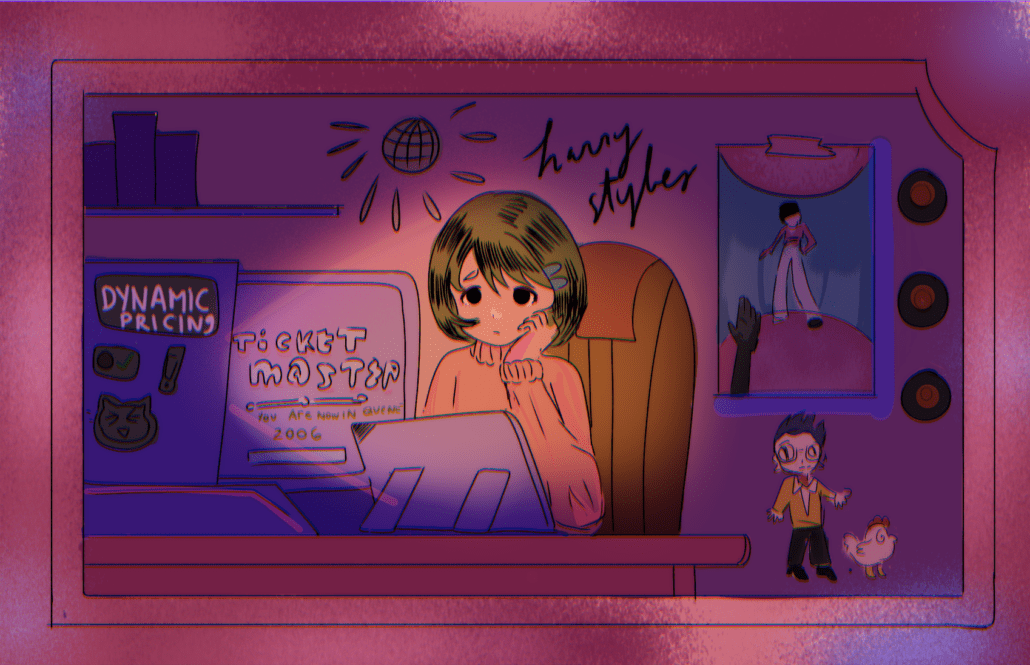

Harry Styles fans think that overpriced tickets disrupt the fangirling experience.
Harry Styles is officially back, though he may not be treating fans with the “kindness” that he once preached. For months, it seemed like the singer was doing everything but recording music: He was parallel parking fans’ cars — albeit poorly — and taking months to send film photos, but was nowhere to be found at the studio.
But after the initial excitement from the ex-One Direction member confirming his return to music, with the release of his latest single, “Aperture,” and the subsequent “Together, Together” tour announcement, fans began sobering up to the electropop-induced hype.
Harry Styles HQ is chugging along the same promotion rollout as previous eras; it’s just that this time, fans aren’t as susceptible to its business practices. With this awareness, it seems that fans’ willingness to accept these deceitful tactics is wearing thin and, with it, the unconditional loyalty of the fangirl archetype as we know it.
On Feb. 3, over 400,000 fans who signed up for presale to Styles’ long-awaited tour entered Ticketmaster’s queue, brandishing their drawn swords, hoping for a seat to see Styles live.
To the dismay of many, tickets were priced as high as $1,182, despite Ticketmaster denying the use of dynamic pricing and assuring users that prices were set beforehand.
Whether a service like Ticketmaster is to blame, winning the queue battle has become a stroke of pure luck and economic privilege, working in tandem with rising merchandise and ticket costs to price out economically disadvantaged fans. Indeed, the opportunity to see your favorite artist rests on how much money lines your pockets, not how long you’re willing to camp out for the box office.
Fans even took to X to express their anger, condemning both Ticketmaster and the artist himself. “Harry’s album should’ve been called capitalism all the time, music occasionally,” one user wrote.
Though a few stan tweets may seem insignificant in the face of the music industry, consumers’ frustrations are translating into measurable backlash in real time: Since the entire Ticketmaster debacle, Harry Styles’ “Aperture” experienced the biggest drop in streams for a No. 1 song on Spotify’s global chart, falling 57.8%.
As a fan myself, having even seen Styles live during his Love On Tour era, it was tempting to pin the entire fiasco on the ticketing hellsite. But if we look at the dissonance between his love for his fans and the pricing of his tickets, it’s not hard to believe that he was betting on fans’ devotion converting to revenue. The unexpected — but warranted — pressure that followed unveiled how buying a ticket is reserved only for those with disposable income.
Live music is no longer just expensive; it’s exclusionary. Skyrocketing ticket prices and additional fees on top seem designed to gatekeep the art form and fandom itself.
Since its inception, the fangirl seemed to be at the mercy of high pricing by promoters and resellers. Now the tide is shifting on ticketing sites and scalpers: Fans have grown tired of the service-fee routine, a precedent set by venues and musicians, especially now that they’ve seen how artists can intervene when it comes to these absurd ticket prices.
Artists like Olivia Dean have criticized ticketing companies for their exploitative practices, prompting Ticketmaster to eventually cap resale rates for her tour. But until more artists follow suit, fans are left with two options: pay up or opt out entirely.
While Ticketmaster may not be singlehandedly killing off the fangirl, it’s certainly warping what fandom looks like now. Before the days of service fees and verified fan lotteries, the fangirl could be imagined in her slouchy $20 band tee, holding up a poster pressed at the barricade of her favorite artist’s concert.
Now, the ritual of the concert has become increasingly inaccessible to such devoted fans. Fangirls have built and continue to sustain pop culture, and the power they yield has the power to destabilize it. Withholding loyalty, streams or ticket purchases are sometimes the most radical form of devotion by refusing to participate in protest when companies treat fandom as an extractable good.
The issue is not that live music is dying — it’s beating loud in between intimate house shows near USC’s campus and concerts at the Shrine or SoFi Stadium — it’s that we’re letting exploitative corporate practices dim the fangirls’ passion, a once sacred force that uplifted the medium.
I’m not here to push the idea of simply diversifying your taste with smaller artists as a response — liking popular music isn’t inferior, and that argument ignores that the industry should be scaling ethically to demand instead of punishing those supplying it.
If the drop in Styles’ streams following presale taught us anything, it’s that outrage works and can incite change. When Oasis fans condemned the use of dynamic pricing during their reunion tour, the band deliberately opted out of the system, prompting a full-blown investigation into unfair pricing tactics.
So, instead of accepting Ticketmaster as an inevitable evil of the live music experience, continue to speak out while remaining your fangirl self. Embrace the whimsy and devotion that initially drew you to your artists’ live performances, even as the industry tries to monetize it out of existence.