NO STRAIGHT ANSWERS
Time moves forward — never backward
Love and memory let us return to the moments we thought were gone, giving weight to what was once ordinary.

By ANDREW CARDENAS
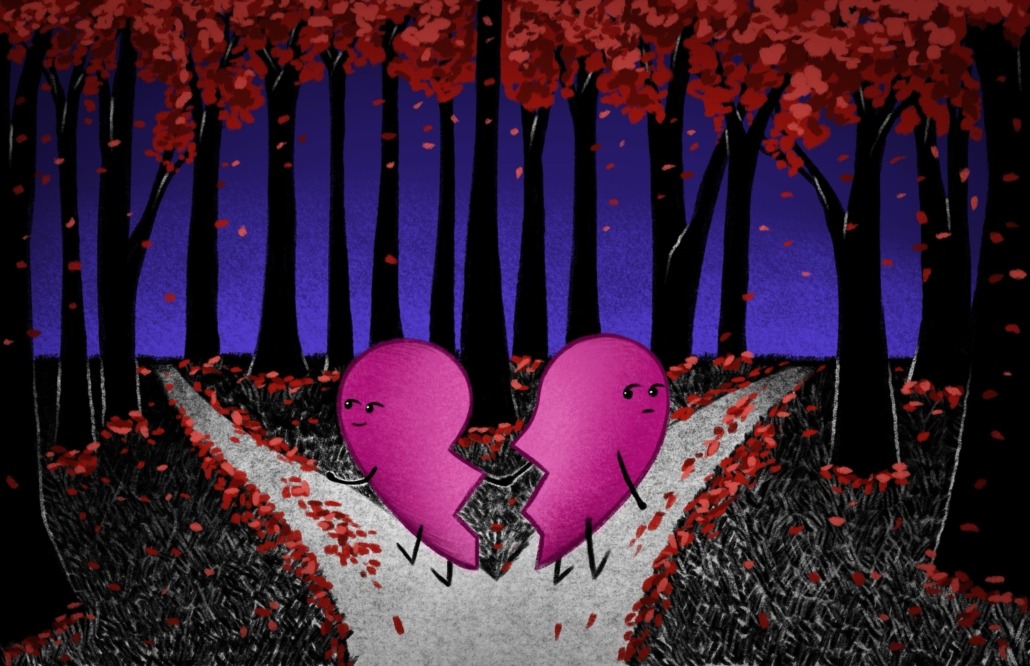

Love and memory let us return to the moments we thought were gone, giving weight to what was once ordinary.
I remember the morning we brought Lily home. She was small enough to fit in my hands, her paws too big for her body, her eyes already curious and bright. My family had just adopted her, and I was in elementary school, blissfully unaware that 16 years would pass before I would say goodbye to her.
We had her for 16 years — nearly two decades. Other dogs I have — or will foster — may only be with me for as short as a couple years, more if I’m lucky. Their lives are brief, but their presence defies numbers.
When Lily died, time shifted in ways I hadn’t anticipated. It didn’t move forward in a straight line; it curved inward. I found myself wandering backward through it, revisiting small rooms of memory long closed. I remembered afternoons sprawled on the living room rug, the smell of her fur, the tilt of her head when she wanted attention. Memory refuses linearity.
By two, Lily was already middle-aged in human years. I always knew her life would be short — the arithmetic was obvious — yet the truth felt distant. She was simply there, woven into the fabric of my days. I cared for her, delighted in her, but rarely paused to really look at her.
When Lily slowed, time slowed with her. Anyone who has kept vigil at a bedside knows it: The clock moves, but life suspends. You stop moving through time and begin inhabiting it. The tragedy was not that her years were fewer than mine, but that I mistook time with her for depth. I assumed there would always be another ordinary afternoon to notice her more carefully. And then, there wasn’t.
The philosopher Martin Heidegger wrote that authentic living requires an awareness of finitude — that recognizing limits sharpens how we can live. I came to understand this not in a textbook, but at the foot of Lily’s bed, as I stroked her fur and wondered how to honor her life now that she was gone.
Death does not extend time — it deepens it.
For much of my life, I experienced time as something slipping away. I felt urgency — to optimize, to achieve, to outrun the sense that I was falling behind some invisible clock. Time felt scarce and fast.
Roman philosopher Lucius Annaeus Seneca wrote that it is not that we have a short time to live that is tragic, but that we waste much of it. I used to read that as a reprimand. Now I see it differently: Waste is not always about laziness or efficiency. Sometimes we waste moments by failing to notice them, and waste our love by declining to show it.
Loss taught me that love requires presence. To love is to slow down, to notice, to linger, to speak and act without waiting for the “right moment.” I remembered Lily’s little quirks, the way she pressed her nose into my hand, the way she waited patiently at the door for my mom to come home.
After Lily’s death I began writing, recounting ordinary days that had become extraordinary in hindsight. I continued fostering dogs, offering small gestures that could never replace the years I spent not recognizing her presence, but which transformed my grief into active love. I learned that even when someone is gone, love ripples outward — shaping the world and the lives of those still here.
Time moves forward. That’s inevitable. But love gives us the strange privilege of return. Through memory, attention, through the simple act of sitting still with what has already happened, we bend what was linear. Death does not give us more time; it gives us different access to it. Time moves in one direction, meaning time circles, it expands and gathers weight each time we return to memories.
Pause before the next obligation. Look at the person beside you. Notice the room you’re standing in. Let ordinary moments register as finite — not to fear them, but to honor them. Love harder. Love wider. Love now. Send the text. Take the walk. Stay a few seconds longer.
I still carry Lily with me in countless ways: the tilt of her head, the warmth of her fur, the ordinary afternoons that now feel extraordinary. And in holding those memories close, I realize that we, too, can carry forward the love and care we feel — letting it ripple quietly into the lives around us, into the way we move through each day. Perhaps this is the gift of absence: the chance to notice more deeply, to love more fully and to honor what was once here, even as life moves on.
Andrew Cardenas is a junior writing about love in all its forms in his column, “No Straight Answers,” which runs every other Wednesday. He is also the DEIA Director and Talkin’ Troy Editor at the Daily Trojan.